Biography
Olaf II Haraldsson
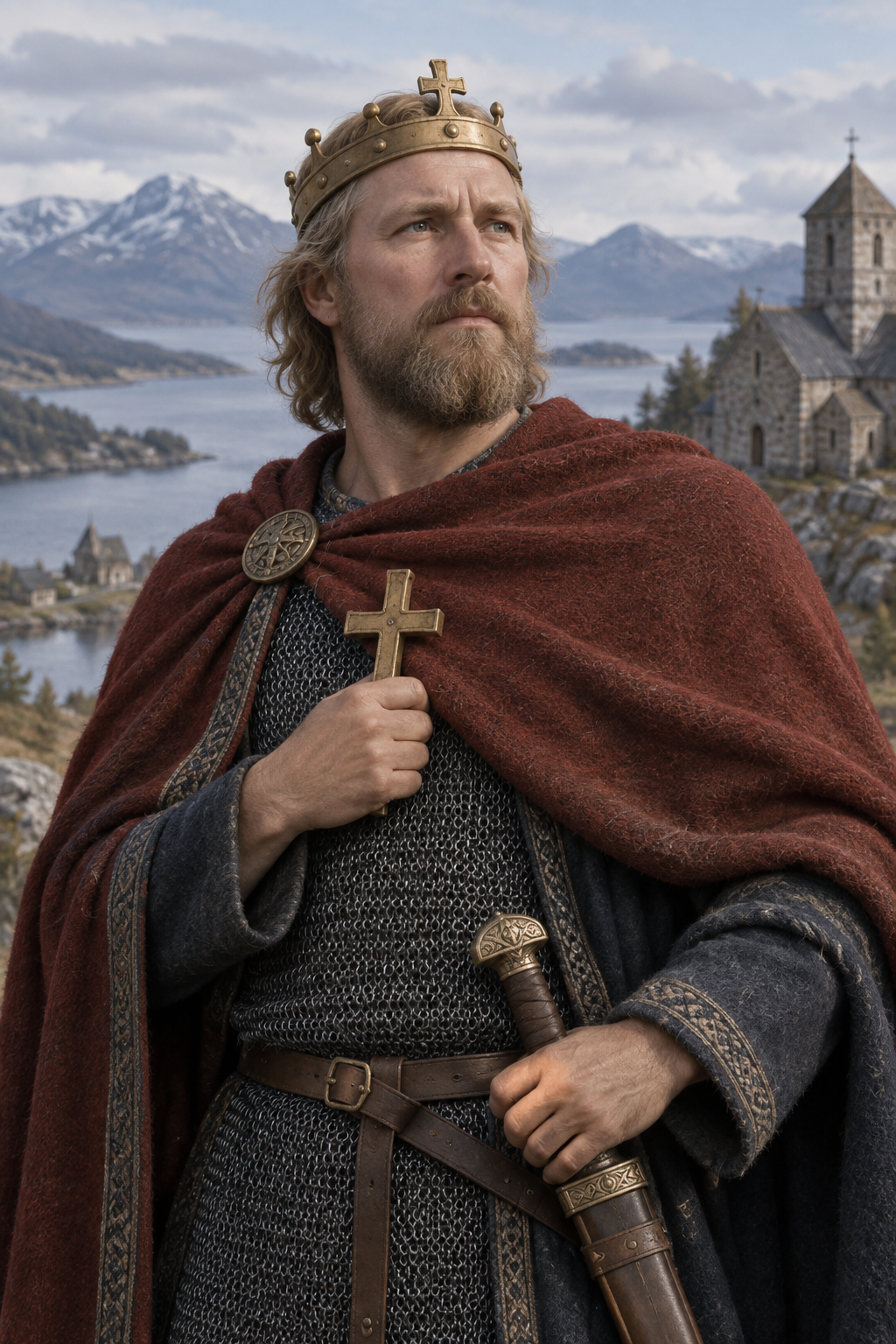
About Olaf II Haraldsson
Olaf Haraldsson grew up in Ringerike in the 990s as the son of a chieftain. As a boy he joined sea expeditions and later fought in England. His early life belonged to the world of Viking warfare, not to the peaceful royal image that later devotion would prefer. Nidaros Cathedral places him in Normandy for two winters and says that he received Christian instruction and baptism at Rouen in 1014.
He returned to Norway in 1015 seeking rule over a divided country. He claimed descent from Harald Fairhair, and the royal tribute at the Øreting assembly in 1016 strengthened his position. Olaf brought clergy from England into the work of conversion, while political authority and Christianization advanced together. Nidaros Cathedral dates the establishment of Christianity as the official religion to 1024. His reign ended in 1028.
His program was not gentle. The cathedral’s account explicitly describes brutal actions and strong opposition among Norwegian nobles. When opponents joined the Danish king, Olaf fled east. He returned two years later to reclaim the throne but met an army led by Norwegian opponents at Stiklestad. He died there on 29 July 1030. Calling that death martyrdom reflects later religious remembrance; it does not erase the political battle that brought it about.
After his death, accounts of miracles circulated around his burial in Nidaros. The cathedral relates that his grave was opened a little over a year later and he was acknowledged as a saint. Claims about the body’s miraculous condition belong to that devotional tradition. A church later rose over his grave, and Nidaros became a major medieval pilgrimage destination. The Catholic Church in Denmark records his later title, rex perpetuus Norvegiae, “Norway’s eternal king.” His legacy joins Christian memory with the difficult history of royal force.
Wondering how to weigh the stories and sources? Learn how to read a saint biography.