Biography
Francis de Sales
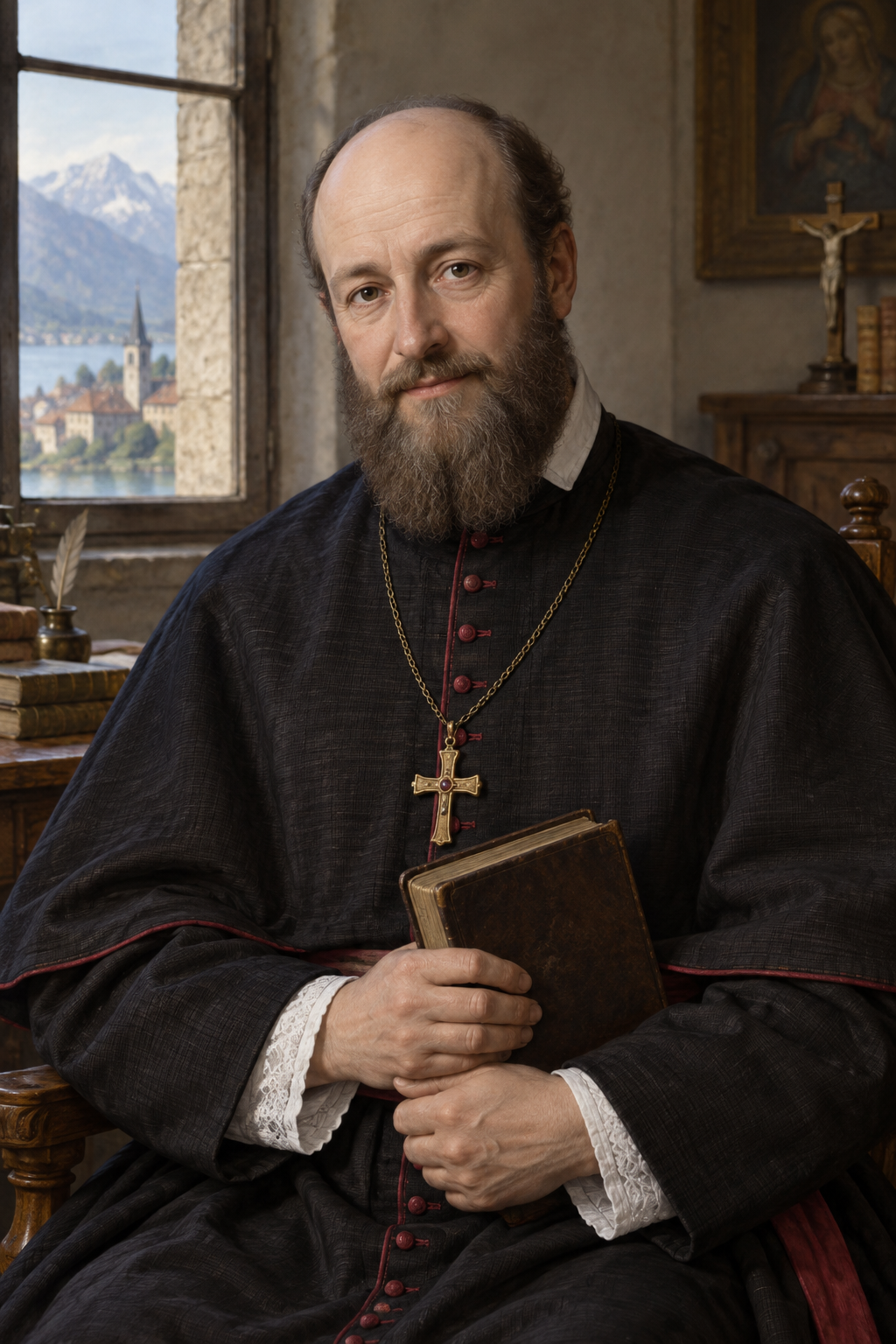
About Francis de Sales
Francis de Sales became a priest against his father's wishes and a bishop known for making Christian devotion accessible beyond monasteries. His family belonged to the nobility of Savoy. His education took him to Paris and then to Padua, where he qualified in both civil and canon law. Alongside his studies, religious questions became intensely personal. Arguments about predestination led him to fear for his own salvation, with an anxiety so severe that he struggled to eat and sleep. He found peace through prayer and a decision to love God without demanding assurance about his own future. The experience helped shape a spiritual teaching centered on trust rather than fear.
Ordained in December 1593, Francis soon undertook a mission in the Chablais at his bishop's request. The territory was Calvinist but had returned to Savoyard control through warfare and treaties. He developed ways to reach people who would not attend his sermons, distributing written arguments and slipping notices under doors. This was energetic Catholic missionary work in a bitterly divided society, not religious dialogue on equal modern terms. Pope Francis's account acknowledges an intransigence that de Sales himself later recognized. His methods nevertheless changed through contact with people: personal encounters became increasingly important beside formal controversy.
The mission also depended on political power. After the duke of Savoy consolidated control, he required remaining Calvinists to become Catholic or leave. J. Power's encyclopedia account notes that Francis did not openly oppose these measures, although he preferred persuasion. He shared the period's assumption that religious unity supported the state. This context matters alongside his reputation for gentleness: conversions cannot all be described simply as the result of friendly preaching. His meetings with Theodore Beza, Calvin's successor, did not overcome the division between their churches.
Francis became bishop of Geneva in 1602, but his seat was at Annecy because Geneva was Protestant. He organized religious instruction for adults and children, gave guidance to his clergy and visited parishes scattered through the mountains. Preaching, hearing confessions and answering requests for advice filled his working life. He also wrote extensively to people seeking spiritual direction. His ministry involved the ordinary administration of a diocese as well as the books for which he became better known. The Catholic Encyclopedia describes a deliberately economical household that allowed him to give more to people in need.
His work with Jane Frances de Chantal produced a new religious community. On 6 June 1610 they founded the Visitation at Annecy in the small house called La Galerie. The first group included Chantal, Marie-Jacqueline Favre, Jeanne-Charlotte de Bréchard and Anne Jacqueline Coste. As more women entered, the community outgrew the house and moved near the lake. Francis consecrated its small church in 1617. The foundation was therefore a collaboration with women building a shared life, not simply another book or a solitary project of the bishop.
The Visitation made room for women whose age or health prevented them from undertaking the strenuous observances of other communities. Its rule did not require the same prolonged vigils or severe physical penances. Francis sought commitment through moderation rather than measuring devotion by bodily endurance. His spiritual counsel to the sisters stressed love, humility and a reliable practice of their rule. The community gave an institutional form to his conviction that the demands of religious life should take account of the people living it.
In the Introduction to the Devout Life, Francis applied a related insight to people outside religious orders. He addressed the differing circumstances of workers, servants, rulers and married people. A parent could not rightly abandon provision for a family, nor could an artisan spend the working day in church. Prayer and devotion needed to strengthen the duties of a person's calling rather than displace them. He rejected the idea that a serious Christian life was impossible in a workshop, household or court. That attention to ordinary responsibilities made his teaching more than a set of instructions for people able to withdraw from society.
The Treatise on the Love of God explored the relationship between divine grace and human freedom. Francis argued that grace could attract a person powerfully without compelling consent. An invitation could be accepted or resisted; God's initiative did not erase the will's response. He distinguished being awakened by an inspiration from choosing to act upon it. In this account, dependence on divine help and personal responsibility belonged together. The discussion gave theological depth to his practical concern that spiritual guidance should encourage a free response rather than use force.
His final journey took him to Avignon on a diplomatic mission for the duke of Savoy. Returning through Lyon, he stayed in the Visitation's gardener's lodge and continued receiving people despite exhaustion and poor health. He died there on 28 December 1622.
His memory also includes a friendship with Martin, a deaf man with whom he learned to communicate. Pope Francis recalled that relationship in 2023 when discussing communication attentive to another person. Alongside the books and institutions, this remembered encounter gives a concrete expression to the bishop's enduring association with patient, personal communication.
Wondering how to weigh the stories and sources? Learn how to read a saint biography.
Explore similar vocations
Prayers for Francis de Sales
Francis de Sales: collect petition
fais que, soutenus par son exemple, nous donnions une preuve de ta douce charité en nous dévouant pour nos frères.