Biography
Albert the Great
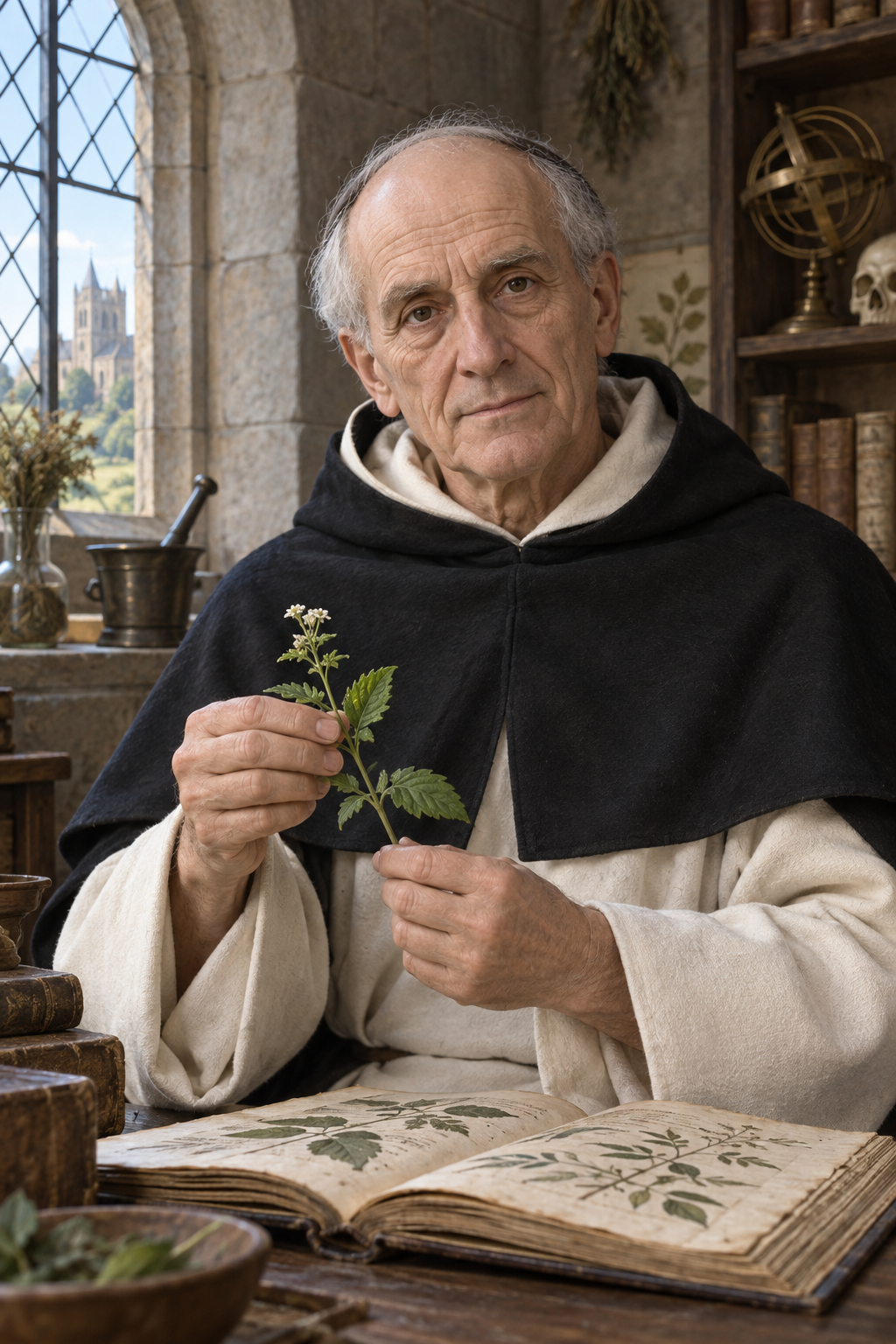
About Albert the Great
Albert the Great spent his working life moving between classrooms, religious communities, and public disputes. Born around 1200 at Lauingen on the Danube, he eventually became a Dominican teacher whose interests extended far beyond a single field. The Albertus-Magnus-Institut traces his early years to northern Italy and considers study at Padua likely. There he encountered Jordan of Saxony and the young Order of Preachers, a community that recruited among university students and made learning part of its religious vocation.
The surviving chronology leaves two possible years for his entry into the Dominicans, 1223 and 1229. By 1245 he had become a master of theology in Paris; in 1248 he returned to Cologne to direct the order's advanced school, accompanied by Thomas Aquinas. His Paris years also include a troubling act: on 15 May 1248 he signed the condemnation of the Talmud. That participation in the condemnation of a Jewish religious text belongs in his history alongside his achievements as a teacher.
Albert's friendship with Thomas developed through their shared theological work. The responsibilities of teaching were soon joined by those of government. Elected provincial in 1254, Albert visited Dominican communities across a large territory and urged fidelity to the order's religious life. Later, as bishop of Regensburg, he worked on the organization of parishes and convents and the renewal of charitable activity. His classroom learning was therefore accompanied by responsibility for communities and their practical needs.
The bishopric did not become a permanent destination. Albert accepted it despite the objections of Humbert of Romans, his order's master, and subsequently sought release from office. In 1263 Urban IV appointed him to preach a crusade in Germany and Bohemia: this was recruitment for a crusade, not merely a preaching tour. He later worked in Würzburg and Strasbourg. Cologne repeatedly called on his negotiating skills, including in the settlement of 1271 between the city's citizens and Archbishop Engelbert. Even with declining sight in old age, he continued ecclesiastical and legal duties.
Writing continued through these changes of office and residence. His projects included commentaries on the theologian Pseudo-Dionysius and an extensive engagement with Aristotle. He did not limit himself to explaining surviving Aristotelian books, but supplied treatments of subjects he believed the system lacked. His work on Aristotle occupied more than twenty years. He also wrote Gospel commentaries and began a theological synthesis that remained unfinished at his death.
Albert treated logic both as a science with its own principles and as an instrument useful in other kinds of reasoning. He commented across Aristotle's logical corpus and drew extensively on earlier thinkers, including Robert Kilwardby. His scholarship was neither solitary invention nor passive repetition: the modern study of those commentaries identifies both borrowed classroom material and places where he developed or disputed it.
His large work On Animals shows how this learning was assembled. Its first nineteen books expound Aristotle through Michael Scot's translation from Arabic; two further books revise Aristotelian teaching; the final five form an animal dictionary drawing heavily on Thomas of Cantimpré. The range extends from the structure and reproduction of living bodies to hunting and ordinary human activity. The contents move through visible organs, bones, muscles, nerves, and blood vessels, bringing many bodily details into an organized account. Reading that structure makes it easier to understand the scale of Albert's undertaking: he was gathering inherited learning, arranging it for readers, and adding judgments of his own.
Albert died on 15 November 1280 and was buried in the church of the Cologne convent three days later.
His later recognition joined the religious and intellectual sides of that life. Pius XI canonized him and declared him a Doctor of the Church in 1931. Pius XII subsequently named him patron of the natural sciences.
When John Paul II addressed scientists in Cologne on the seven-hundredth anniversary of Albert's death, he presented Albert's engagement with rational inquiry as an enduring example. In that address, Albert's achievement lay in receiving, correcting, and developing scientific learning while recognizing its distinct methods. The pope also acknowledged that the contents of Albert's synthesis belonged to their historical setting. Its continuing value was not that every medieval explanation remained correct, but that intellectual work could pursue its own questions without surrendering religious commitment. This later reception helps explain why Albert is remembered as more than Thomas Aquinas's teacher: his own wide-ranging effort became a reference point for the Church's discussion of faith and scientific study.
The Church's prayer for his feast also expresses this legacy. In the older Roman collect, worshippers ask to follow Albert's teaching toward the fullness of heavenly light. The revised collect instead connects growth in scientific knowledge with deeper knowledge and love of God. Both prayers turn attention from admiration of a learned person toward the religious purpose of learning, although their petitions emphasize different ways of describing that purpose.
Wondering how to weigh the stories and sources? Learn how to read a saint biography.
Explore similar vocations
Prayers for Albert the Great
Petition from the older collect for Albert
grant us, we beseech you, so to follow in the path of his teaching that we may enjoy perfect light in heaven.