Biography
Gabriel of Lesnovo
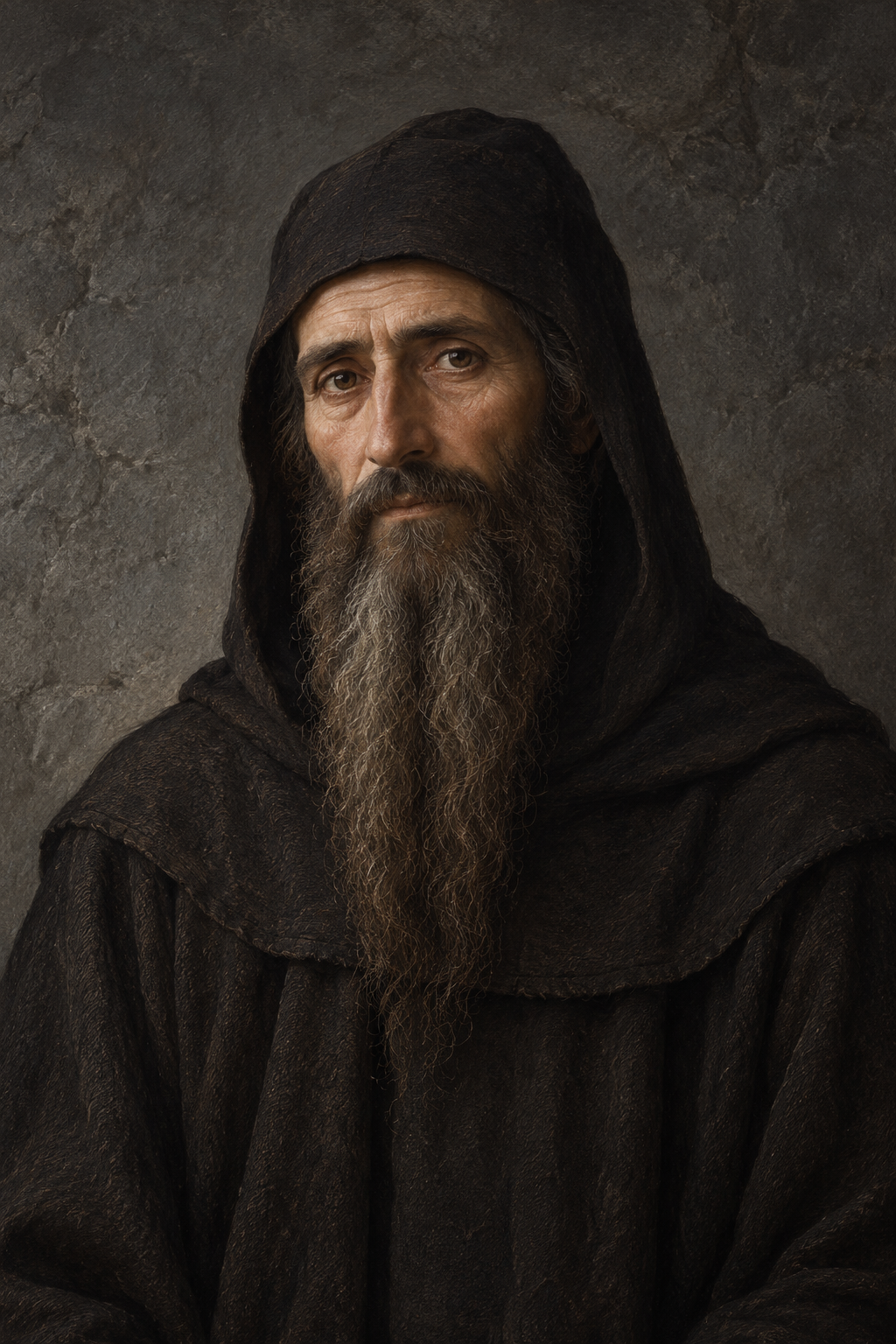
About Gabriel of Lesnovo
Gabriel of Lesnovo is remembered as a monk who used his wealth to support a religious community and then sought a solitary life. The Orthodox Church in America’s account describes him gathering monks around a church dedicated to the Archangel Michael near Kratovo. After placing an abbot in charge, he withdrew for prayer and fasting.
The dates of Gabriel’s life are uncertain. Scholarly discussion places him within the eleventh or twelfth century, but the surviving accounts do not establish a reliable birth or death year. The Orthodox Encyclopedia emphasizes that the information about him is sparse and comes from later sources.
The longer life associates his family with Osečko Pole. It tells of his arrival at Lesnovo, where he received permission to live apart from the monastery. Visitors seeking help interrupted his solitude, and he moved first toward Lukovo and then to the mountain called Oblov. These movements belong to the received hagiographic narrative rather than a contemporary itinerary.
There is a significant difference between the two principal accounts. The shorter life makes Gabriel the founder of the monastery, while the longer one describes him joining a community that already existed. Literary historian Ilija Velev favors the earlier account, while acknowledging that the date of the monastery’s original construction has not been securely established. Gabriel’s close association with Lesnovo is clearer than the precise sequence of its foundation.
The manuscripts preserve the history of his remembrance as well as stories about his life. Aleksandar Meshkov identifies the short life in the Prologue copied by Stanislav in 1330, now held in Belgrade. The longer narrative survives through later copies. This distance between the life remembered and the texts that survive calls for care with elaborate personal details.
Local storytelling extended his reputation into the surrounding landscape. One narrative describes him healing a shepherd’s goats with rainwater; others associate him with caves, wild animals, and the discovery of his remains. Meshkov studies these as traditions and legends through which communities expressed their relationship with the saint. They should not be read as independently verified accounts of supernatural events.
The Orthodox Encyclopedia records regional devotion to Gabriel as a protector of livestock and shepherds in northeastern Macedonia and adjoining southwestern Bulgaria. It also notes unresolved contradictions in accounts of his relics being transferred to Tarnovo. A confident modern itinerary for those remains cannot be reconstructed from the conflicting stories alone.
Lesnovo’s later importance reached beyond its immediate surroundings. It developed as a center of monastic life and manuscript production, maintaining literary connections across the Orthodox world. Velev describes Gabriel’s example as influential among monks living both in communities and in solitude. The monastery preserved his memory while becoming a place where texts were copied and religious learning continued.
Gabriel remains commemorated in the Orthodox Church in America on January 15. His remembrance is closely tied to the community of Lesnovo and its tradition of prayer.
Wondering how to weigh the stories and sources? Learn how to read a saint biography.