Biography
Hugh of Lincoln
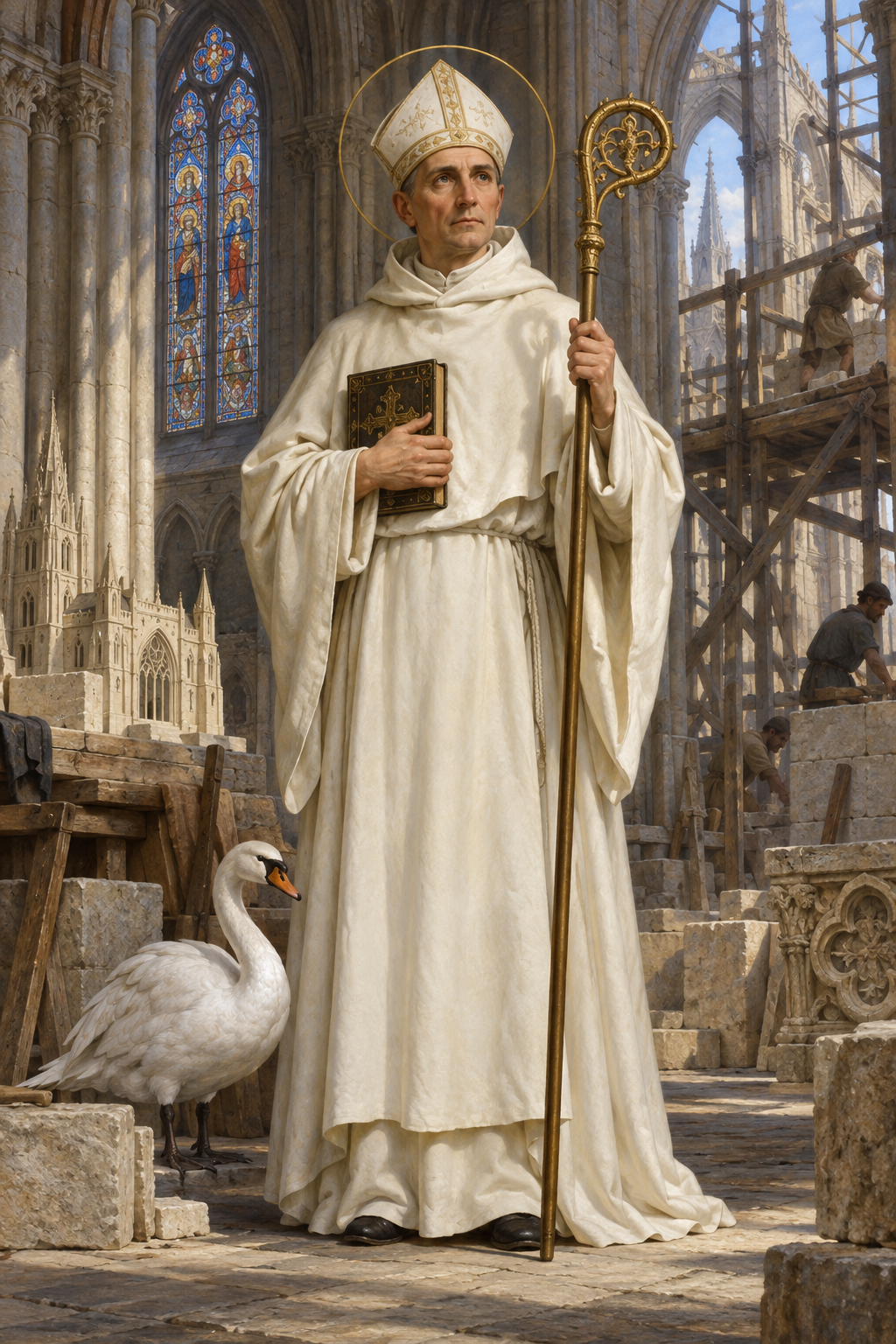
About Hugh of Lincoln
Hugh was born about 1135 at Avalon in Burgundy, near present-day Pontcharra in France. The Catholic Encyclopedia describes his childhood in an Augustinian priory before he joined the Carthusian Grande Chartreuse. The Diocese of Lincoln handbook gives a later approximate birth estimate, around 1140, so this record retains the range’s earlier conventional estimate with an approximation flag.
Hugh became a Carthusian monk at the Grande Chartreuse, where he served as procurator. The Diocese of Lincoln handbook describes him leaving earlier priory duties for the Carthusian life and later becoming prior of the English foundation at Witham. The Catholic Encyclopedia places his move to Witham around 1180 and relates that Henry II selected him to lead the new house. The Benedictine foundation is recorded in England’s monastic history as the first Carthusian house in the country.
The Lincoln Cathedral account records that Hugh resisted a move into episcopal office but became Bishop of Lincoln in 1186. The Cathedral had recently suffered serious earthquake damage. Cathedral sources remember his pastoral care, attention to clergy, and efforts to rebuild the building. These institutional accounts emphasize his local legacy; the older reference biography also records conflicts and work beyond Lincoln.
Hugh sometimes opposed royal preferences when he believed church rights or diocesan responsibilities were at stake. The Diocese handbook describes his sense of justice, his service under three kings, and his role as both critic and friend to rulers. The Catholic Encyclopedia gives fuller examples of those conflicts, including disputes about church appointments and property. The exact speeches in older narratives are not repeated as verbatim history.
After an earthquake damaged Lincoln Cathedral in 1185, Hugh directed its rebuilding and enlargement. The Cathedral timeline places his accession in 1186 and connects his episcopate to the reconstruction campaign. The work was part of a long architectural process, not a project completed in a single moment. Later medieval accounts also remember Hugh as personally involved in the effort, but the present record does not turn that reputation into an unsupported claim about specific building tasks. The rebuilt church became a major expression of Lincoln’s religious life and Hugh’s legacy as bishop.
Lincoln’s church sources remember Hugh’s protection of vulnerable communities, including Jews during anti-Jewish violence, and his care for poor people and those with illness. These are retrospective institutional accounts, not evidence that Hugh could stop persecution throughout England.
Hugh died in London in 1200, after about fourteen years as Bishop of Lincoln.
Pope Honorius III canonized Hugh in 1220. The Diocese of Lincoln handbook records that recognition, and the local church continues to commemorate him. The Catholic Encyclopedia gives his feast as 17 November, the day after the date of his death.
Wondering how to weigh the stories and sources? Learn how to read a saint biography.