Biography
John Roberts
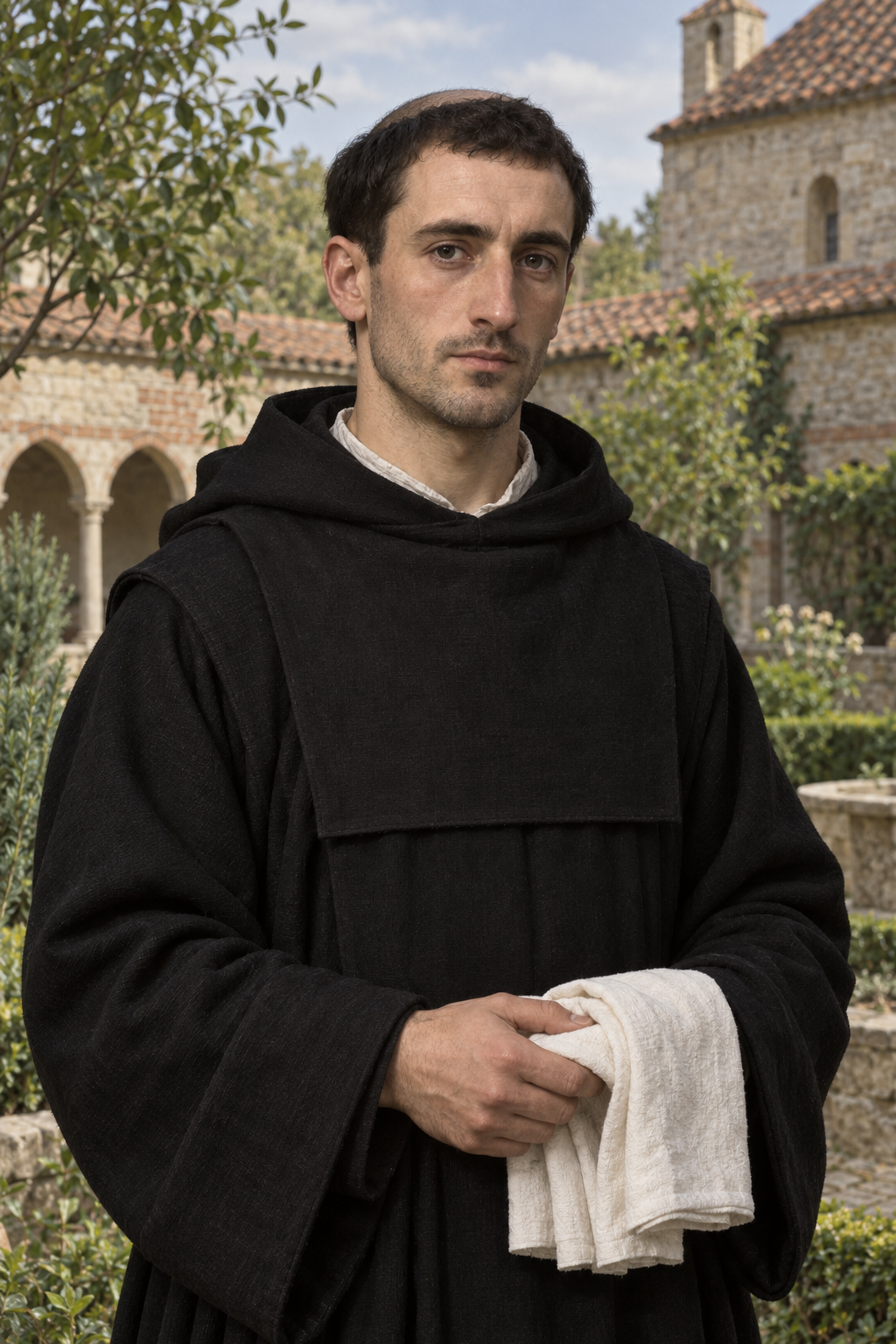
About John Roberts
John Roberts was a Welsh Benedictine monk and priest born at Trawsfynydd around 1576. His education took him to Oxford and the study of law in London before a journey abroad changed the direction of his life. In Paris in 1598 he became a Catholic, then went to Spain to prepare for religious life. His later service moved repeatedly between England and the Continent, as imprisonment and banishment interrupted his work without bringing it to an end.
The Dictionary of Welsh Biography places him at Saint John’s College, Oxford, in 1595–96 and then at Furnival’s Inn. After his reception into the Church he entered the English College at Valladolid. A year later he chose the Benedictine vocation and took the name Juan de Mervinia. He continued his studies and was ordained in 1602. Those stages joined the work of a missionary priest to a commitment to monastic life, rather than making the two vocations alternatives that could never meet.
Huddleston’s account distinguishes the Spanish houses involved in his formation. Roberts first joined the Abbey of Saint Benedict at Valladolid and was then sent to Saint Martin at Compostela for the novitiate, making his profession toward the end of 1600. After completing his studies he set out for England. He reached the country in 1603, was soon arrested and banished, and returned again. The movement from college to monastery and back to missionary work had already required several changes of home before his first English imprisonment.
In London he became known for caring for people afflicted by plague. The New Catholic Encyclopedia places that service in 1603, after an early imprisonment and return. It remembers the interest aroused by the presence of a Benedictine monk in England again. His work was therefore both practical and religious: care for sick people accompanied the ministry of a priest whose form of religious life had largely disappeared from public view. The account does not require a claim that such service protected him from arrest.
Another arrest followed the discovery of the Gunpowder Plot in 1605, when officials found him at a house connected with one of the conspirators. Huddleston explicitly records that he was cleared of complicity in the plot. He nevertheless remained in the Gatehouse prison and was again sent abroad. In a later imprisonment the French ambassador intervened, obtaining banishment in place of execution. Repeated return to England was a decision to resume pastoral work after enforced absence, with the possibility of another arrest always present.
Recent archival work makes the prison history more detailed. Jenni Hyde examines a document preserved at Downside which names Roberts among prisoners for whom the Gatehouse keeper sought payment. It alleges that he was charged to the king as closely confined, though he had not been committed or kept in that manner, and that he received no food from the keeper for part of the period. The record concerns the administration of his custody, exposing the financial practices behind the familiar sequence of arrests and releases. The document lists a confinement of ten weeks and three days.
Hyde relates that document to evidence of another period in the Gatehouse, possibly in 1609, including a letter from Luisa de Carvajal. Her study cautions against treating the older summaries as a complete prison record. It also shows how Catholic visitors and prisoners could sometimes sustain religious contact within a system that was at once harsh and irregular. Carvajal’s later visit to Roberts in Newgate, just before his death, belongs to those continuing relationships of support.
During one of his periods abroad, Roberts helped establish Saint Gregory’s at Douai and became its first prior. The Welsh biographical account places that work in 1606–07 and remembers him as a pioneer of the Benedictine revival in Britain. The foundation gave a common home to English monks whose formation had taken place abroad. His legacy therefore included a community that could continue after his own death, alongside the pastoral service for which he repeatedly returned to England.
His final arrest came in Holborn on December 2, 1610, while he was finishing Mass. Taken to Newgate, he faced trial before George Abbot and Edward Coke. He defended the purpose of his priestly work but was found guilty. On December 10 he was executed at Tyburn with Thomas Somers, another priest. The New Catholic Encyclopedia remembers him as the first martyr of Saint Gregory’s. His last return had ended in the death that earlier intervention and banishment had postponed.
Roberts was beatified in 1929 and canonized in 1970 among the Forty Martyrs of England and Wales. In a homily marking Downside’s two hundred years in Somerset, Cardinal Vincent Nichols recalled him among the community’s martyrs and traced its heritage back to Douai. That later remembrance connects the missionary’s death with the monastic foundation that outlived him.
Wondering how to weigh the stories and sources? Learn how to read a saint biography.