Biography
Amandina of Schakkebroek
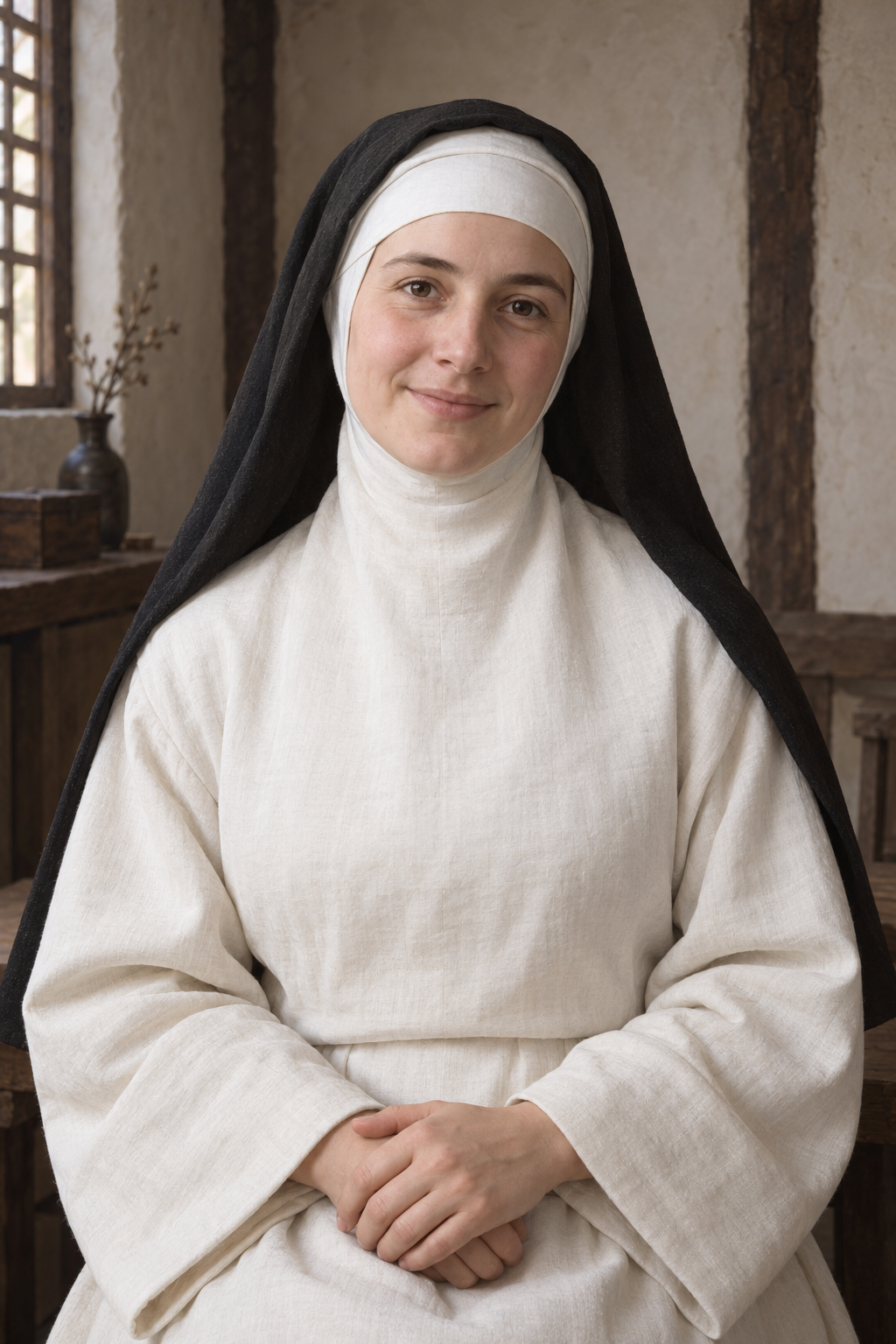
About Amandina of Schakkebroek
Pauline Jeuris grew up in Belgium and lost her mother in childhood. Taken into another household, she later joined the Secular Third Order of Saint Francis. Her sister Rosalie’s missionary vocation helped draw her toward the Franciscan Missionaries of Mary, where she became Marie Amandine.
After training in Marseille, she served in the Taiyuan dispensary, caring for sick children and people who came from outside the orphanage. The congregation remembers her cheerfulness and her care for Marie de Sainte Nathalie. She herself became seriously ill, recovered and resumed service.
The published correspondence describes a community working alongside Chinese caregivers, with limited language skills and resources. Plans for a hospital gave way to immediate needs, including famine relief. Amandine’s work belonged to this practical, often difficult setting.
Amandine was killed at Tai-yuan-fu on 9 July 1900, with European missionaries and Chinese members of the community. In 1943, the Congregation of Rites recognized their martyrdom. That finding is the Church’s judgment about the religious character of their deaths during the Boxer violence.
John Paul II canonized Amandine on 1 October 2000 with Augustine Zhao Rong and 119 companions. The canonization letter names her among the religious women and places this group within a much longer history of Christian witness in China. The 120 recognized people did not all die on the same day or in the same place.
Her birthplace is remembered locally at the Amandinamuseum in Schakkebroek. The museum occupies the family’s former home; living and sleeping rooms are presented in a historical style, while part of the barn became the Chinese Chapel. These arrangements connect a Belgian childhood with the distant mission in which her life ended.
The Flemish heritage inventory identifies the preserved nineteenth-century farmhouse, its yard and outbuildings. It also records the garden’s traditional arrangement and the site’s development into a place of regional pilgrimage. Her remembrance thus continues both in her congregation and in the place associated with her early life.
Wondering how to weigh the stories and sources? Learn how to read a saint biography.