Biography
José María Rubio
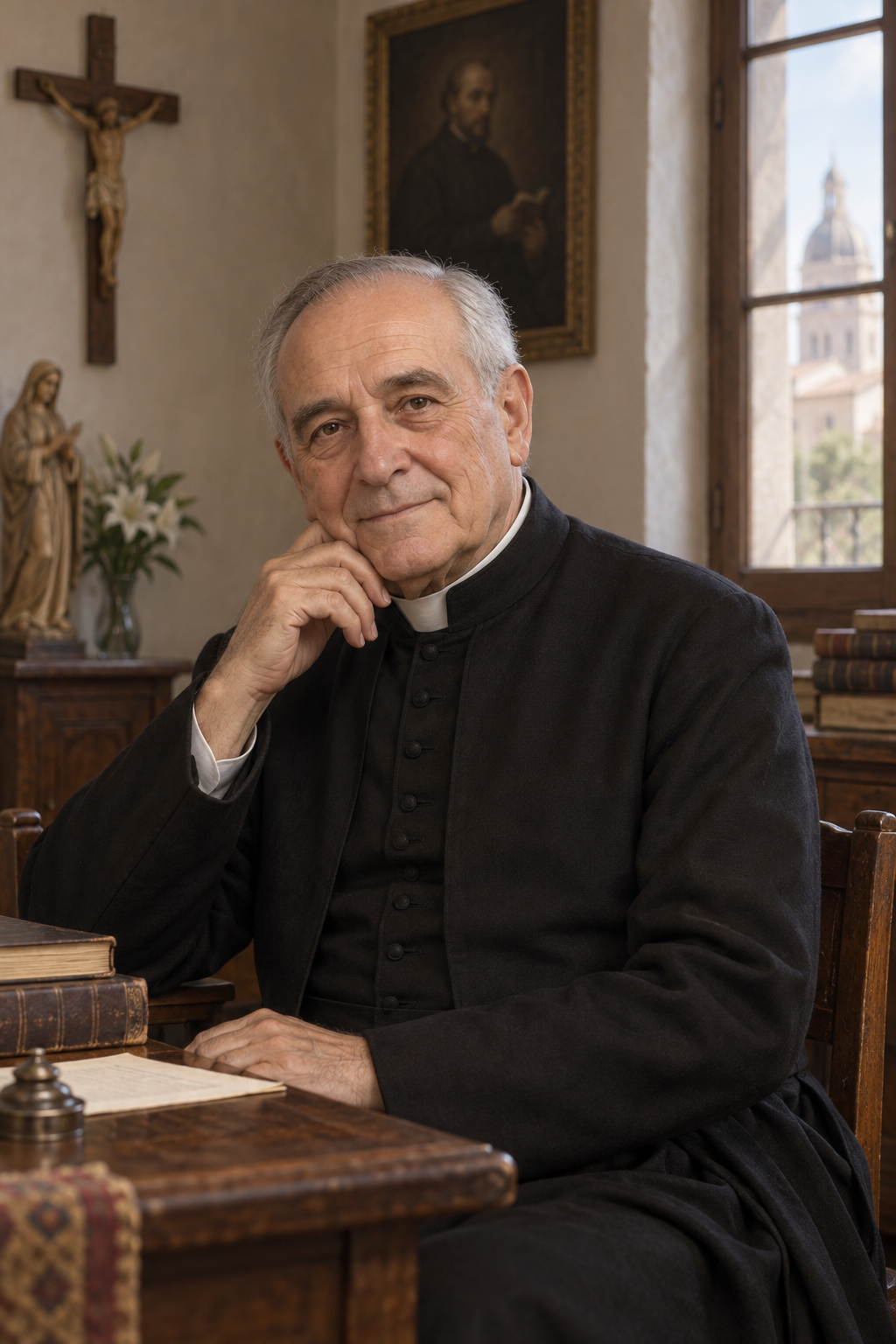
About José María Rubio
José María Rubio y Peralta was born on 22 July 1864 in Dalías, in the Spanish province of Almería. He grew up in a large farming family and began secondary studies in Almería. Drawn toward priesthood, he entered the diocesan seminary and later studied philosophy, theology, and canon law in Granada and Madrid. These years gave him both the formal education required for ordination and an early desire to join the Society of Jesus. The desire took much longer to realize. According to the Holy See's life, his care for an elderly priest was among the obligations that delayed his entry into the Jesuits.
Rubio was ordained in 1887. He first served in Chinchón and Estremera, communities outside Madrid, and then taught Latin, philosophy, and pastoral theology at the Madrid seminary. The Jesuit account says he wished to enter the Society of Jesus but delayed that step while caring for a priest who had helped his studies. This was not a waiting period without its own pastoral work: parish service and teaching already occupied many years. His path joined diocesan service to the religious life he had hoped to enter.
Rubio entered the Society of Jesus at Granada in 1906, after years as a diocesan priest. The Spanish Jesuit missal places him in the Madrid professed house from 1911 until his death. It describes preaching, spiritual direction, and the sacrament of reconciliation as central work there. The same liturgical account remembers him as a father to poor and abandoned people and credits him with forming lay collaborators to meet practical needs. This is the community's remembrance of his ministry. The clear chronology is late entry into the Jesuits, formation, and sustained Madrid service.
In Madrid, Rubio became known for patient attention in the confessional and for simple preaching. The Jesuit account remembers how he listened to people who sought counsel and how his language avoided elaborate rhetoric. Those activities were central to the work of a city priest: they gave individuals a place to speak and made teaching accessible beyond an educated audience. He also guided retreats. At his canonization, John Paul II recalled Rubio's long hours in the confessional and the Christians he formed through retreats. That judgment is a church remembrance of his ministry, not a claim that every later event can be traced to him.
Rubio's work extended beyond church buildings. A Madrid parish account recalls visits to poorer districts, including La Ventilla, and schools established with volunteers. It also remembers help for children, young people, workers, and sick neighbors. The account was republished from Catholic.net, so it is a later church remembrance rather than a firsthand record of each project. Still, it describes assistance organized with other people. A reader should therefore see the schools and care as shared work, rather than institutions he single-handedly built and ran. His concern reached families whose needs went beyond worship services.
The Jesuit account of Rubio pairs this social work with prayer and the Spiritual Exercises of Ignatius of Loyola. It presents a priest who spent time in the chapel and then went into the city to preach, listen, and serve. This is a religious interpretation offered by his own community, and it helps explain why the record of his public activity alone is incomplete. The point should not be inflated into a claim that he solved Madrid's poverty. He worked within the limits of a priest and the lay networks around him. His contribution lay in forming people who could keep helping their neighbors when he was elsewhere.
In the La Ventilla district, the Jesuits of Madrid continue to remember Rubio's evangelization and social promotion during the 1920s. Their present pastoral unit bears his name, a sign of local memory rather than evidence that every current project began with him. They mark his feast on 4 May. This later remembrance also helps locate his ministry: the name “Apostle of Madrid” arose from sustained work in a city and its poorer neighborhoods, not from an office or political title. The label is useful when its limits are clear. Rubio served many people, but the historical record does not supply a count of those he personally helped.
Rubio moved to Aranjuez shortly before his death on 2 May 1929. He was beatified in 1985 and canonized by John Paul II in Madrid on 4 May 2003. The pope's canonization homily joined his diocesan and Jesuit years and emphasized the Word, the sacraments, confession, and retreats. For modern readers, his enduring significance is this combination of steady personal ministry and organized assistance to neighbors in need. The free schools were the work of a group, and his Jesuit community still remembers him primarily as a pastor whose prayer informed his daily service. That is a more grounded account than treating the “Apostle of Madrid” title as a claim of extraordinary power.
Wondering how to weigh the stories and sources? Learn how to read a saint biography.