Biography
Juan Jacobo Fernández
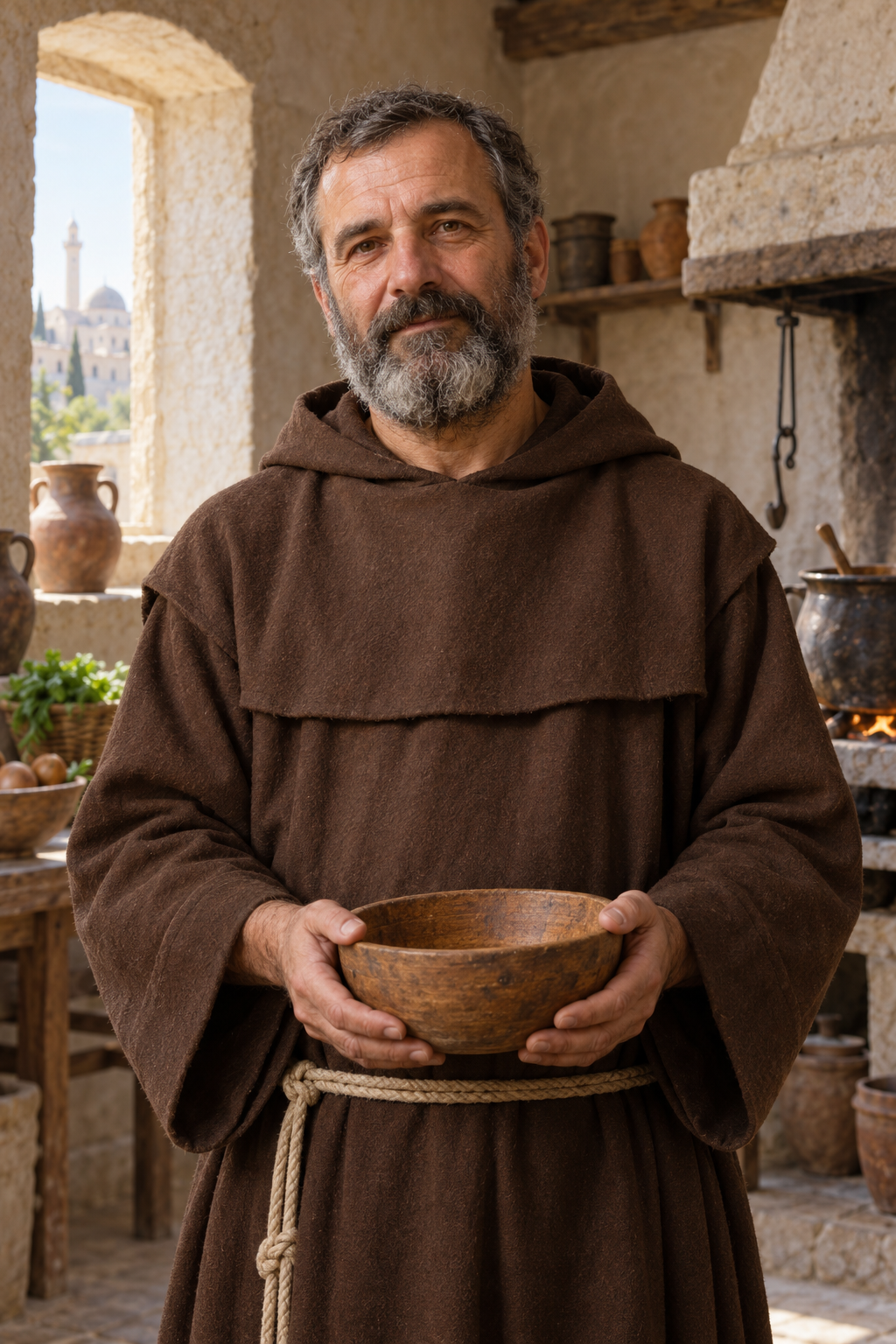
About Juan Jacobo Fernández
Juan Jacobo Fernández was a Franciscan lay brother from Galicia. Born in Moire in 1808, he entered the community at Herbón in 1831. He was not an ordained priest.
The suppression of religious houses in Spain in 1835 interrupted his community life. He returned to Moire but kept in touch with other displaced friars. When he learned that the Custody of the Holy Land needed missionaries, he applied in November 1858. He sailed from Valencia in January 1859 and reached Jaffa the following month.
A letter from the period of suppression offers a glimpse of his circumstances. Franciscan writer Natalio Saludes Martínez reports that in December 1835 Juan wrote to his guardian about his health and the belongings he had managed to retain. The letter belongs to a long interruption of convent life, rather than to his later years in Damascus.
At the Franciscan convent in Damascus, Juan served as cook. Another lay brother, Francisco Pinazo, cared for the sacristy. Saludes’s account describes their ordinary work within a community that also maintained a church, offered hospitality and taught children. Juan’s contribution was the daily support on which the other activities depended.
In July 1860 violence swept through the city’s Christian quarter. The Franciscan convent was attacked, and Juan was among those killed.
The apostolic letter issued for the martyrs’ beatification recounts that Juan and Francisco sought refuge in the bell tower. It describes them being attacked and thrown from its height. This is the Church’s formal account of their deaths, rather than a surviving statement written by either man.
The wider history also includes people who protected their neighbors. In the published abstract of their historical study, Abdelfettah Senoussi and Hamza Bougadoum describe the Muslim leader Emir Abdelkader sheltering Christians in his home and intervening against the attacks. Remembering this protection avoids attributing the violence to an entire religious community.
Juan died on July 10, 1860.
He was beatified with the other martyrs in 1926.
Pope Francis canonized the group on October 20, 2024. In his homily, the pope connected their witness with service and care for others, contrasting those commitments with the pursuit of status and power.
The Diocese of Ourense marked the canonization by recalling Juan’s work as a cook. Its bishop described that humble but necessary service as a way of living holiness in everyday tasks. Priests, relatives and other pilgrims traveled to Rome for the ceremony.
A thanksgiving Mass followed at Ourense Cathedral in November. The diocese also reported that Juan’s image had been restored and placed for veneration in the cathedral’s chapel of the Conversion of Saint Paul.
The martyrs’ liturgical commemoration is July 10.
Wondering how to weigh the stories and sources? Learn how to read a saint biography.