Biography
Ladislaus I of Hungary
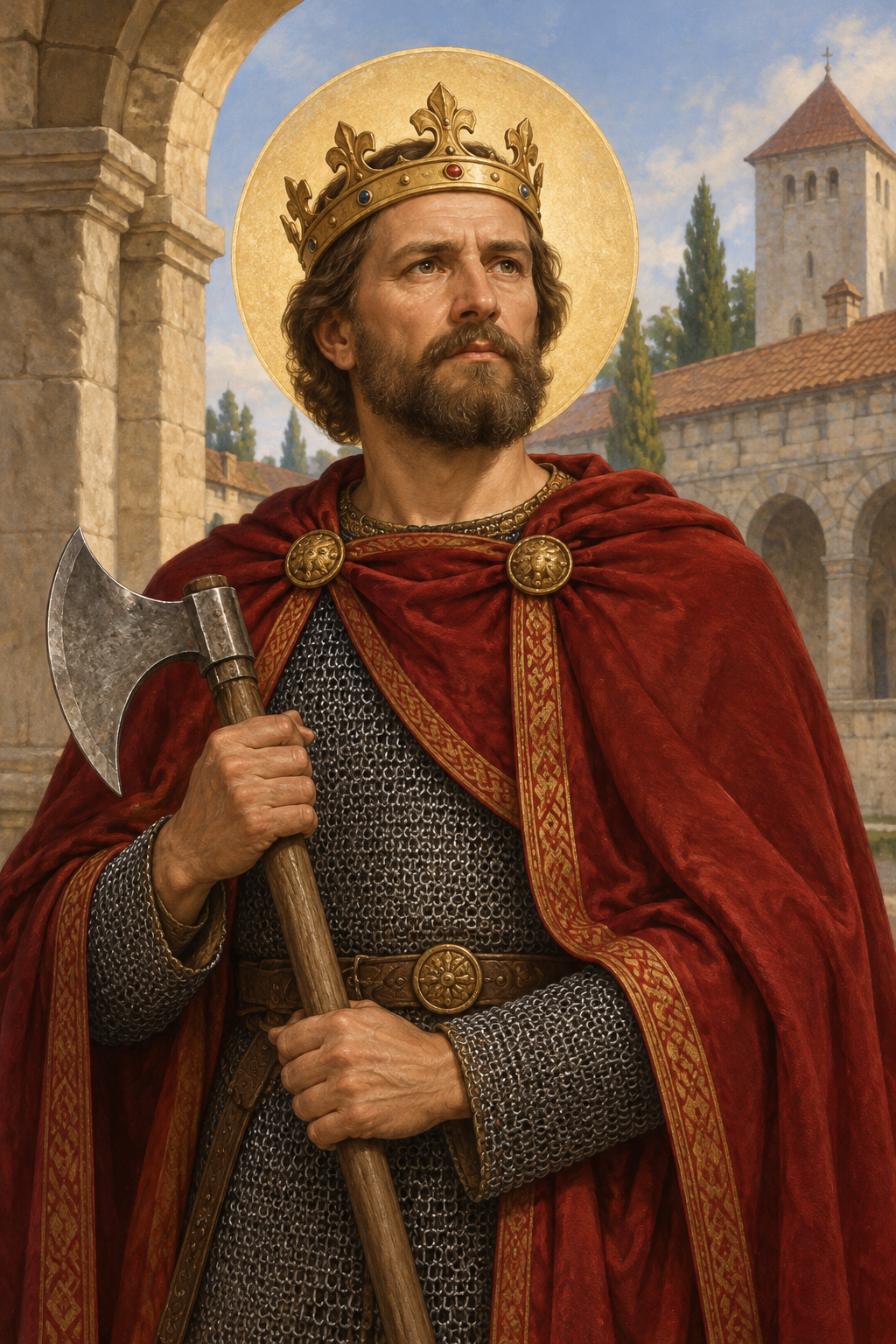
About Ladislaus I of Hungary
Ladislaus I ruled Hungary from 1077 to 1095 and was a son of King Béla I. Larousse places his birth around 1040.
Other accounts place his birth later, and the precise year remains uncertain. Hungarian devotion came to remember him as a protector of the country.
The struggle for the throne shaped his early public life. His family contested the rule of Solomon, and his brother Géza became king before him. After Géza’s death, Ladislaus succeeded to the throne. The conflict with Solomon continued into his reign; Solomon was eventually imprisoned and later released. These struggles form part of his biography alongside the later accounts of his piety and generosity.
His reign also extended Hungarian power beyond its earlier borders. In 1091 he intervened in Croatia. This expansion brought him into conflict with Pope Urban II and helped draw him toward the emperor Henry IV. The political disagreement complicates any picture of his reign as an uninterrupted partnership with the papacy.
Within the kingdom, Ladislaus helped organize ecclesiastical life. At the Council of Szabolcs in 1092, he presided over an assembly that included bishops, abbots and secular leaders. Its decisions concerned church property, tithes, marriage, the conduct of clergy and participation in worship. Historian of canon law Szabolcs Anzelm Szuromi emphasizes that these measures did not simply adopt the entire Gregorian reform program. They drew on older Western canonical traditions while addressing local circumstances.
The surviving laws also show the coercion through which royal and religious order were enforced. Book II prescribes hanging for people caught stealing in specified circumstances and blinding for those who escaped into a church. One provision could reduce a convicted free person’s children over ten to servitude. Children below that age retained their freedom under the same provision of the law. The synodal rules prohibited Jewish households from keeping Christian wives or Christian people in servitude, required the relocation of baptized Muslims who returned to their former religion, and prescribed beating for failure to attend Sunday or major feast worship, with an exception for distant villages. These provisions belong to the record of his government as surely as his church foundations do.
The legal texts distinguish between free people and those already enslaved. Their penalties could affect a convicted person’s family as well as the individual. Such distinctions show the unequal social order that these measures were intended to preserve.
Ladislaus supported the recognition of earlier Hungarian holy figures. The Military Ordinariate’s account recalls the canonizations of Stephen, Emeric, Gerard, Andrew and Benedict in 1083. It also records his later support for the antipope Clement III. His religious commitments therefore existed within the contested loyalties of eleventh-century European politics, rather than outside them.
He died at Neutra, now Nitra, on July 29, 1095. His subsequent veneration centered on his tomb at Várad, now Oradea. Canonization followed in 1192, during the reign of Béla III. The long interval matters: much of the familiar image of Ladislaus was shaped by people remembering him generations after his death.
Historian László Veszprémy distinguishes that later image from the king’s own lifetime. Medieval accounts associated Ladislaus with leadership of the First Crusade, but he died before the proclamation at Clermont. This story expresses later ideals of Christian kingship rather than an event he could have taken part in. Veszprémy also cautions that the papal correspondence surrounding his canonization has not survived; proposed dates for the preliminary negotiations remain reconstructions.
His shrine also had a judicial role. Veszprémy describes the association of his tomb and relics with ordeals at Várad, where crowds gathered by the late twelfth century. The oldest surviving fragments of the local ordeal register date from 1205.
Oradea’s diocesan account describes the continued care of his relics and the renewal of public devotion. In 1775, Bishop Ferenc Zichy obtained a fragment of his skull from Győr for Oradea. A later reliquary was associated with Bishop Lőrinc Schlauch. After political change at the end of the twentieth century, processions honoring Ladislaus resumed. These objects and gatherings connect present communities with a cult whose forms have changed over centuries.
His feast is kept on June 27. Hungarian devotion names him as patron of the country and associates him with soldiers, knights, judges and lawmakers, as well as the protection of women’s chastity. The Military Ordinariate specifically identifies him as patron of infantry soldiers. These are particular devotional associations, rooted in his reception as a royal protector and lawgiver.
The diocesan tradition remembers him through both narrative and images: the royal saint appears in stories of deliverance and in representations of a crowned warrior. Such works preserve the hopes of later worshippers, rather than a contemporary portrait. His memory remains tied to Oradea’s religious life, where relics, processions and the story of the king continue to give public form to devotion.
Wondering how to weigh the stories and sources? Learn how to read a saint biography.