Biography
Laetus of Micy
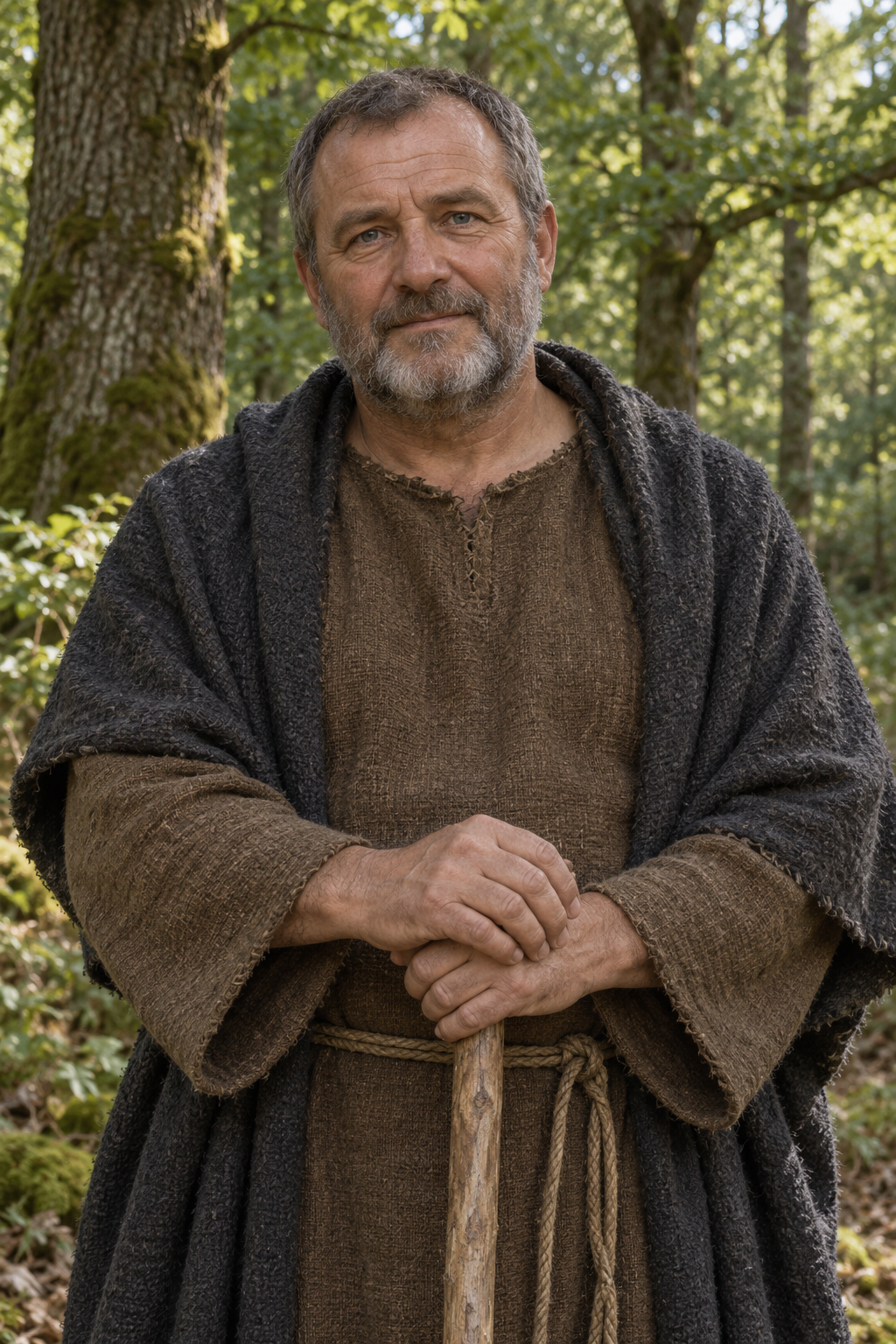
About Laetus of Micy
Laetus, known in French as Lié or Lyé, is remembered as a hermit of the forest north of Orléans. Later tradition places him among the monks of Micy before his withdrawal into solitude. The New Catholic Encyclopedia assigns him to the sixth century, while acknowledging that the story of his life is largely legendary and that his clerical rank is uncertain. Nominis gives his death as about 534, a traditional date within this uncertain chronology.
The evidence for his cult is stronger than that for these early episodes. Albert Poncelet points to Usuard’s ninth-century martyrology, which commemorates Laetus as a priest in the territory of Orléans. He also notes the local veneration of the saint’s body at the village that bears his name.
Poncelet dates that Life to the eleventh century because its author speaks of Bishop Odolric as a contemporary. He demonstrates that most of its narrative follows the Life of Viator of Sologne, often with only small changes. This literary borrowing does not, in his judgment, make the two saints one person. Their cults belonged to different places. It does mean that stories about Laetus’s childhood and companions cannot be accepted as independent testimony.
A passage near the end of the Life turns from those borrowed adventures to the relics. It says that Bishop Ermentheus brought Laetus’s body to Pithiviers with neighboring bishops and a gathering of the faithful, and that a church was built there to honor him. The narrator presents the shrine as a place of miracles.
Cécile Coulangeon discusses this transfer in her study of medieval religious architecture, placing Ermentheus’s episcopate around 941–970. The account helps explain the importance of Laetus’s relics in Pithiviers. She also warns that the history of the relic collections and their distribution between the town’s churches raises questions.
At Saint-Lyé-la-Forêt, local memory remained attached to the hermit after the reported transfer. The regional heritage account identifies him as the commune’s patron and describes relics in a shrine at the foot of his altar. It distinguishes the former chapel associated with him from the surviving parish church, which has undergone later rebuilding.
Nominis lists his local Catholic commemoration on 5 November and records continuing veneration in the diocese of Orléans.
Wondering how to weigh the stories and sources? Learn how to read a saint biography.