Biography
Parthenius of Rome
About Parthenius of Rome
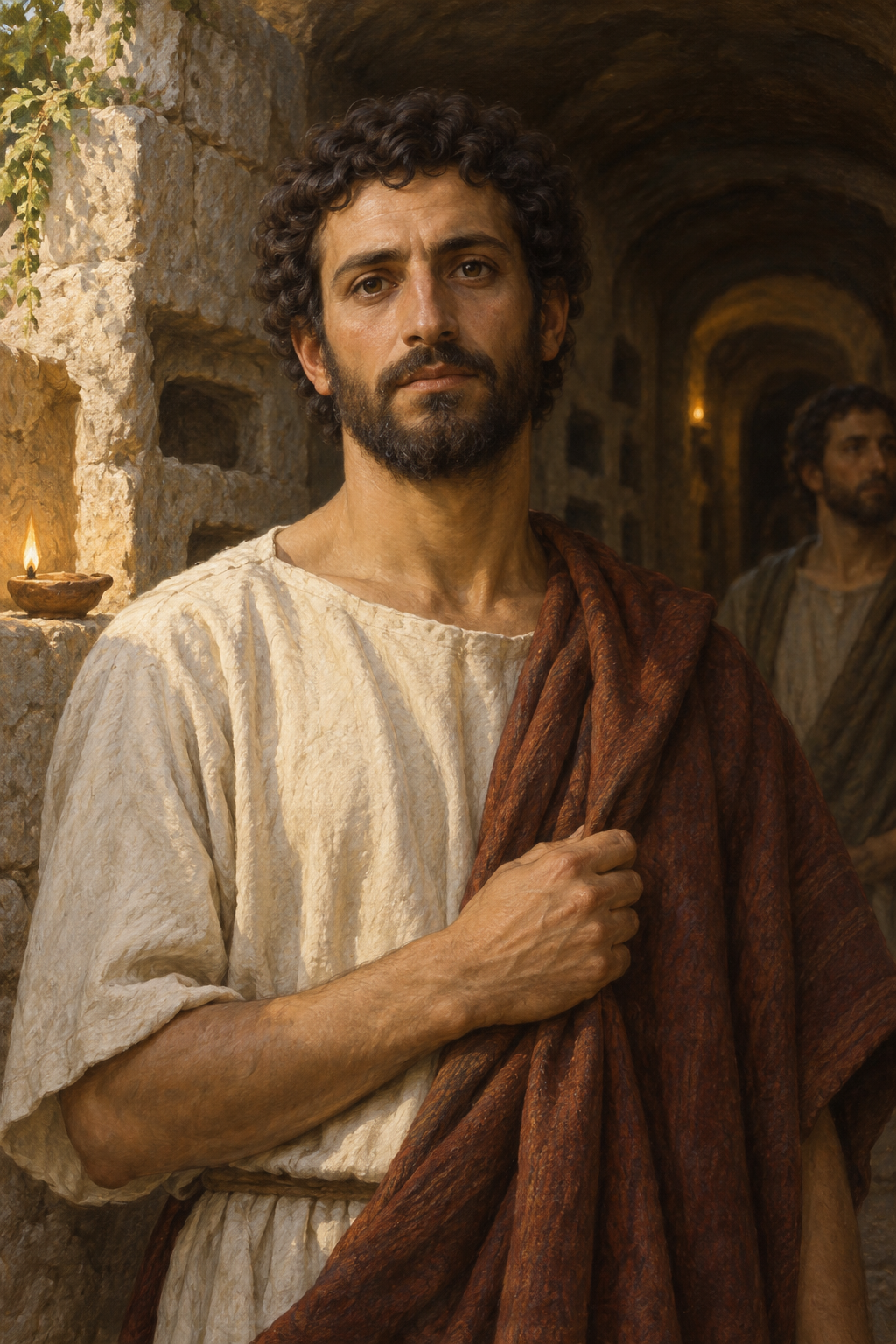
Parthenius of Rome is known above all through his association with another martyr, Calocerus, also called Calogero. Their memory is attached to the Catacombs of Saint Callixtus beside the Appian Way. The site's custodians describe a small burial chamber near the crypt of Pope Eusebius. On plaster beside its entrance, graffiti name Parthenius and Calocerus separately and call each a martyr. This is unusually tangible evidence for a person whose individual story is otherwise obscure. The inscriptions anchor the names and their veneration to a physical place. They do not provide an age, birthplace, occupation, date of death, or account of the event that brought either man there.Christian communities continued to remember the two men together. Vatican News lists them among the saints of May 19 as martyrs on the Via Appia. An older Roman martyrology also places them at Rome along that road, and a Catholic historical directory discusses an early burial list and a later pilgrim account that connect the pair with the cemetery. These witnesses explain why the catalog's May 19 observance belongs to the Roman Parthenius. A feast is the day a community commemorates a saint; it need not be treated as independent proof of the exact day he died. Their shared burial memory is firmer than the personal episodes supplied by later narratives.A later passion presents Parthenius and Calocerus as Armenian brothers employed in a wealthy Roman household. It describes accusations against them, a public profession of Christian faith, and a dramatic execution. An older martyrology transmits another court-service version. These accounts are important to the history of devotion, but the Catholic historical directory itself calls the surviving passion legendary and says that little is known securely about the men. Neither the tomb graffiti nor the early commemorative notices independently verify their birthplace, family relationship, service in a palace, or the reported details of their deaths. Those scenes should therefore be read as later tradition, not as established biography.The chronology illustrates the problem. The Catholic directory reports that the *Depositio Martyrum* associates their memory with 304, during the age of Diocletian, while the passion sets the trial under Decius around 250. The catacomb guide cautiously says they may have been victims of Diocletian's persecution. Some scholars have proposed a later transfer of the bodies to reconcile the accounts, but that explanation depends on assumptions the directory questions. The catalog therefore leaves Parthenius's death year blank. It likewise does not claim a particular cause or method of execution. His classification as a martyr rests on the named burial graffiti and enduring church commemoration, not on accepting every detail of the passion.Parthenius's recorded life is thus brief but not empty. A visitor to the Catacombs of Saint Callixtus can encounter a site where the two names were preserved on the wall as martyrs. The May 19 commemoration keeps their joint memory in the church's calendar. Beyond that, the surviving witnesses do not allow a continuous account of his childhood, work, ministry, or last days. Keeping those limits visible honors the early Roman community's witness without turning a later literary passion into an eyewitness report. The name “of Rome” identifies the martyr attached to the Appian Way and helps distinguish him from other saints called Parthenius, especially the bishop of Lampsacus.
Wondering how to weigh the stories and sources? Learn how to read a saint biography.