Biography
Peter Damian
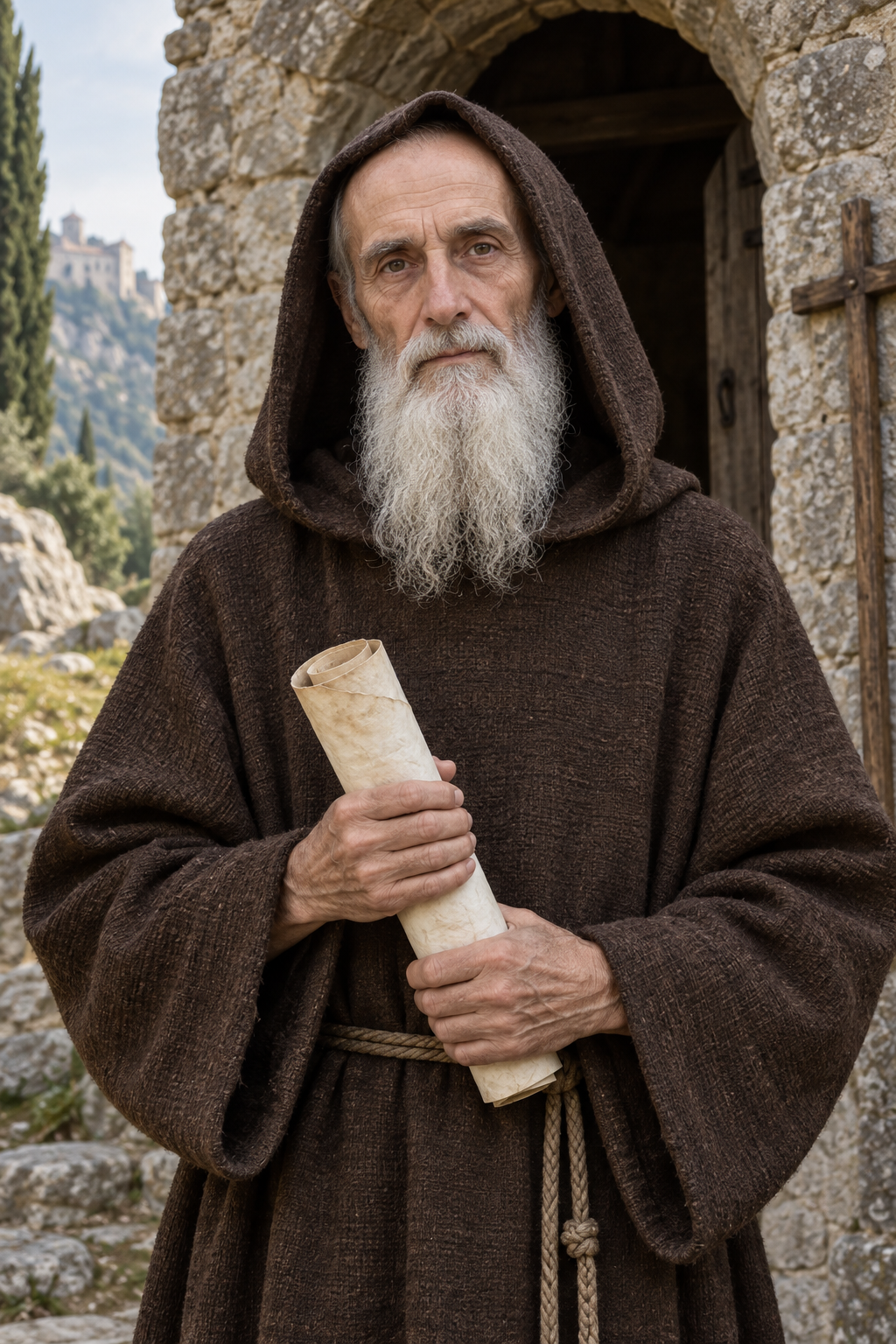
About Peter Damian
Peter Damian was a teacher who became a monk, then a cardinal called away from solitude to help reform the Church. Born at Ravenna around 1007, he lost his parents during childhood and depended on relatives for care and schooling. His brother Damian helped provide the education that opened a different future for him. Peter studied at Faenza and Parma and became a teacher while still a young man. His command of Latin would remain a working tool throughout his life: he wrote letters, sermons, saints' lives and poems. The move from the classroom to Fonte Avellana did not end that intellectual work; it placed it within a community devoted to prayer.
At the hermitage he embraced penance so severely that his health suffered. He used a period of recovery to study Scripture and subsequently taught his fellow monks. Other communities also sought his instruction. As prior, he combined demanding religious observance with practical adjustments, including daytime rest to compensate for the night office. He promoted bodily penitential practices that met opposition even among Christians of his own time, and later had to restrain excessive enthusiasm within his circle. These austerities belong to his historical setting, not to a program readers should copy. The account of his leadership also includes the acquisition of books and liturgical vessels: renunciation did not mean abandoning the community's material needs.
Reform brought him into disputes where personal severity did not always produce the harshest institutional answer. In the Liber Gratissimus, written in 1052, he addressed ordinations performed by bishops implicated in simony, the buying and selling of church office. He took a mediating position against more uncompromising reformers. His own ordaining bishop had subsequently been accused of simony. In 1049 he had addressed the Liber Gomorrhianus to Leo IX, attacking sexual misconduct among clerics, including sex between men. That polemic belongs to his campaign for clerical discipline; it should not be recast as a neutral modern account of sexuality. He also pressed for reform through correspondence, visits to bishops and advice on appointments.
Peter's theological work could begin with an ordinary conversation. A discussion at a meal at Monte Cassino prompted the questions treated in On Divine Omnipotence, a letter to Abbot Desiderius and his community. Could God restore what had been lost, or make a past event never have happened? Peter defended God's power while insisting that doing evil was not an achievement required of omnipotence. The Stanford Encyclopedia's analysis challenges the familiar picture of him as simply hostile to reason. He did not consistently treat logical contradiction as something God could accomplish. His sometimes difficult argument tried to protect divine freedom without turning God into the author of evil.
In 1057 Pope Stephen IX appointed him cardinal and bishop of Ostia. The responsibilities were concrete and frequently contentious. He went to Milan, where disputes over clerical conduct and the influence of powerful families had divided the city. At Cluny he defended the monastery's privileges against the local bishop. He also supported Alexander II against a rival claimant to the papacy. In 1069 he traveled to Frankfurt to oppose Henry IV's intended divorce. Another journey took him to the dedication of Monte Cassino's new church in 1071. Retirement from episcopal responsibilities did not mean that requests for his help stopped.
The connection between solitude and public service was part of his theology, not merely an interruption of it. In Dominus Vobiscum he described the whole Church as present in each of its members. For a hermit, withdrawal therefore did not erase belonging or responsibility. Benedict XVI's letter to the Camaldolese emphasizes how Peter addressed different demands to different audiences. Monks were called to wholehearted commitment; bishops and other church leaders to detachment from honors; priests to integrity and personal poverty. His ideal of reform reached beyond changing officeholders. It asked whether the exercise of authority and the use of possessions matched the faith those leaders professed.
Fonte Avellana retains reminders of the community that sustained this work. The monastery attributes its eleventh-century cloister to Peter. Monks gathered there in silence before worship after returning from their cells or their tasks. A room now commemorates John of Lodi, Peter's trusted scribe, who later succeeded him as prior. The scriptorium bearing Peter's name is not simply his unchanged workplace: the monastery dates the surviving room to the twelfth century, replacing an earlier one. The distinction matters when visiting a place whose buildings preserve several periods of monastic life.
His last journey again took him away from the hermitage. Returning from a mission, he died at Faenza during the night of February 22–23, 1072, according to the account followed here. Bose remembers him as both a monk and a pastor, whose forceful writing coexisted with efforts to resolve painful conflicts. His remains are kept in Faenza Cathedral. The year is not beyond dispute: historian John Howe has argued for 1073 instead of the commonly accepted 1072.
Wondering how to weigh the stories and sources? Learn how to read a saint biography.
Explore similar vocations
Prayers for Peter Damian
Peter Damian: prayer petition
Accorde-nous, Dieu tout-puissant, de suivre les exemples et les exhortations du saint évêque Pierre Damien.