Biography
Peter Phan Hữu Đa
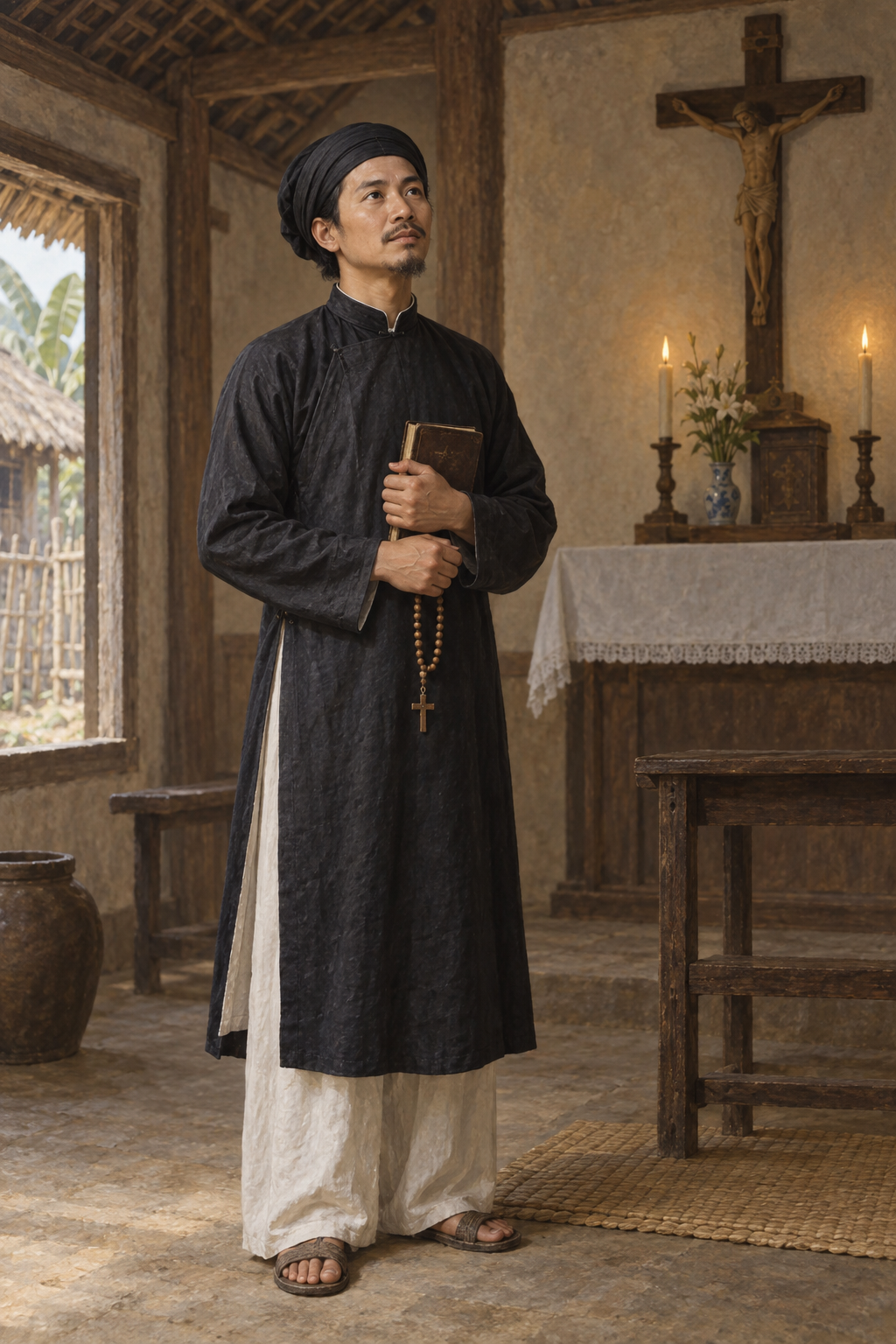
About Peter Phan Hữu Đa
Peter Phan Hữu Đa was a lay Catholic in northern Vietnam during the reign of Emperor Tự Đức. The Catholic Bishops’ Conference of Vietnam gives his birth as around 1802 and identifies Ngọc Cục, in Nam Định province, as his home village. The source connects the place with the present-day parish of Ngọc Tiên in the Diocese of Bùi Chu, but it does not provide a fully verified current civil administrative hierarchy. The biography therefore retains the historical village and province names and does not infer a modern district or province from the church parish.The bishops’ account describes Đa as a carpenter who married and supported a family. It says that he cared for his children and took part in the daily life of his parish, including ringing the church bell and preparing liturgical objects. These details present him as a layman whose faith was lived within family and work. The Vatican’s official list of the Vietnamese martyrs classifies Pietro Da simply as a layman. Neither source calls him a catechist, so that title is not used here.In 1861, during the enforcement of anti-Christian measures, Đa was arrested on June 27 and taken to the district seat of Xuân Trường. The bishops’ account says he was transferred six days later to a prison at Quá Linh. It places these events within the persecution and dispersal policy imposed on Christian communities. The record is local and ecclesiastical, written as a saint’s biography, so it is used for the sequence and names it supplies while avoiding details it does not establish about his trial or the legal process.The bishops’ biography reports that officials pressured Đa to step on a cross and that he refused. It preserves a short reply in which he distinguishes his willingness to accept release from a willingness to deny his faith. The quotation is presented by the modern church source as part of his remembered testimony; it is not independently preserved as a contemporary courtroom transcript. The account says that on June 17, 1862, he was taken to be burned alive. When the flames were dying, soldiers believed he was still alive and beheaded him. His wife and other Christians buried his body at the execution site; the next year, they transferred it to his home village.The Vatican list uses the short form Pietro Da and identifies him as a layman among the Vietnamese martyrs canonized on June 19, 1988. The catalog uses the fuller Vietnamese name in English transliteration and preserves the Vatican form in the source record. The date in the profile is June 17, not the unrelated April 17 inherited from the earlier index entry.The Church of Vietnam remembers Đa as one of its lay martyrs of the nineteenth-century persecutions. The historical sources support his occupation, marriage, arrest, refusal to renounce the faith, execution date, and later recognition, while leaving many personal details unknown. His story should not be expanded with a catechist role or other activities unless new evidence is found. The portrait is a modern imaginative depiction of a Vietnamese layman in a domestic church setting; it is not a historical likeness and does not claim to reproduce his clothing exactly.
Wondering how to weigh the stories and sources? Learn how to read a saint biography.