Biography
Philemon
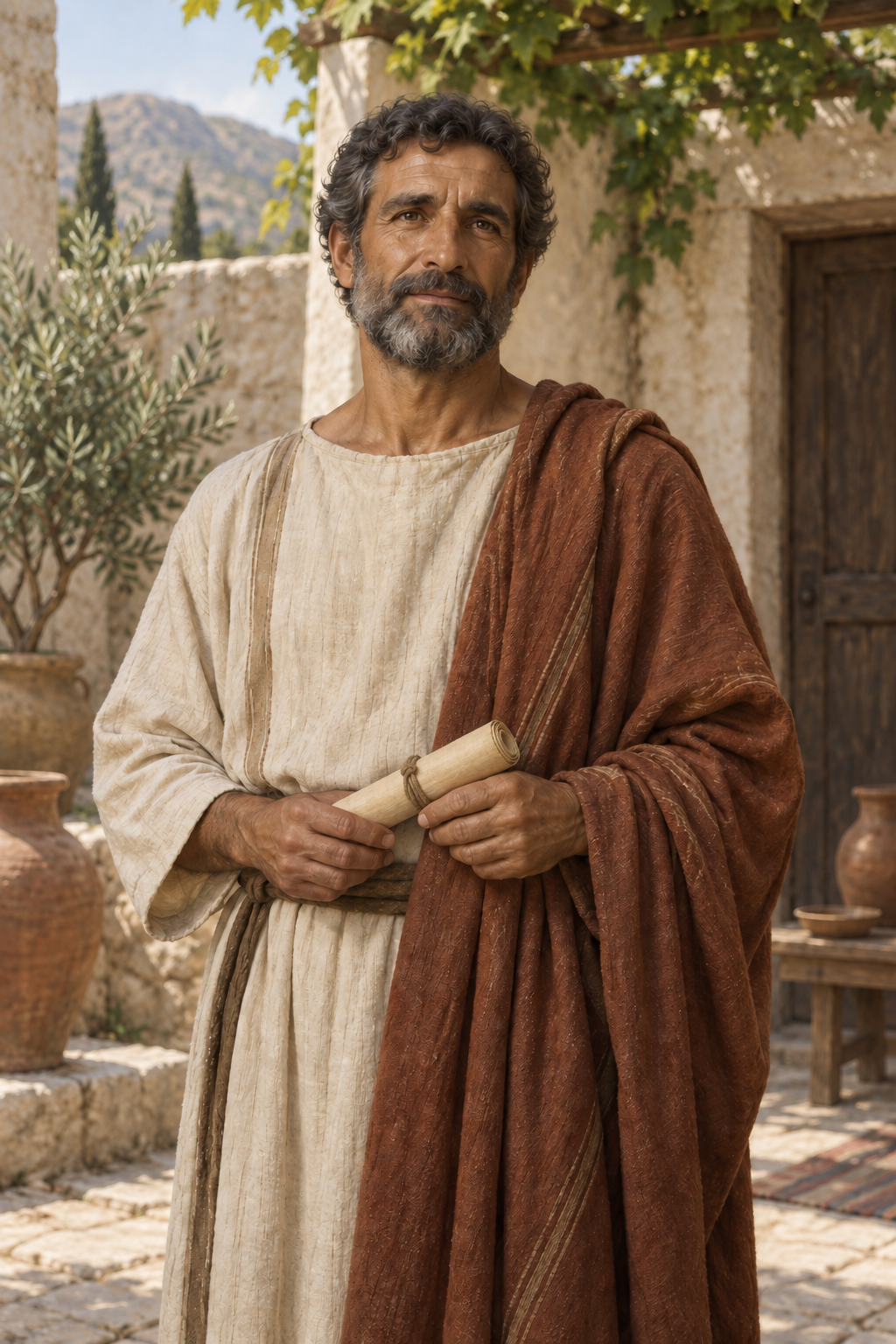
About Philemon
The strongest evidence for Philemon is a short New Testament letter written to him by Paul. Its greeting calls him a coworker and also names Apphia, Archippus, and an assembly meeting in a house. The United States Catholic Bishops' translation notes that the house and the enslaved Onesimus more likely belonged to Philemon, while acknowledging another interpretation involving Archippus. That uncertainty matters: the text presents Philemon as the principal addressee, but it does not provide a legal document identifying every person in the household. Church calendars associate him with Colossae, and the bishops' introduction places Onesimus in that city. The letter gives no birth date, exact birthplace, or physical description of its recipient. This profile starts with those limits rather than with a later, fuller legend.Paul writes on behalf of Onesimus, whom he calls his spiritual child. The letter describes a prior separation and asks Philemon to welcome Onesimus as a brother. Paul offers to repay any debt and appeals rather than simply issuing a command. The text is moving, but its social setting is enslavement. The USCCB introduction names Onesimus as a slave and explains that Paul did not directly abolish slavery in the letter. Philemon's eventual decision is not recorded in the text. It would be inaccurate to turn Paul's request into a proven emancipation or to replace Onesimus's constrained position with a cheerful reunion scene. The record can instead state the appeal, the injustice embedded in the setting, and the fact that the response remains unknown.Later Christian communities remembered Philemon together with Apphia and Archippus. The Orthodox Church in America calls Apphia his wife and Philemon a bishop at Gaza, and tells a story of their martyrdom under Nero. Its November 22 observance is direct evidence of Orthodox commemoration. The letter itself calls Apphia a sister in the faith and never explicitly identifies her as Philemon's wife. It does not call Philemon a bishop or narrate a death. These differences do not erase the traditions; they identify what kind of evidence supports each claim. This profile mentions the wife, episcopal office, and martyr narrative as later church memory and does not turn them into structured historical relationships, an office, or a death date.The two main calendar traditions reviewed here meet on November 22. The older Roman martyrology lists Philemon and Apphia at Colossae on that date, and a current French Catholic church directory repeats it. The OCA directly commemorates Philemon on November 22. By contrast, the inherited February 16 Roman page opens with Onesimus and refers to Philemon only because Paul's letter bears his name. A mention in someone else's calendar notice is not Philemon's own feast. The Catholic field is therefore corrected to November 22 and the Eastern Orthodox field added for the same day. The older Roman entry's account of death under Nero remains a tradition, not proof of an exact event date or place.Philemon's place in Christian memory is shaped by one surviving request: a leader in a small community was asked to reconsider how he would receive an enslaved person. The letter's preservation lets readers see both an appeal to kinship and the institution that made the appeal necessary. Its existence does not disclose whether Onesimus was freed or what happened to Philemon afterward. The later calendars give him a saint's observance, and the Orthodox account expands the life into a mission and martyrdom, but neither replaces the first-century letter as evidence for his own words and choices. The imaginative portrait shows a man with a tied scroll in a generic domestic setting. It avoids portraying Onesimus or staging a response that the evidence does not supply.
Wondering how to weigh the stories and sources? Learn how to read a saint biography.