Biography
Sebaldus
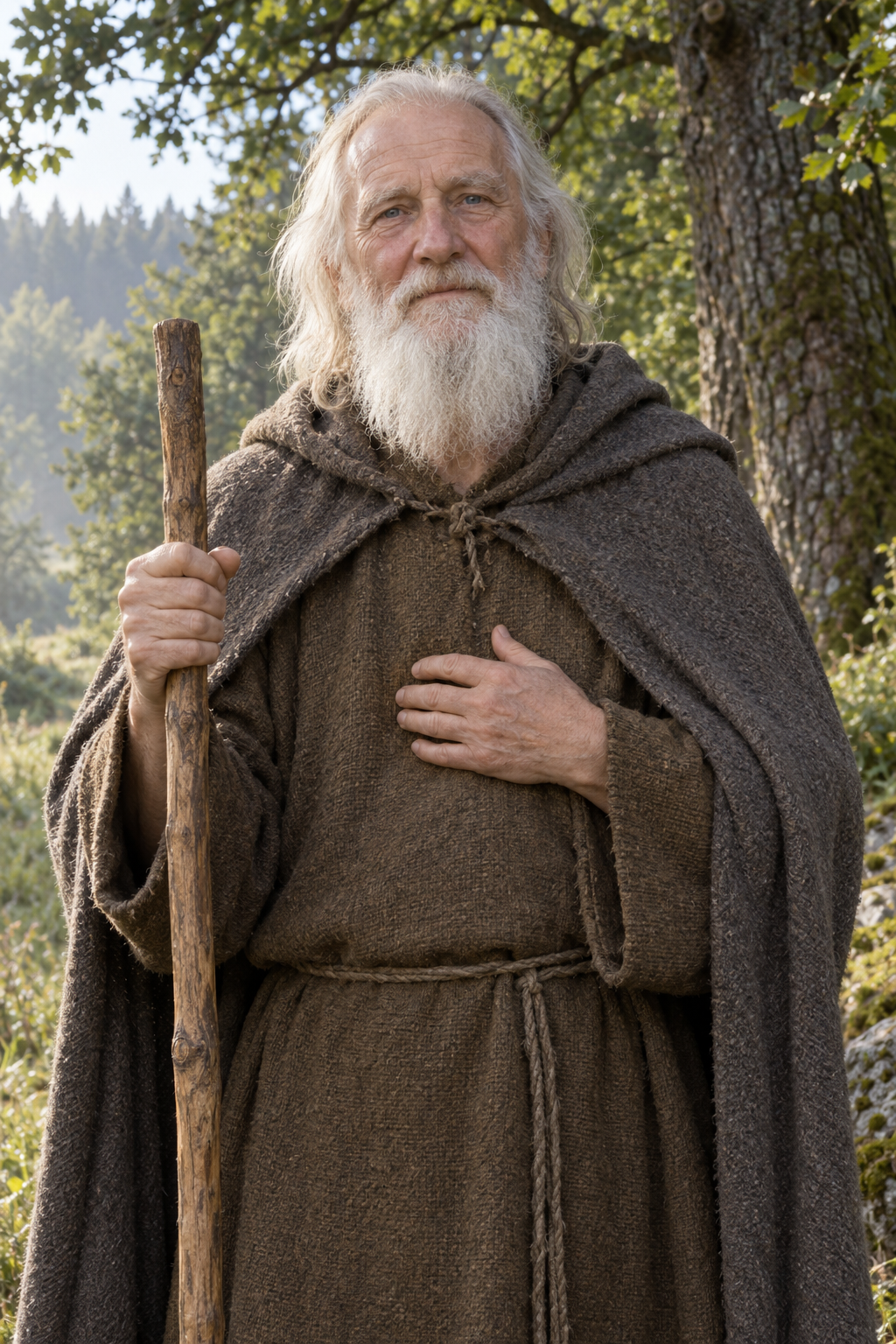
About Sebaldus
Sebaldus is remembered as a hermit in the region of Nuremberg. Hubertus Seibert’s study finds evidence for his historical existence in three sources associated with 1070 and 1072, but describes his origins and earlier life as entirely unknown. He probably belonged to the religious world of the eleventh century.
The familiar story of a Danish prince who left his marriage to become a pilgrim appears in late medieval legend. It gives a much fuller career than the early evidence preserves.
His grave became the center of a growing civic devotion. Martin Brons’s account describes how Nuremberg’s citizens made Sebaldus a patron associated with the city’s identity and independence. The church that bears his name grew from the earlier chapel associated with his burial. His later legends expressed devotion and civic aspirations rather than supplying a secure early biography.
On 26 March 1425 Pope Martin V formally declared him a saint. The surviving bull responds to the petition of Nuremberg’s civic authorities and citizens. It recognizes the existing devotion, orders his name entered among the saints and establishes 19 August as his feast. The document also supports the church connected with his shrine.
Augsburg’s diocesan notice names him patron of Nuremberg and of livestock, and records his invocation against cold. Bamberg’s calendar keeps 19 August as a feast in Nuremberg and a memorial throughout the archdiocese.
His memory survived the Reformation in Nuremberg. Brons notes that the relics associated with him remain in the church that is now Protestant.
Wondering how to weigh the stories and sources? Learn how to read a saint biography.