Biography
Stephen of Cuneo
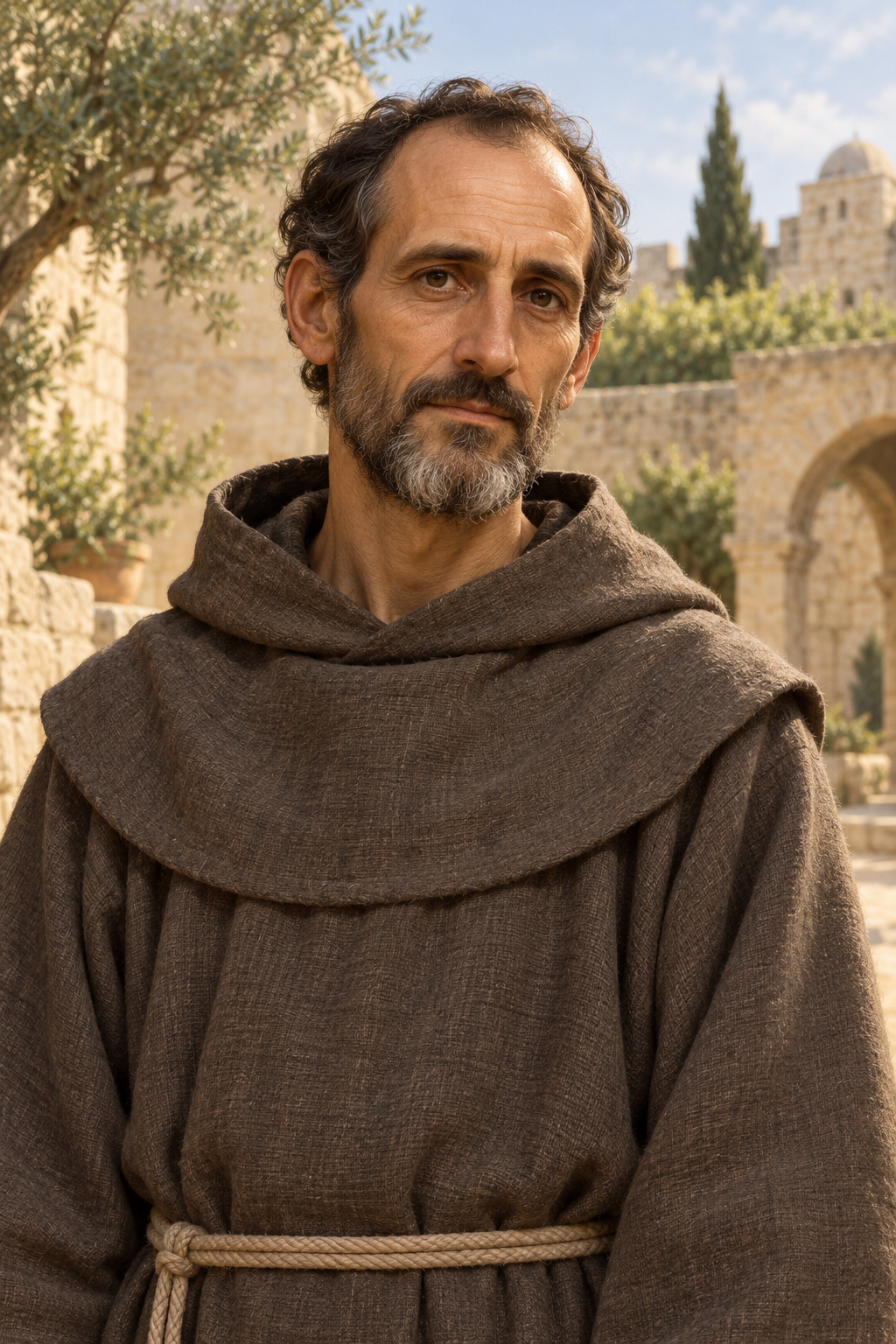
About Stephen of Cuneo
Stephen of Cuneo was a Franciscan priest killed in Jerusalem with Nicholas Tavelić, Deodatus of Ruticinio and Peter of Narbonne on November 14, 1391. The four belonged to the community on Mount Zion. They are remembered together on the anniversary of their deaths and were canonized by Paul VI on June 21, 1970.
Very little can be established about Stephen before those final events. Historian Francesco Carta traces the accounts to reports associated with witnesses, including the Franciscan superior Geraldo Calvet. One report survives through a manuscript tradition connected with Šibenik. These sources preserve his membership in the Franciscan province of Genoa, but give differing forms of his place-name. His familiar designation as Stephen of Cuneo does not settle his birthplace.
Only the Šibenik account describes his earlier career: eight years in the Corsican vicariate followed by eight in Jerusalem. Carta treats this as the basis for a reconstructed journey to the Holy Land around 1383. No birth date is known. A much later writer claimed a Corsican origin, adding to the uncertainty rather than providing a secure account of his childhood.
The friars prepared a written argument defending Christian teaching and attacking Islam. According to the Dicastery’s account, they consulted theologians before presenting it to the qadi of Jerusalem on November 11. They refused to retract, were imprisoned and beaten, and were killed three days later. Their mission involved a public religious confrontation which they knowingly undertook.
Paul VI addressed that difficulty directly at their canonization. He acknowledged that deliberately provoking one’s death raised a serious objection to calling it martyrdom. He interpreted their action through the Franciscan desire to imitate Christ and their willingness to give their lives for their faith, while recognizing the imprudence of their approach.
The pope did not present confrontation as a model for contemporary relations with Muslims. In the concluding part of his homily, he rejected an imitation that would deepen hostility. He instead recalled the Second Vatican Council’s appeal for mutual understanding and common work for justice, peace and freedom. Stephen’s commemoration thus carries both the memory of his conviction and a searching question about how religious witness is expressed.
Wondering how to weigh the stories and sources? Learn how to read a saint biography.