Biography
Swithun Wells
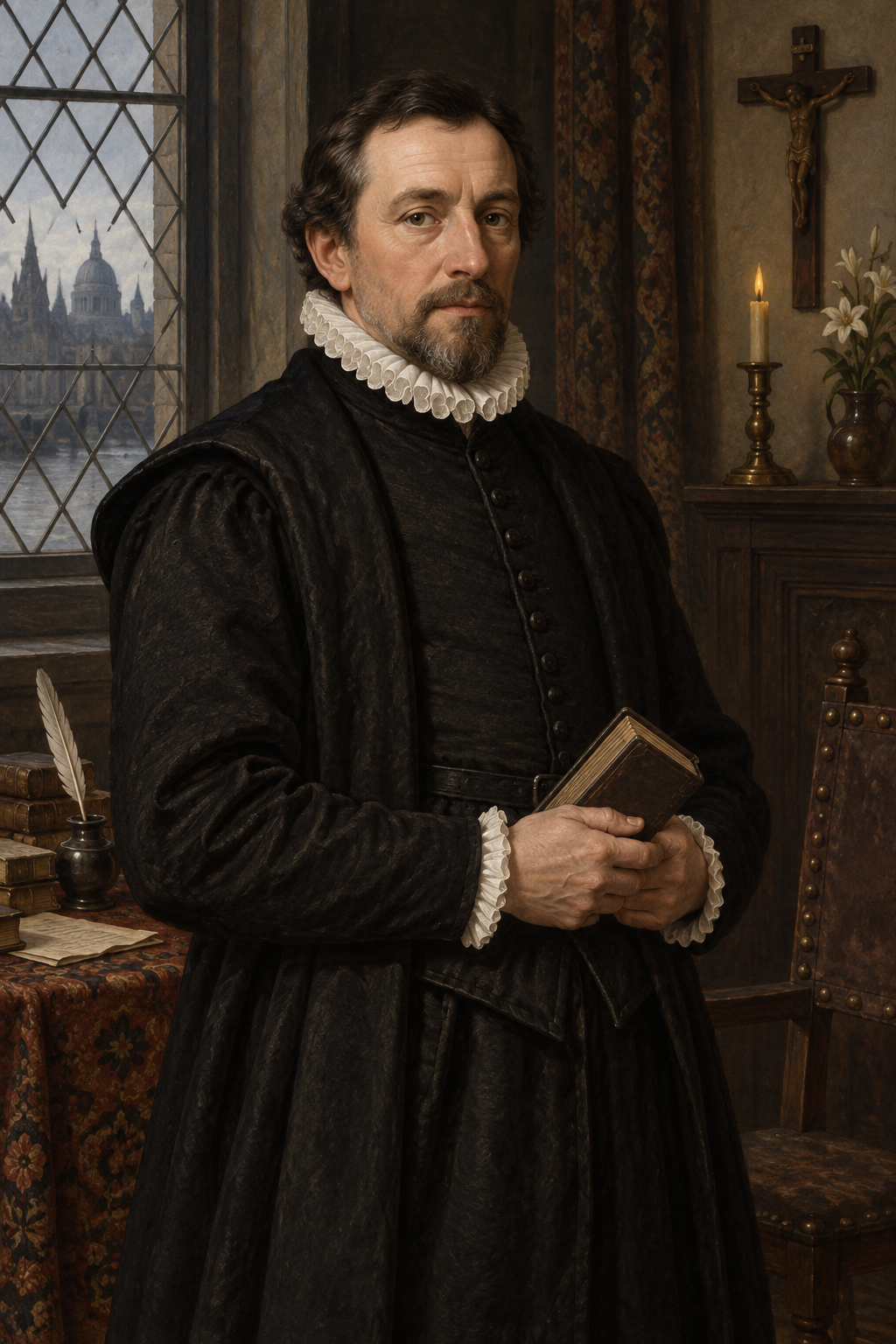
About Swithun Wells
The Catholic Encyclopedia places Wells’s birth at Brambridge, Hampshire, about 1536, and identifies him as the youngest son of Thomas Wells. It reports that he spent years conforming to the established church before reconciling with Catholicism around 1582 or 1583. For about six years he taught young gentlemen at Monkton Farleigh in Wiltshire. The Privy Council ordered a search for him in 1582. These early biographical details rest on later scholarship and archival records; the source itself marks some dates as probable, so the profile keeps his birth year approximate and avoids treating every interval as exact.Pollen’s Catholic Record Society volume reproduces documentary records relating to Wells, including an examination dated August 9, 1586. That record places Wells within the pressure exerted on English Catholics during Elizabeth I’s reign. The encyclopedia says he later lived in London and kept a house on Gray’s Inn Lane. In November 1591, Edmund Gennings was found celebrating Mass there while Wells was away; when Wells returned, authorities arrested him. The charge concerned receiving a Catholic priest into his home. The documentary collection and later biography illuminate the legal context without turning the more dramatic martyr narratives into unqualified fact.The Catholic Encyclopedia records that Wells was indicted with other Catholics and hanged before his Gray’s Inn Lane home on December 10, 1591. Pollen’s documentary collection includes an account of the martyrdoms of Edmund Gennings and others on that date. The Roman Martyrology commemorates Wells and Gennings together on December 10. The Holy See’s causes-of-saints page names Swithun Wells as a layman among the Forty Martyrs of England and Wales and gives their canonization as October 25, 1970. Thus the legal record, calendar, and canonization establish his public Catholic memory; a reported final saying preserved in later accounts should remain attributed rather than presented as a verbatim transcript.
Wondering how to weigh the stories and sources? Learn how to read a saint biography.