Biography
Teresa of Ávila
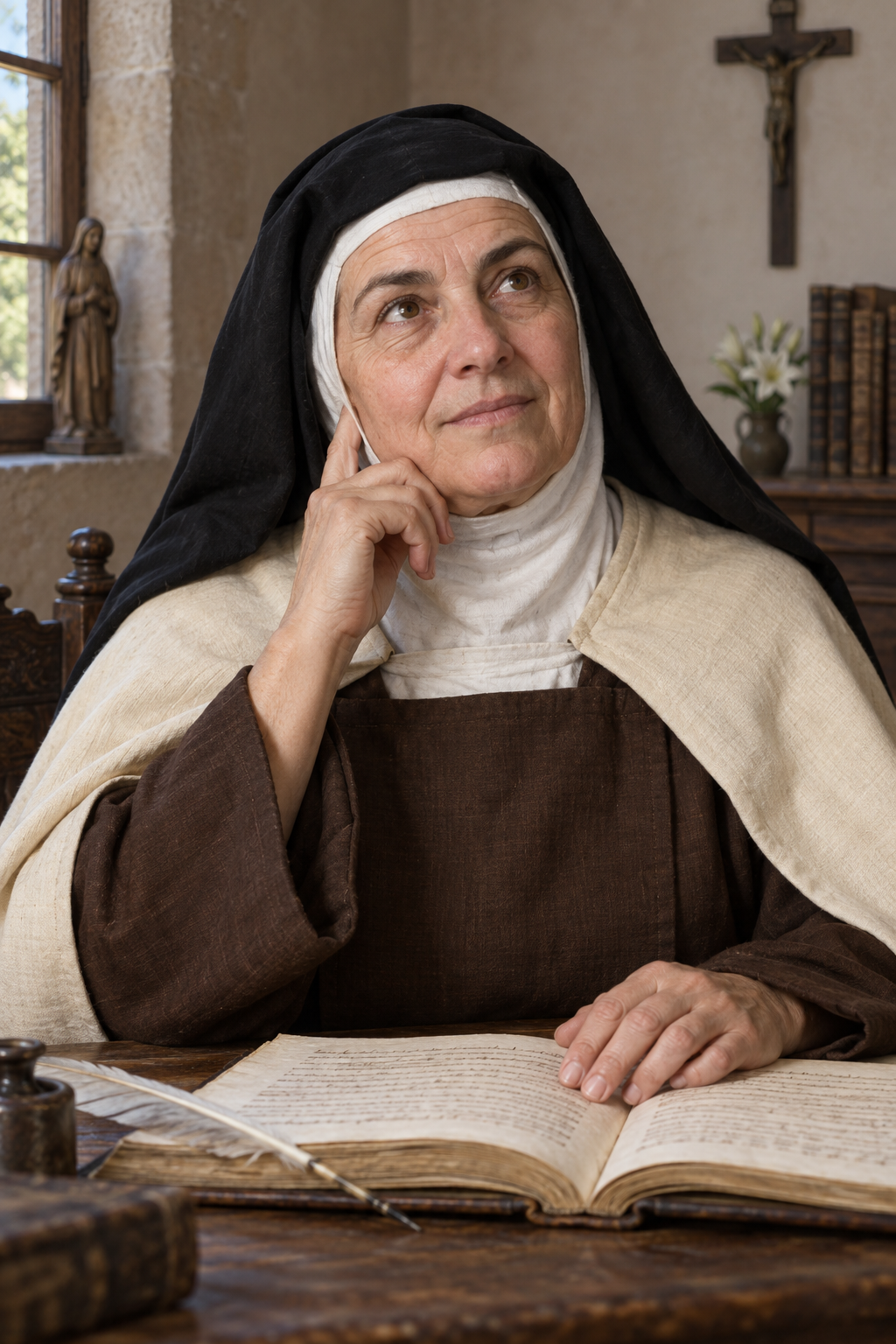
About Teresa of Ávila
Teresa of Ávila learned to guide a religious community through years of illness, prayer, and difficult decisions, not through an uninterrupted certainty about her vocation. Born in Ávila in 1515, she grew up in a large family and later received education from Augustinian nuns. Reading religious books helped draw her toward contemplative prayer. She entered the Carmelite convent of the Incarnation as a young woman, but serious illness interrupted her early religious life. In her own account, a turning point came in 1554 before an image of the wounded Christ. She described that encounter as a summons to a less divided commitment to God.
Reform began with a small house rather than a new order already mapped out. On August 24, 1562, four young women began religious life at San José in Ávila. Teresa had worked through permissions, practical arrangements, and the help of relatives and supporters to bring the foundation about. Local opposition quickly followed: the city's council challenged the project, and the dispute required months of negotiations. Her insistence on a poor community had consequences for how the house would support itself and how its neighbors understood it. The foundation survived these objections, giving her a place to put her understanding of prayer and common life into practice.
In The Way of Perfection, Teresa addressed the women who would live that experiment with her. She placed mutual love, detachment, and humility before detailed instruction about contemplation. These were not merely private dispositions. Favoritism could divide a small convent into competing groups, so she asked the sisters to care for one another across personal preferences. She also warned that a spiritual adviser could become a source of harm rather than help. A sister troubled by such a relationship should seek qualified advice instead of allowing the difficulty to grow in silence. Teresa's demanding rules belonged to an enclosed religious household, but they reveal a leader attentive to the pressures created by intimacy, authority, and dependence.
The next foundation tested her ability to act beyond Ávila. For Medina del Campo in 1567, her collaborator Julián de Ávila obtained testimony supporting the usefulness of a new convent and arranged accommodation. Trouble over the house emerged while the group was already traveling. Teresa chose to continue, finding another place rather than turning back. The founders reached Medina at night and enlisted help from Carmelite friars. The first arrangements were so insecure that Teresa worried about protecting the reserved Eucharist. This was the work behind a foundation: permits, rent, transport, helpers, and a building that did not yet provide what the community needed. At Medina she also recruited the young friar who became John of the Cross to the reform.
Expansion brought conflict as well as new communities. Some houses of friars were established with the Carmelite general's permission, while others relied on apostolic visitors against his wishes. Civil authorities and other outsiders became involved in the quarrels. The eventual creation of a separate province for the Discalced Carmelites gave the reform a more settled institutional position. By Teresa's death, seventeen monasteries of nuns belonged to the reform. Her work therefore included sustaining relationships and navigating competing authorities, not simply withdrawing from the world. Her surviving letters likewise show her occupied with the everyday problems of maintaining communities.
Writing was another form of responsibility. The surviving autograph of her Life is a second account; the first has been lost. A confessor requested the work while her activities were under scrutiny. Alongside spiritual experiences, the manuscript preserves family recollections and details of ordinary life. The Royal Library at El Escorial now holds that autograph, which reached the monastery in 1592 at Philip II's request. Its preservation links the woman who wrote to explain herself with the later readers who treated her writings as a treasured religious inheritance. The same collection holds other autograph works concerned with foundations, prayer, and visiting convents.
The Interior Castle brings Teresa's teaching back to action. At the end of its account of spiritual growth, she refuses to separate contemplation from service. The biblical figures of Martha and Mary belong together: love must find work to do. She cautions against dreaming of impressive undertakings while overlooking neighbors. A sister can begin with the companions who share her life, accepting inconvenience and attending to their needs. For Teresa, the value of a deed lies in the love that animates it rather than its public importance. The highest language of prayer therefore ends with a practical question about how a person treats others.
Teresa died at Alba de Tormes on October 4, 1582. Spain's calendar reform meant that the following day was October 15; those are successive historical dates, not two labels for the instant of her death.
Her Catholic recognition continued after her death. On September 27, 1970, Paul VI proclaimed her a Doctor of the Church, the first woman to receive that title. The decision followed consideration of whether a woman could hold this teaching designation. It recognized the importance of her spiritual doctrine without turning her into an ordained minister. The nun who had written for advisers and companions was formally commended as a teacher for the wider Catholic Church.
Wondering how to weigh the stories and sources? Learn how to read a saint biography.
Explore similar vocations
Prayers for Teresa of Ávila
Teresa of Ávila: French collect excerpt
fais-nous trouver notre nourriture dans sa doctrine spirituelle et brûler du désir de la véritable sainteté.