Biography
Thaddeus
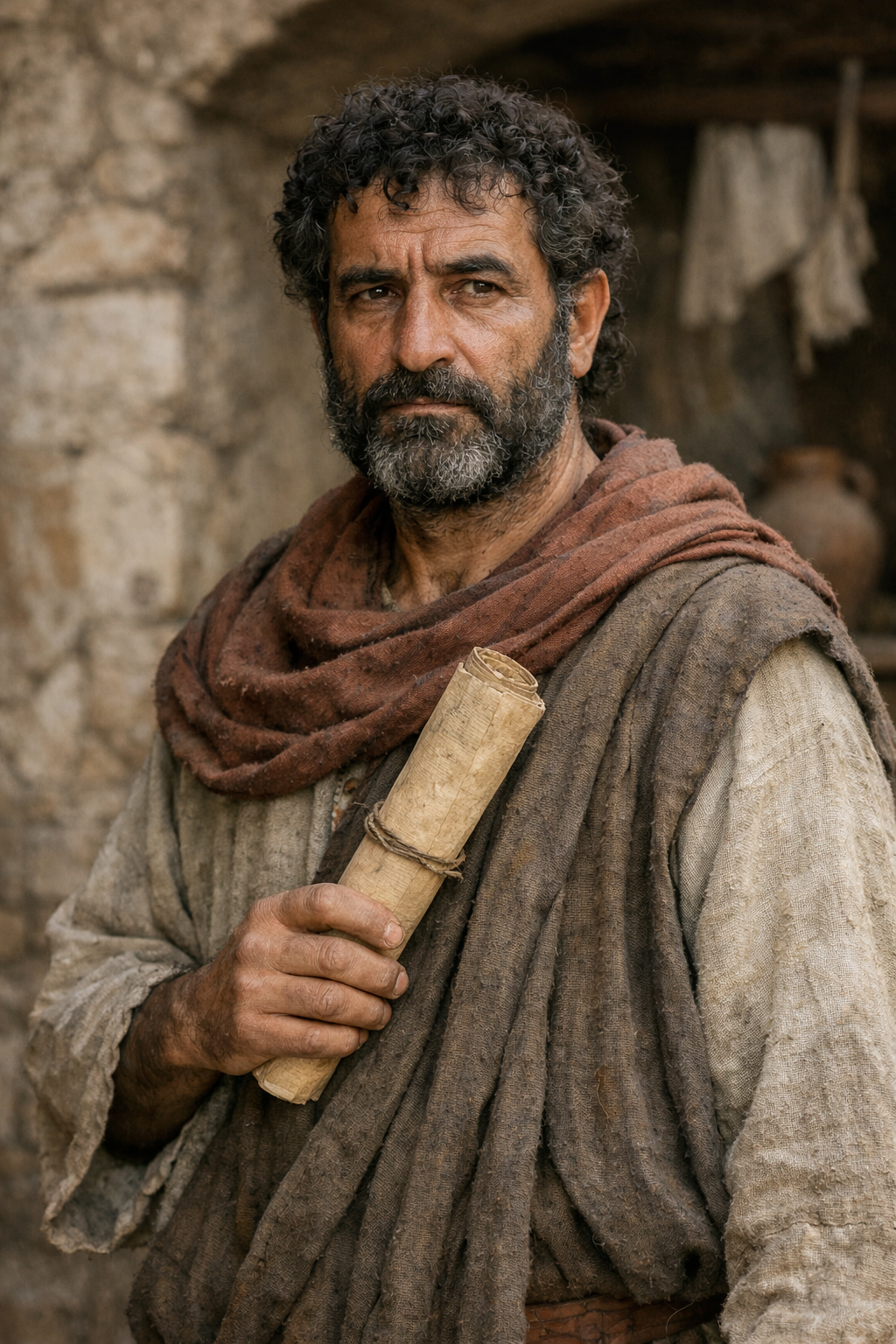
About Thaddeus
Thaddeus is the traditional name for one of the Twelve apostles, but even his naming requires care. Matthew and Mark list Thaddeus. Luke and Acts instead list Judas son of James in the corresponding place, immediately before Judas Iscariot. Christian tradition commonly joins these names as Jude Thaddeus, while distinguishing him from the betrayer. The New Testament gives this apostle no birth date, birthplace, occupation, or family narrative. It also does not preserve a missionary itinerary or death account. A responsible biography must therefore begin with the lists, state their differences, and resist turning later harmonization into first-century documentation.
Luke frames the choice of the Twelve with Jesus spending the night in prayer on a mountain. At daybreak he calls disciples and chooses twelve whom he names apostles; Judas son of James appears near the end of the list. Matthew places Thaddeus in a mission discourse in which the Twelve are named and sent to announce that the kingdom of heaven is at hand. Mark likewise names Thaddeus among twelve appointed to remain with Jesus and to be sent to preach. These passages establish membership and vocation at the level of the Gospel narratives, but none isolates an individual action by Thaddeus during the Galilean ministry.
The wording ‘Judas son of James’ is itself not a complete modern biography. The Greek construction can identify a relationship to James, but the texts do not tell readers which James is meant or supply a genealogy. Matthew and Mark's Thaddeus may be the same person represented by Luke's Judas, as the traditional alignment of the lists holds, yet the canonical books never pause to explain the substitution. The name Lebbaeus appears in parts of the manuscript tradition but not in the USCCB's main text. It is therefore retained only as a historical variant, not evidence for another phase of his life.
John records a question from ‘Judas, not the Iscariot’ during Jesus's farewell discourse: why will Jesus reveal himself to the disciples and not to the world? Jesus answers by speaking of love expressed in keeping his word and of the Father and Son making their dwelling with the faithful. Later Christian teaching often assigns this question to Jude Thaddeus. The USCCB note, however, says the speaker is probably not the apostle named Jude in Luke and suggests Thomas, while acknowledging variant readings. The question may be quoted as traditionally associated with Thaddeus, but its attribution cannot carry documented confidence.
Acts gives the final secure narrative setting for Judas son of James. After the Ascension, the apostles return to Jerusalem and gather in an upper room. Judas is named with Peter, John, James, Andrew, Philip, Thomas, Bartholomew, Matthew, James son of Alphaeus, and Simon the Zealot. The group devotes itself to prayer with women, Mary the mother of Jesus, and Jesus's brothers. Acts does not then trace Judas's individual preaching. His presence nevertheless locates him within a waiting, praying community rather than as an isolated heroic traveler, and it supports Jerusalem as a city-level map association without identifying the room.
The canonical Letter of Jude must not be used as an unqualified window into this apostle's personality. Its opening identifies the writer as Jude, a servant of Jesus Christ and brother of James, but not as an apostle. The USCCB introduction concludes that the intended person is almost certainly another Jude, one of Jesus's relatives, and distinguishes him from the figure listed among the Twelve. Benedict XVI describes authorship as attributed to Jude Thaddaeus, reflecting ecclesial reception rather than settling the historical question. This packet therefore does not assign the letter's warnings, exhortations, or doxology to Thaddeus as documented speech.
Eastern Christian tradition sometimes identifies the apostle with Jude the brother of the Lord and attributes broad preaching in Judea, Galilee, Samaria, Idumaea, Arabia, Syria, and Mesopotamia before martyrdom near Mount Ararat. The Orthodox Church in America presents this received life and commemorates him on June 19. Yet the same page distinguishes him from a predecessor at Edessa, while other traditions identify that missionary as Thaddeus of the Seventy or Addai. These overlapping names show why no exact route, year, or coordinate belongs in a historical map. The regions may be recorded only as traditional and disputed associations.
Western calendars pair Jude with Simon. The USCCB lectionary marks October 28 as the Feast of Saints Simon and Jude, Apostles. The Church of England observes the same date and provides a collect asking that the Church, founded upon apostles and prophets with Christ as cornerstone, be joined in unity of spirit. These sources document liturgical remembrance; they do not prove that Simon and Jude traveled or died together. The Orthodox June 30 synaxis also includes Jude among the Twelve and explicitly warns against confusing him with Thaddeus of the Seventy. Distinct commemorations preserve distinct traditions rather than a single recoverable chronology.
Thaddeus's limited record still supports a disciplined portrait. He accepts inclusion in a mission larger than individual recognition, remains with the apostolic community after Jesus's death, and participates in common prayer. The question traditionally assigned to him values honest inquiry, while Jesus's answer redirects attention from spectacle toward faithful love and obedience. Later martyrdom traditions witness to how churches remembered his perseverance, but they cannot supply missing eyewitness detail. His example invites fidelity without exaggeration: staying within a community, asking serious questions, practicing the word one has received, and allowing uncertainty to remain where the sources do not resolve it.
Wondering how to weigh the stories and sources? Learn how to read a saint biography.
Explore similar vocations
Prayers for Thaddeus
Collect for Simon and Jude
Almighty God, who built your Church upon the foundation of the apostles and prophets, with Jesus Christ himself as the chief cornerstone: so join us together in unity of spirit by their doctrine, that we may be made a holy temple acceptable to you; through Jesus Christ your Son our Lord, who is alive and reigns with you, in the unity of the Holy Spirit, one God, now and for ever.