Biography
Theodore van der Eem
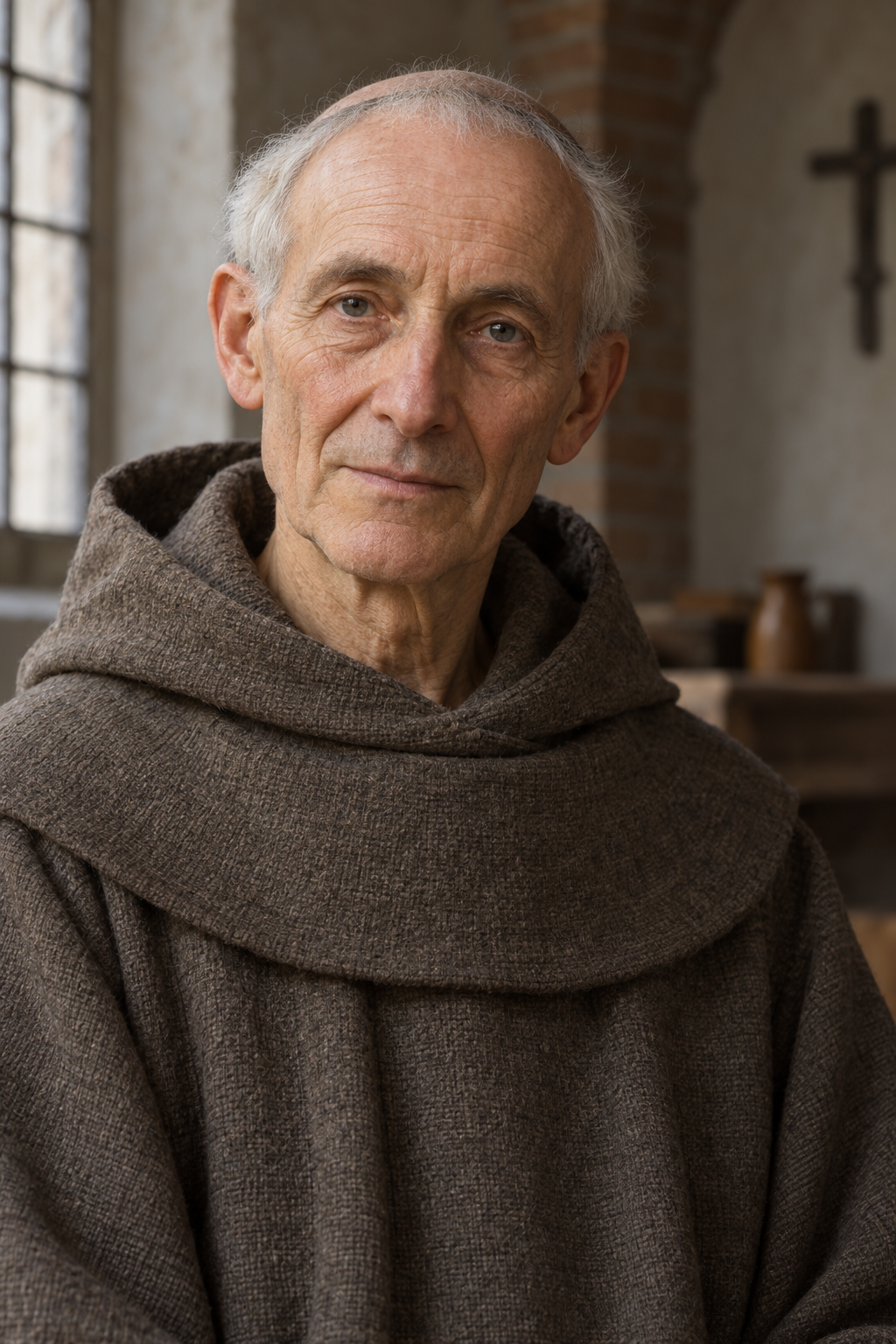
About Theodore van der Eem
Theodore van der Eem, also called Dirck or Theodorus, was born in Amersfoort around 1499. He became a Franciscan priest and served a community of religious women in Gorkum. Bishop Woorts recalled this ministry in a 2022 homily at Brielle, where the nineteen Martyrs of Gorkum are commemorated. Theodore was already an elderly man when he was killed with the group on July 9, 1572.
A biographical leaflet published by the Diocese of Rotterdam describes a choice that shaped his early religious life. According to this account, his influential family offered him the prospect of a wealthy church benefice when he expressed a wish to become a priest. He declined and entered the Franciscans instead. The same account remembers his calm during imprisonment and hardship at Gorkum as a source of steadiness for the other prisoners. These brief recollections preserve an individual character within the much better-known story of the group.
Per Einar Odden’s biography places Theodore in the Franciscan community at Gorkum by 1560, after a period in Dordrecht. It identifies the women he served as Franciscan tertiary sisters at the convent of Saint Agnes, and says that the guardian Nicholas Pieck appointed him their chaplain. The account credits him with restoring discipline in the community, but gives little detail about the problems he encountered. It also acknowledges how little is known of much of his life.
Theodore’s death became part of the common remembrance of the nineteen martyrs. Their shrine at Brielle records their execution on July 9, 1572, and their canonization by Pope Pius IX on June 29, 1867. Its interpretation of martyrdom emphasizes fidelity and forgiveness, rather than the pursuit of violence. Theodore appears by name among the Franciscan members of the group.
Images helped preserve his memory long before the canonization. The Rijksmuseum holds a small engraving by Jacob Matham, dated 1617–1618, portraying Theodorus as one of the nineteen Catholic martyrs. It belongs to a series devoted to the Martyrs of Gorkum. This is a posthumous representation, made several decades after his death, rather than evidence of a portrait drawn from life.
Woorts described another image in the chapel of the bishop’s house in Utrecht, painted in the early twentieth century. Theodore carries a martyr’s palm and wears a noose around his neck. For the bishop, this image recalled his fidelity to the Eucharist and communion with Rome. The homily also joined Catholics, Protestants and Eastern Christians in a common call to faith, peace and justice.
Wondering how to weigh the stories and sources? Learn how to read a saint biography.