Saint profile
Wiborada
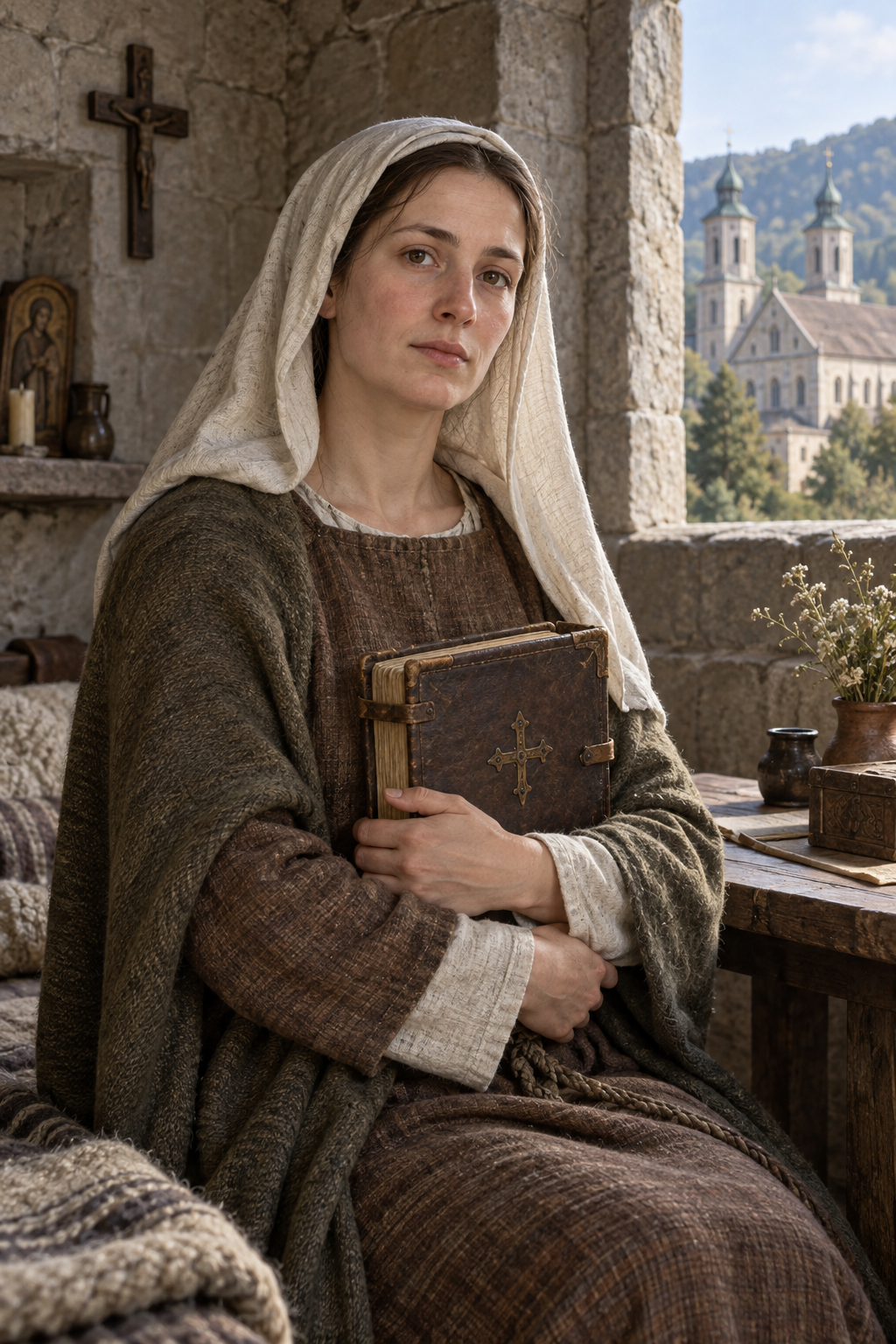
About Wiborada
Wiborada lived as a recluse near the church of Saint Magnus at St Gall. A Catholic reference work places her at the site by the early tenth century and links her with the abbey’s books. It also preserves later traditions about her family and the people who visited her cell. Those details are much less secure than the record of her death, and a brief account should not turn them into a complete childhood story.
The abbey’s profession book offers the nearest surviving witness to her martyrdom. The Abbey Archives describe a contemporary entry marking her death during the Magyar raid on 1 May 926. Because the book was preserved within the community that knew her, it carries a different evidentiary weight from stories written generations later. It anchors the year and place of her death even where later accounts add more dramatic detail.
The Swiss National Museum reviews chronicles composed decades after the raid. They tell of Abbot Engilbert moving people and valuables to safety as the Magyars approached. A later Vita says Wiborada refused to leave her cell. The chronicle account describes attackers entering through the roof and striking her. These scenes are part of the remembered narrative; their details cannot be certified by the brief contemporary entry.
A Catholic reference gives 2 May as the day she died after being wounded on 1 May, while the abbey’s book associates her martyrdom with 1 May. The disagreement supports storing only the year in a life-date field. Wiborada was canonized in 1047. Her association with books and the library remains important, but the record does not establish her birthplace or an exact birth date.
Wondering how to weigh the stories and sources? Learn how to read a saint biography.