Biography
Athanasius of Alexandria
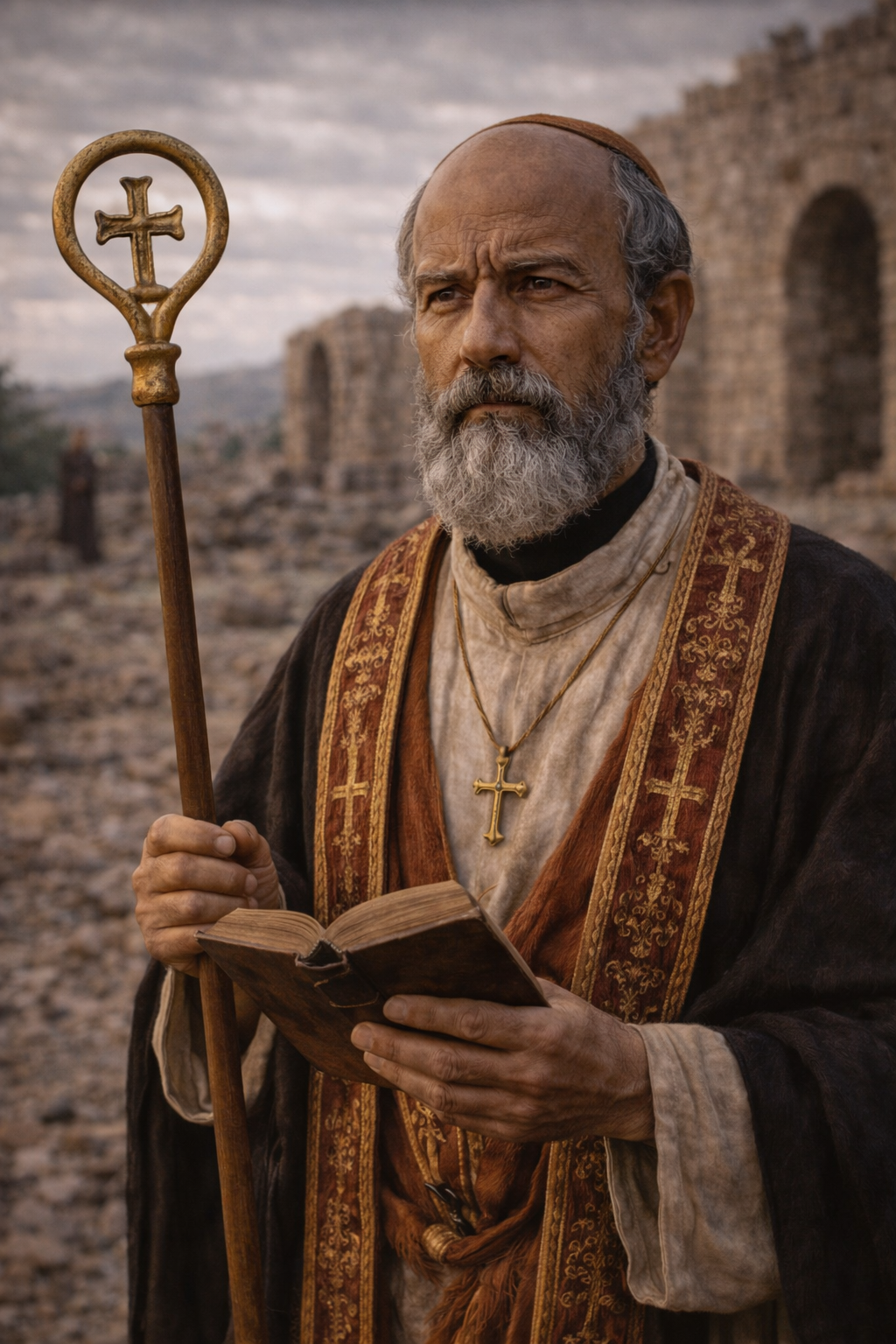
About Athanasius of Alexandria
Athanasius was probably born in Alexandria about 300, when the Egyptian metropolis was a center of learning, commerce, and Christian debate. No surviving record supplies his exact birthday or a detailed account of his parents. He received a substantial education and entered the service of Alexander, bishop of Alexandria, becoming a deacon and secretary. Later stories about Alexander discovering him as a child dramatize his early calling but are not contemporary evidence. The secure record begins with his work beside the bishop. That position placed Athanasius inside the theological and administrative disputes that would shape his long career, while the uncertainty around his childhood should remain visible rather than being filled with devotional scenes.
In 325 Athanasius accompanied Alexander to the Council of Nicaea as a deacon. The gathering addressed the teaching of Arius, an Alexandrian priest who described the Son as a creature rather than eternal in the same sense as the Father. Nicaea's creed confessed the Son as of one substance with the Father. Athanasius later became the most persistent defender of this Nicene language, but surviving evidence does not justify portraying the young deacon as the council's sole architect. His importance lies in the sustained argument he developed afterward: if Christ were merely a creature, Athanasius maintained, Christ could not unite humanity with divine life. Theology and salvation therefore belonged to the same pastoral question.
After Alexander's death, Athanasius became bishop of Alexandria in 328. His election was soon challenged by opponents who disputed both his conduct and the legitimacy of his leadership. Charges involving violence, property, and the alleged murder of a bishop named Arsenius circulated through councils and imperial courts. Athanasius answered at length in his Defense Against the Arians, collecting letters and proceedings intended to expose false testimony and defend his supporters. Because this dossier is an advocate's case rather than a neutral archive, its claims require context. It nevertheless documents a bishop operating within local conflict, regional networks, and imperial oversight, not simply a solitary theologian writing outside politics.
Emperor Constantine sent Athanasius into exile at Trier in 335 after the Council of Tyre and related proceedings. He returned to Alexandria in 337, but further removals followed under changing emperors and rival bishops. Modern summaries commonly count five exiles across seventeen years, involving residence or refuge in the West and within Egypt. Compressing those episodes into a slogan hides their different causes. Councils, imperial orders, military force, and contested appointments all played roles. Athanasius used periods away from his see to build relationships, present defenses, and continue writing. His career shows that fourth-century doctrine developed through institutions and coercive power as well as through close reading and argument.
During a violent removal in 356, soldiers entered a church in Alexandria while worship was underway. Athanasius later defended his escape against accusations of cowardice. In Defense of His Flight he argued that avoiding a pursuer could protect both life and continuing service, drawing examples from Scripture. He described remaining until others could leave and then withdrawing amid confusion. The work is self-defense and should not be treated as an impartial incident report. Yet it offers Athanasius's own reasoning about leadership under threat. Courage, in his account, did not require seeking death or surrendering a community's pastor when survival made further work possible. His years in hiding also depended on networks of Egyptian supporters.
Athanasius's writings extended beyond controversy. On the Incarnation explains creation, human mortality, and the Christian claim that the divine Word truly became human. Its concise formulations helped later readers understand why he opposed accounts that reduced the Son to a creature. The Life of Antony presented the Egyptian ascetic as a teacher whose discipline, prayer, hospitality, and resistance to oppression could instruct communities far beyond the desert. The work became influential in the spread of monastic ideals, although it is a purposeful saint's life rather than a modern critical biography of Antony. Together these books reveal Athanasius communicating doctrine through argument and through a narrated example of practiced Christian life.
His annual Festal Letter 39, written in 367, listed the books read as the Old and New Testaments and named the same twenty-seven New Testament books found in later standard Christian canons. Athanasius also distinguished other works that could be read for instruction from books he called canonical. The letter is an important witness to fourth-century canon history, but it did not create agreement by itself or end every regional difference. The same pastoral correspondence announced Easter and addressed the churches connected with Alexandria. This administrative setting matters: Athanasius was not drafting an abstract table for later historians, but guiding worship and reading within a particular ecclesial network.
Athanasius returned from his final brief removal and spent his closing years in Alexandria, where he died in 373. Churches in East and West remember him as a bishop and teacher; Roman Catholic tradition recognizes him as a Doctor of the Church, while Eastern Orthodox observance honors him with Cyril of Alexandria on January 18 and also on May 2. Those calendars should remain separate rather than being blended into one universal feast. Athanasius's enduring significance rests in the scale of his surviving work and the persistence with which he linked teaching about Christ to the hope of human renewal. His record also warns that doctrinal leadership unfolded amid accusations, coercion, displacement, alliances, and repeated return.
Wondering how to weigh the stories and sources? Learn how to read a saint biography.