Biography
Anton Martin Slomšek
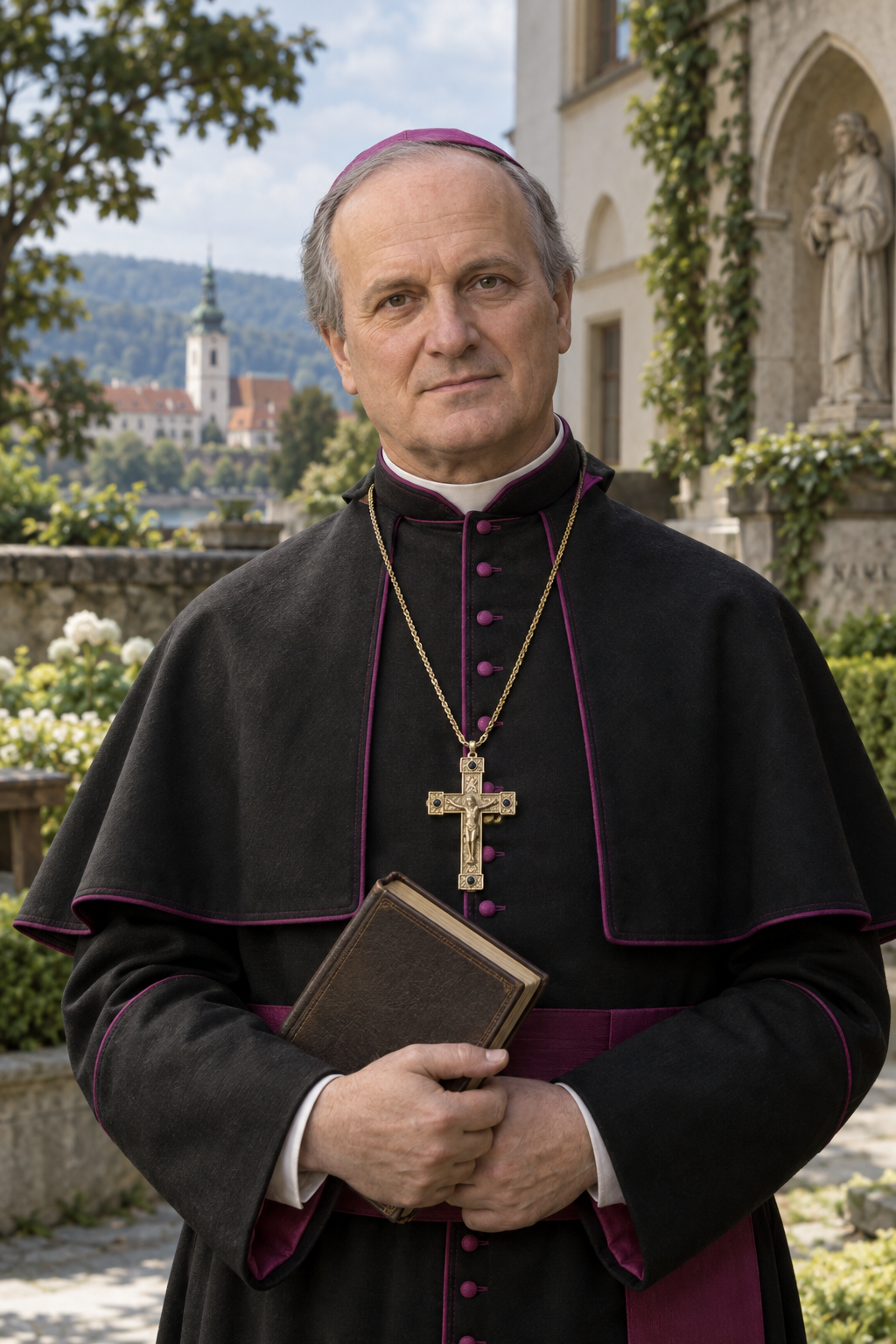
About Anton Martin Slomšek
Anton Martin Slomšek was born on November 26, 1800, at Slom in the parish of Ponikva, then within the Habsburg lands and now in Slovenia. Marko Slomšek and Marija Zorko raised him in a farming household. His historical setting matters: Slovenian-speaking communities lived within a multilingual empire, and schooling and administration frequently operated in German. Slomšek’s later attention to language grew from pastoral and educational concerns rather than from a modern nation-state. The Holy See’s formal letter of beatification confirms his birth date and Ponikva origin. A Slovenian national biographical reference supplies the detailed course of his education and ministry.
He studied at Celje, Ljubljana, Senj, and Klagenfurt before completing theology. While a seminarian in Klagenfurt, he organized instruction in Slovenian for other seminarians who would serve Slovenian-speaking parishes. He was ordained a priest on September 8, 1824. After early parish assignments at Bizeljsko and Nova Cerkev, he returned to the Klagenfurt seminary in 1829 as spiritual director. There he combined priestly formation with language teaching, preaching, and writing. These appointments are documented in the Slovenian Biographical Lexicon; the diocesan account explains how teaching future clergy in Slovenian served the practical work of parish ministry.
Slomšek returned to parish leadership at Vuzenica in 1838 and later became a canon and school inspector at St. Andrä, the seat of the Diocese of Lavant. His work joined pastoral care to education. He prepared school and devotional books, encouraged teachers, and wrote for readers who had limited access to useful Slovenian publications. He also edited the annual Drobtinice. The surviving archive includes sermons, published and unpublished writings, and materials from his Slovenian-language courses. Those records make his literary activity unusually tangible: he did not merely praise education in general, but drafted lessons, trained clergy, visited schools, and created material meant to be read.
In 1846 Slomšek briefly became abbot of the city parish in Celje. Cardinal Friedrich Schwarzenberg then appointed him bishop of Lavant, and he was consecrated at Salzburg on July 5. The title requires care. Slomšek was bishop of Lavant, not yet bishop of a diocese formally named Maribor. The diocesan seat then stood at St. Andrä in the Lavant Valley. As bishop he continued parish visitation, clergy formation, preaching, missions, and publication. John Paul II’s beatification homily later emphasized these concrete activities and also described Slomšek as an early Central European advocate for Christian unity.
Slomšek helped establish Mohorjeva družba, the Saint Hermagoras Society, in 1851 with Andrej Einspieler, Anton Janežič, and other collaborators. The project distributed affordable Slovenian books intended for education and formation. It was not simply a private literary achievement: editors, clergy, teachers, printers, and readers made it possible. Slomšek’s role shows collaboration and cultural stewardship through a practical institution. His diocesan biography preserves a forceful sentence associated with this commitment: “Slovenka me je rodila, Slovenka me je dojila, naj me slovenščina tudi hvaležnega sina ima.” The line links gratitude for his mother with responsibility toward the Slovenian language.
A major administrative change came through the reorganization of diocesan boundaries. In September 1859 Slomšek transferred the seat of the Diocese of Lavant from St. Andrä to Maribor. The move aligned its pastoral center more closely with its largely Slovenian-speaking population. In Maribor he opened a seminary and theological school, strengthening local clergy education. The modern Archdiocese of Maribor grew from this institutional history, but later terminology should not be projected backward without explanation. The relocation was both ecclesiastical administration and an educational decision, supported by documents now described in the archdiocesan archive.
Slomšek’s writings and public work united Catholic pastoral aims, education, and concern for Slovenian culture. They should not be simplified into hostility toward neighboring peoples. In the political tensions of the nineteenth century, he promoted language and culture while calling for Christian responsibility. The Holy See’s 1999 homily praised his cultural work and attention to schools, families, and youth. It also highlighted his ecumenical commitment. These are retrospective ecclesial judgments, yet the underlying activities—schools, books, missions, confraternities, and formation of clergy—are supported by the biographical and archival record. His influence came through sustained institution-building rather than a single dramatic episode.
He died in Maribor on September 24, 1862. His manuscripts and published works remained part of Slovenian religious and cultural life, and his cause for canonization began in the twentieth century. John Paul II declared his heroic virtues in 1996; a decree concerning a miracle attributed to his intercession followed in 1998. On September 19, 1999, the pope beatified him in Maribor and authorized his annual observance on September 24 in the places and manner permitted by church law. Beatification documents Catholic recognition; it does not convert every later devotional story into historical evidence.
Slomšek remains significant because his episcopal ministry treated literacy, clergy formation, publishing, language, and Christian cooperation as connected responsibilities. He used offices available to him—parish priest, seminary director, school inspector, writer, publisher, and bishop—to widen access to education and pastoral materials. The record also shows that this work depended on colleagues and institutions, not on solitary heroism. A historically careful portrait retains the complexity of a Slovenian Catholic leader inside the Habsburg world while recognizing the durable effects of the books, schools, seminary, and diocesan structures he helped build.
Wondering how to weigh the stories and sources? Learn how to read a saint biography.