Biography
Berard of Carbio
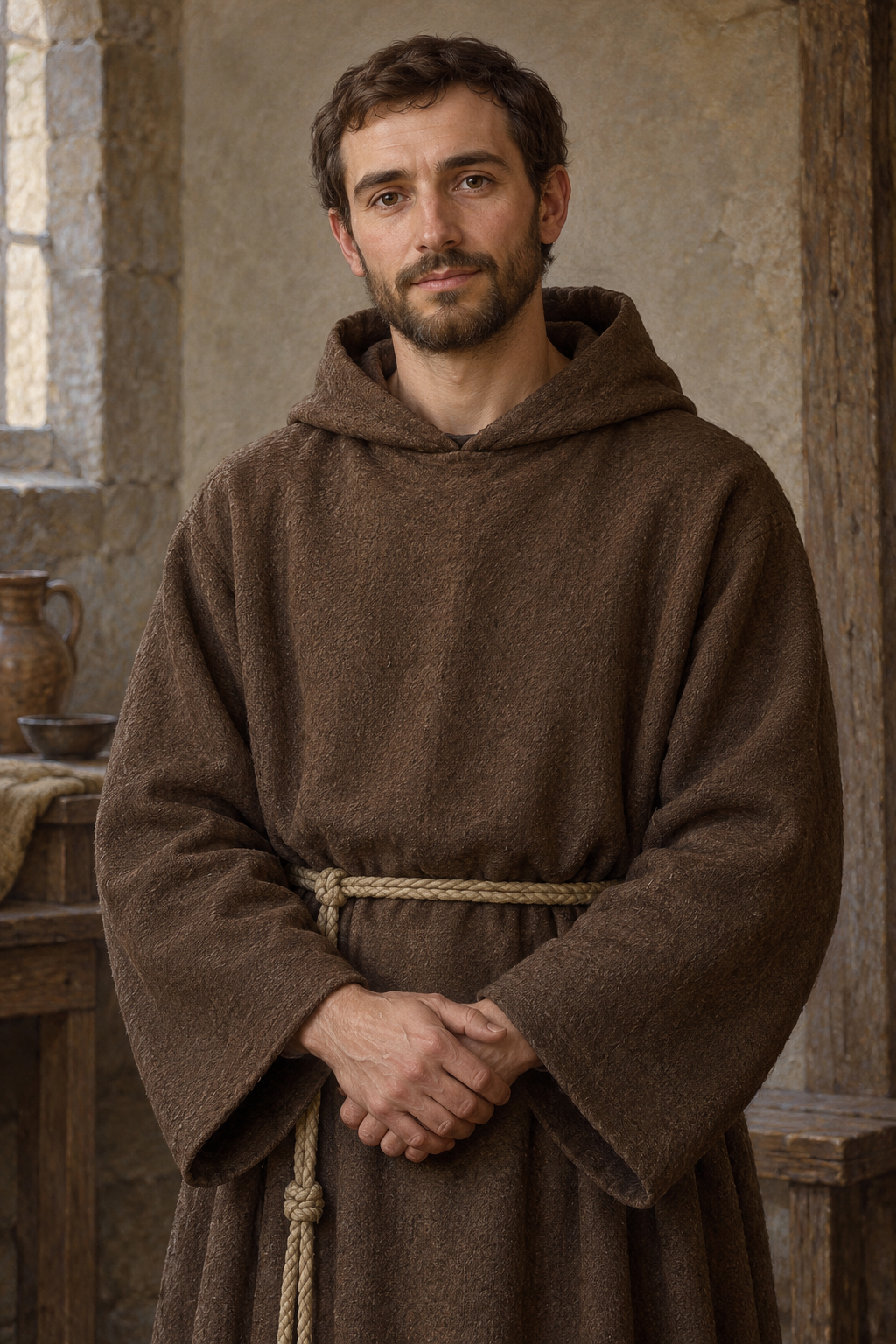
About Berard of Carbio
Berard of Carbio was a Friar Minor remembered among the first Franciscan martyrs in Morocco. The surviving martyr narrative follows his companions through Spain and Portugal to their preaching in Muslim lands. It recounts arrest, expulsion and their return to preaching, ending in their deaths. These episodes belong to a received account shaped by religious purpose.
Raffaele Volpini’s study draws attention to differences within the evidence. Later narratives place Berard at the centre of the mission and call him a priest, but Volpini identifies him as a subdeacon and considers Otho the more likely leader. The date of the mission’s departure is also uncertain. The study examines a long Passion compiled well after the deaths, using earlier materials whose treatment cannot always be checked. A shorter account may preserve a partly independent line of testimony, but it too is late and compressed. These distinctions matter because the shape of a remembered story can give one person a prominence that the earlier evidence does not establish.
The collection published by the Diocese of Terni also includes Jordan of Giano’s account of Francis’s reaction. Jordan reports that Francis resisted a martyr legend when he heard himself praised and saw the brothers taking pride in another person’s suffering. The account raises a question about how the martyrs were remembered.
Pietro Messa approaches that question by examining the purpose of the Passion. He argues that its emphasis is the radical commitment of the new mendicant martyrs, presented alongside the examples of the early Christian centuries. The narrative should therefore be read with attention to its religious aim and its historical setting. Messa also distinguishes describing a past event from evaluating the attitudes it expresses. Admiration for the friars’ devotion to Christ need not require approval of their judgement about another religion. His introduction invites a reading that can acknowledge both their sacrifice and the limits of the world in which they lived. It resists turning the account into a simple argument for present-day conflict or making the difficult parts disappear.
Dominic Monti likewise treats their manner of preaching as a subject of interpretation. His account notes scholarly debate about the motivation behind their confrontational approach. He places it beside Francis’s later directions for brothers living among Muslims: a humble presence could precede open preaching, which depended on judging the opportunity. This comparison does not settle every detail of Berard’s intention. It does show that the Franciscan tradition itself contains questions about the relation between proclamation, vulnerability and the way a missionary lives among others. The martyr account is one part of that wider history.
In 1481, Sixtus IV permitted the friars to celebrate the martyrs publicly in their churches. The translated letter specifies Mass and the divine office on 16 January and protects that permission against interference. This is the concrete form of recognition preserved in the document.
Their remembrance continued to develop in the communities connected with them. At the opening of the eighth centenary in 2020, Bishop Giuseppe Piemontese invited the Diocese of Terni-Narni-Amelia to study the martyrs within their historical setting. His homily also urged listeners to find their own way of witnessing to faith, rather than merely taking pride in the achievements of earlier saints. He called for the sanctuary’s remembrance to support the search for peace and dialogue between peoples, religions and nations. This is a later pastoral interpretation of the martyrs’ legacy, directed towards the responsibilities of a present community. It joins honour for their sacrifice to a concern for how that honour is lived.
A modern pilgrimage route gives another form to that remembrance. Reporting for Vatican News in 2026, Paolo Ondarza described a circular journey through southern Umbria, developed from an idea begun in 2010 and inaugurated in 2015. The interview with guidebook author Alessandro Corsi presents the walk as an opportunity to slow down, distinguish what is necessary from what is superfluous, and attend to places of prayer and encounter. These are contemporary ways of receiving the martyrs’ memory. The route connects local communities with a religious inheritance whose earliest story still requires careful reading.
Wondering how to weigh the stories and sources? Learn how to read a saint biography.