Saint profile
André de Soveral
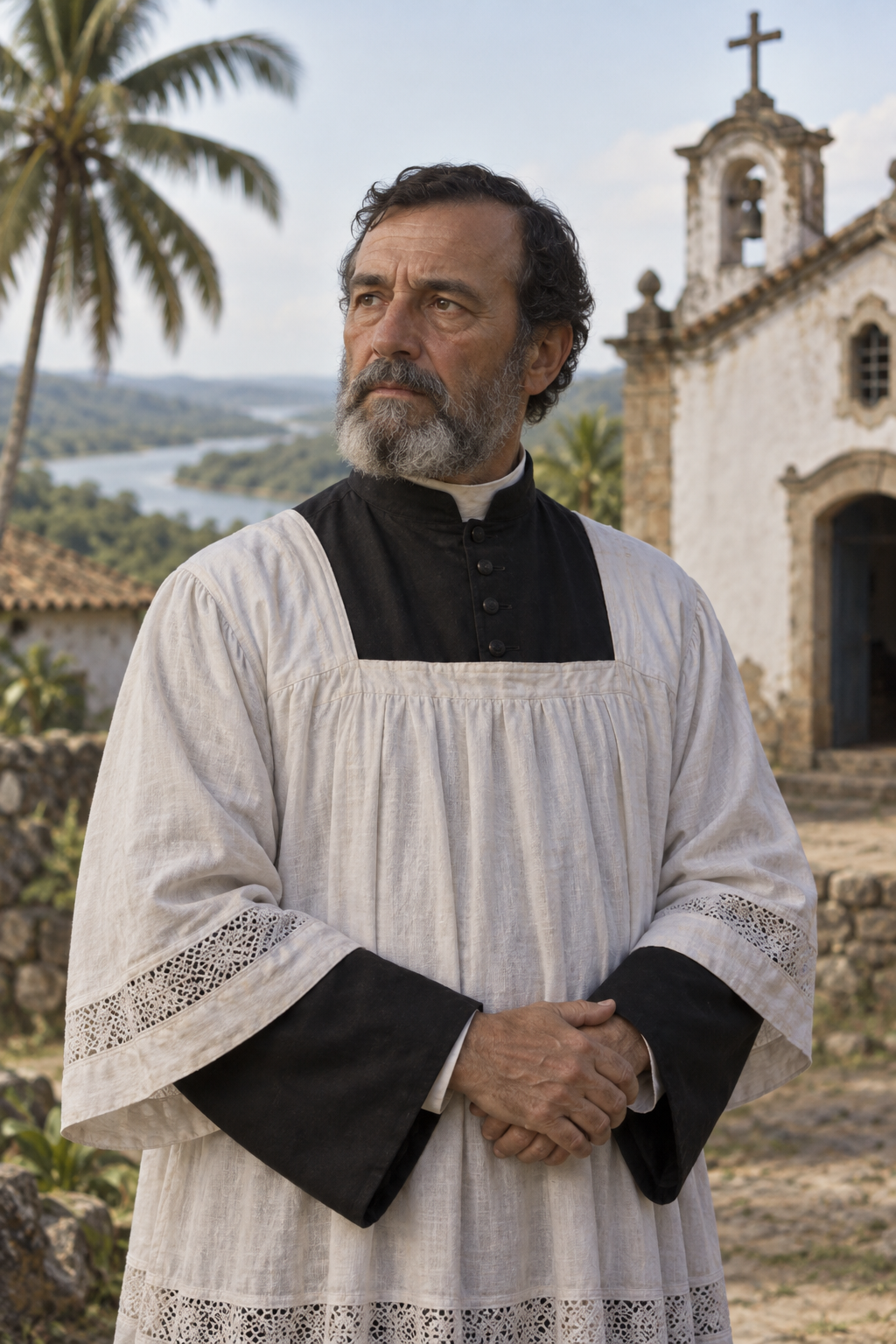
About André de Soveral
The surviving official account gives only a brief outline of André de Soveral’s life. The Dicastery for the Causes of Saints identifies him as a diocesan priest associated with the Catholic community of Cunhaú, in the captaincy of Rio Grande, in what is now northeastern Brazil. It places his birth around 1572 at São Vicente, on the island of Santos. No exact birth date or family information is supplied, so neither is proposed here.According to the same account, André entered the Society of Jesus at about twenty-one years of age. After completing studies, he was sent to Olinda, in Pernambuco, as part of missionary work in the region. The account says that he had left the Jesuits by 1607 and was then found serving as a diocesan priest and parish priest of Cunhaú. It gives no detailed chronology of his education, ordination, or later pastoral activity. The available evidence therefore supports the broad sequence of his vocation, but not a fuller personal narrative.The wider setting was shaped by Dutch expansion into northeastern Brazil. The Dicastery’s account describes restrictions on Catholic worship after the Dutch established control in the region from 1630. This political and confessional context matters, but it does not make every detail of the later retellings equally secure. The profile relies on the official ecclesiastical account for André’s role and marks the attack itself as an event preserved in the cause’s historical narrative.On Sunday, 16 July 1645, André was celebrating Mass in the chapel of Our Lady of the Candles at Cunhaú. The official account says that Jacob Rabe arrived with a message, and that armed Dutch soldiers and Indigenous allies entered after the consecration, shut the doors, and attacked the unarmed worshippers. It reports that André had to stop the celebration and began prayers for the dying with those present. More than sixty people were killed at Cunhaú, while the names of only André and the layman Domingos Carvalho were known in the account. These numbers and the sequence describe the institution’s received historical account; they are not expanded here into a reconstructed scene or dialogue.The attack at Cunhaú was distinct from a second massacre at Uruaçu on 3 October 1645, where another group, including the priest Ambrósio Francisco Ferro, was killed. André died at Cunhaú in July and should not be placed among the Uruaçu victims. The distinction is important because later Catholic recognition joined the two episodes in one group cause. The Dicastery says that only thirty victims from the two events could be identified with certainty for the cause.Pope John Paul II beatified André, Ambrósio Francisco Ferro, and twenty-eight companions on 5 March 2000. His apostolic letter authorized their memorial on 3 October in the places and manner permitted by church law. Pope Francis canonized André, Ambrósio, Mateus Moreira, and their twenty-seven companions on 15 October 2017. These are institutional acts that document Roman Catholic recognition; they do not fill the gaps in André’s personal biography.André’s story is consequently a short one in the surviving evidence: a priest who served Cunhaú after leaving the Jesuits, and who died with worshippers gathered for Mass. The Dicastery’s account remembers him leading prayers as the attack unfolded. His continuing significance is bound to that pastoral role and to the community’s memory of the Cunhaú martyrs. Claims about his private character, precise words, physical appearance, or motives beyond the documented church recognition are left unstated.
Wondering how to weigh the stories and sources? Learn how to read a saint biography.