Biography
Angel of St. Joseph (Joan Font Rius)
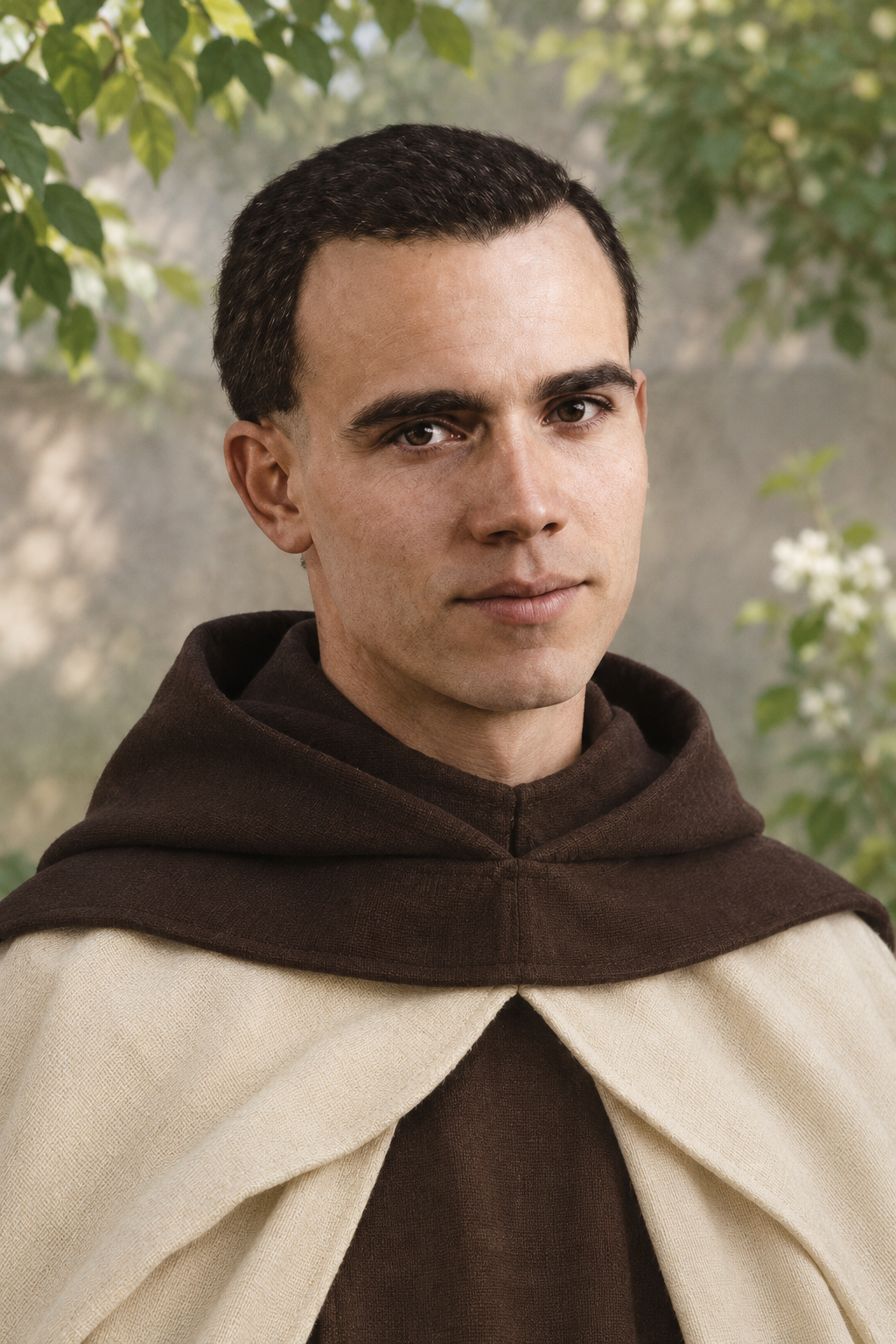
About Angel of St. Joseph (Joan Font Rius)
Before he became a Carmelite brother, Joan worked in a bakery near Tarragona in Catalonia. His parents, Ramón and Catalina, had moved the family there from L’Espluga de Francolí, where Joan was born on October 20, 1896. He was about sixteen at the time of the move. In his new home he came to know Francisco de la Soledad, a Discalced Carmelite with whom he could talk about his religious life.
Joan joined the Carmelites in Tarragona and took the name Ángel of Saint Joseph. He was a religious brother. The work through which people came to know him in Arizona was organizing parish life alongside young people. The two provinces of his order agree that he made his first vows in Tucson in 1921, although their accounts give different days. The American province records that he made his solemn vows three years later. In Carmelite records his surname appears as Fort Rius. The Vatican’s letter of beatification gives Font Rius.
Santa Cruz was part of a cluster of communities the friars served in southern Arizona. The Diocese of Tucson traces their first foundation in the state to Winkelman in 1912. They came to Holy Family Parish in Tucson in 1915 and took up work at Santa Cruz in 1919. It was at Santa Cruz that Ángel found a way for parish youth to take responsibility for something of their own.
The parish’s own school history puts those years in perspective. Bishop Henry Granjon founded Santa Cruz Parish in 1916. Its church was dedicated in 1919 and its school opened in 1920, facing Twenty-Second Street. The parish was still building the institutions in which a generation of Tucson children would grow up when Ángel made his vows there. His particular contribution to that effort was to make a place for the young people to gather outside the classroom.
He organized a club under the patronage of Saint Joseph. A club needed somewhere to meet, and Ángel helped provide a hall. Its young members also put together an annual magazine, Juventud, Spanish for “youth.” The magazine was their work. The two accounts credit Ángel with organizing the group and the young people with preparing its publication.
In 1934 Ángel returned to Tarragona. The community put him in charge of its door as porter, receiving people who came to the monastery. When the Civil War began in July 1936, the friars dispersed. The Iberian province dates their departure to July 21. A family offered Ángel its home and he chose to sleep in its warehouse. He later went to the house where another friar with Tucson ties, Vicente of the Cross, had taken shelter.
The Carmelite accounts remember Ángel’s arrest in company with Vicente and place his death near the harbor. They differ about when he died. The Iberian province gives July 25, and that is the date recorded for Ángel by the Holy See. He was thirty-nine. The Catholic Church beatified him in Tarragona on October 13, 2013.
More than fifty years before the beatification, people in Tarragona were already commemorating the proceedings to examine these deaths. The archdiocesan historical archive catalogs a small illustrated card for the closing session of the local processes on May 29, 1959. It lists Ángel by his religious name alongside other Carmelite brothers and priests. The modest printed item preserves a stage of local remembrance between the death of a parish brother in 1936 and his formal recognition by the wider church.
At Santa Cruz, the people who kept Ángel’s memory alive included families who had belonged to the parish for generations. At a Mass marking ninety years since the deaths of the five Carmelites connected with Tucson, parishioner Angie Quiroz described the committee’s work of telling their stories. Among those five, Ángel is remembered as the brother who gave young parishioners space to meet and a way to put their own words into print.
Wondering how to weigh the stories and sources? Learn how to read a saint biography.