Biography
Antonio Francisco
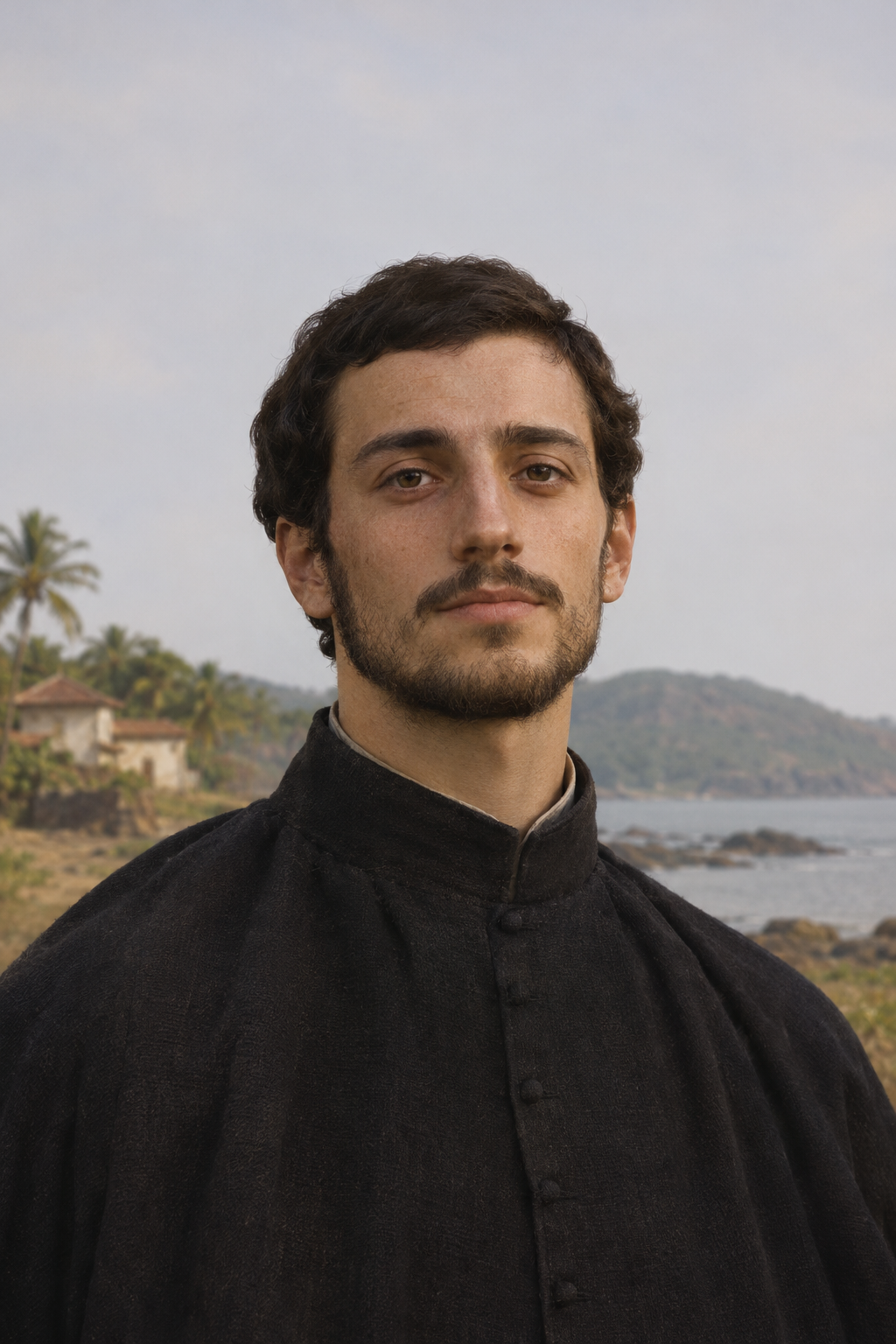
About Antonio Francisco
Antonio Francisco came from Coimbra, Portugal, and entered the Society of Jesus in 1571. He was drawn to the Jesuits during a period when reports of overseas missions and deaths circulated widely in Portugal. The Society’s account says the example of Ignatius de Azevedo and his companions influenced his choice. Antonio’s formation began in Europe, but his priestly work would be spent in the Portuguese sphere of the Indian Ocean.
In 1581 Antonio traveled to Goa with Alphonsus Pacheco. There he continued theology at Saint Paul’s College and was ordained in 1582. He was assigned to the Moluccas, but accounts differ on why he remained in Goa: the current Jesuit profile recounts a shipwreck soon after departure, while an 1893 Jesuit account says ill health stopped the voyage. He was instead sent to Orlim in Salsette. His local ministry lasted only a few months, according to the Jesuit account, and the surviving sources give little detail about his daily teaching there.
Tavares names Antonio among the Jesuits who accompanied earlier destruction of Hindu temples in Salsette; an older Catholic account similarly places him in the campaigns. This gives his brief Orlim service a more difficult context than a generic description of Christian mission. Cuncolim’s residents depended on the village’s temples and trade, and Portuguese efforts to replace those institutions brought resistance. The source record does not reveal Antonio’s view of each action or identify every act he personally performed. It does show that the mission to which he belonged was entangled with coercive colonial power.
On 25 July 1583 he accompanied Pacheco and other Jesuits from Orlim toward Cuncolim, with Indian Christian guides, to place a cross and choose ground for a church. An attack there killed Antonio and four fellow Jesuits: Pacheco, Pedro Berno, Francisco Aranha, and Rodolfo Acquaviva. Accounts differ about the Indian Christians killed in the same violence: Tavares counts twelve and Cañeque fourteen. The Holy See lists the five Jesuits as the martyrs of Salsette. The beatification names the five Jesuits. Indian companions also died at Cuncolim that day.
Accounts produced after the attack sought to interpret the Jesuits’ deaths as martyrdom. They preserve the Society’s memory of Antonio’s constancy, while their rhetorical form cautions against presenting speeches or wounds in minute detail as certain. His known life has a clear sequence—entry in Coimbra, arrival in Goa, ordination, a failed Moluccas voyage, work at Orlim, and death at Cuncolim—but very little survives about his childhood, writings, or daily teaching. Pope Leo XIII beatified the five Jesuits in 1893; the Holy See records their common feast on 4 February.
Wondering how to weigh the stories and sources? Learn how to read a saint biography.