Biography
Augustine of Hippo
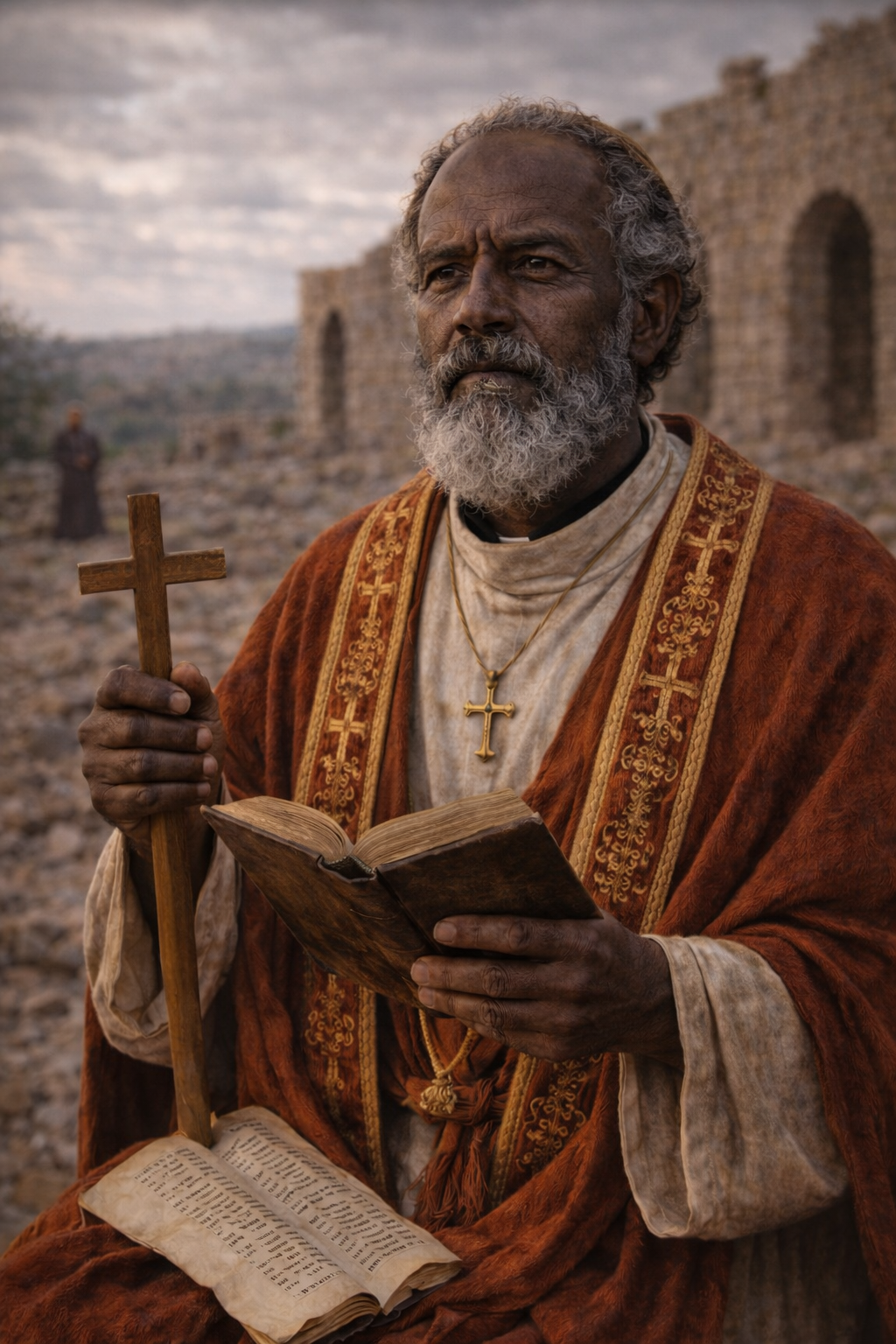
About Augustine of Hippo
Augustine of Hippo began his working life as a teacher before becoming a bishop in Roman North Africa. He was born at Tagaste on 13 November 354. His mother, Monica, raised him in the Christian faith, although he did not receive baptism in childhood.
In his Confessions, Augustine recalls studying at Carthage and wanting to distinguish himself through eloquence. Reading Cicero’s Hortensius redirected his attention toward the pursuit of wisdom rather than success in speaking alone. He also describes rejecting the style of Scripture as beneath the literature he admired. He became involved with the Manichaeans, whose promises of truth appealed to him but whose teachings he later rejected.
His account of these years includes relationships that do not fit a simple story of steady progress. He recalls living faithfully with a woman to whom he was not married. Later, when marriage plans led to their separation, she returned to Africa while their son remained with him. Augustine describes that separation as a painful wound, not merely a convenient stage on his religious journey.
Teaching took him from Carthage to Rome and then to Milan. He reports hoping for better student discipline in Rome, only to encounter students who avoided paying their fees. A public teaching appointment brought him to Milan, where he began listening to Bishop Ambrose. At first he attended closely to the bishop’s eloquence rather than accepting the message being preached.
Augustine says that Ambrose’s interpretation of Scripture gradually made Christian teaching seem more defensible to him. His uncertainty did not disappear simply because he had encountered an accomplished preacher. He continued comparing competing accounts of truth and eventually left the Manichaeans. He chose to remain a catechumen in the Catholic Church while seeking a clearer direction for his life.
The Confessions presents his next change as a struggle with habit and divided desire, not an effortless intellectual victory. Augustine sought advice from Simplicianus and heard Pontitianus describe Antony and monastic life. In his account of a crisis in a garden, he heard a childlike voice urging him to read. He opened Paul’s letters, read the passage now identified as Romans 13:13–14, and understood it as a call to change his life.
Ambrose baptized Augustine in Milan at Easter in 387. Augustine records that his friend Alypius and his son Adeodatus received baptism with him. He remembers the singing of the church as deeply moving during those days. The return journey to Africa brought another loss: Monica died at Ostia while the party was preparing to travel home.
Back in Africa, Augustine shared a life of prayer and study with companions. His biographer Possidius describes the community’s common life and Augustine’s teaching through sermons and books. Ordination as a priest at Hippo in 391 brought new public responsibilities. Possidius reports that the congregation pressed him into service and that Augustine wept as he faced the demands of caring for a church.
He became a bishop in 395, initially alongside Valerius rather than immediately replacing a deceased predecessor. His work included preaching, writing, and the care of a community whose needs extended beyond theological debate. Possidius records that Augustine used church income and offerings to support people in poverty. He also describes Augustine warning guests at his table against speaking harmfully about absent people.
His public ministry also included choices that require a candid account. Writing to Vincentius in Letter 93, Augustine explained that he had changed his earlier opposition to compelling religious unity. He now defended imperial pressure, including fines and exile, as a means of bringing dissenting Christians into Catholic communion. The letter documents his support for coercion; its claims that such pressure helped people express his own justification for that policy.
Another letter shows him intervening against severe punishment in a particular criminal case. In Letter 133 he asked Marcellinus to spare the lives and bodies of men implicated in attacks on Catholic clergy. He wanted punishment that restrained further violence without execution or mutilation. That appeal did not reject coercion altogether: the same letter accepted compulsory labor and approved the use of rods during interrogation.
Augustine’s writing extended well beyond these disputes. The Confessions brings recollections of his earlier life into an extended prayer addressed to God. The City of God considers the Christian understanding of history and political life in the aftermath of Rome’s sack in 410. On the Trinity explores Christian teaching about God, while On Christian Doctrine addresses the understanding and communication of Scripture.
He did not treat every earlier formulation as beyond revision. Near the end of his life he reviewed his writings in the work commonly called the Retractations, identifying points that needed correction or clarification. This later examination belongs beside the confident arguments of his other books: it records an author returning critically to work already circulated under his name.
Augustine died at Hippo on 28 August 430 during the siege of the city. Possidius describes him praying with penitential psalms during his final illness and asking that the church’s books be preserved. That surviving body of writing leaves later readers access both to his arguments about Christian life and to his searching account of his own conversion.
Wondering how to weigh the stories and sources? Learn how to read a saint biography.
Explore similar vocations
Prayers for Augustine of Hippo
Augustine — prayer from Confessions I.5.6
Angusta est domus animae meae, quo venias ad eam: dilatetur abs te.