Biography
Augustine Thevarparampil
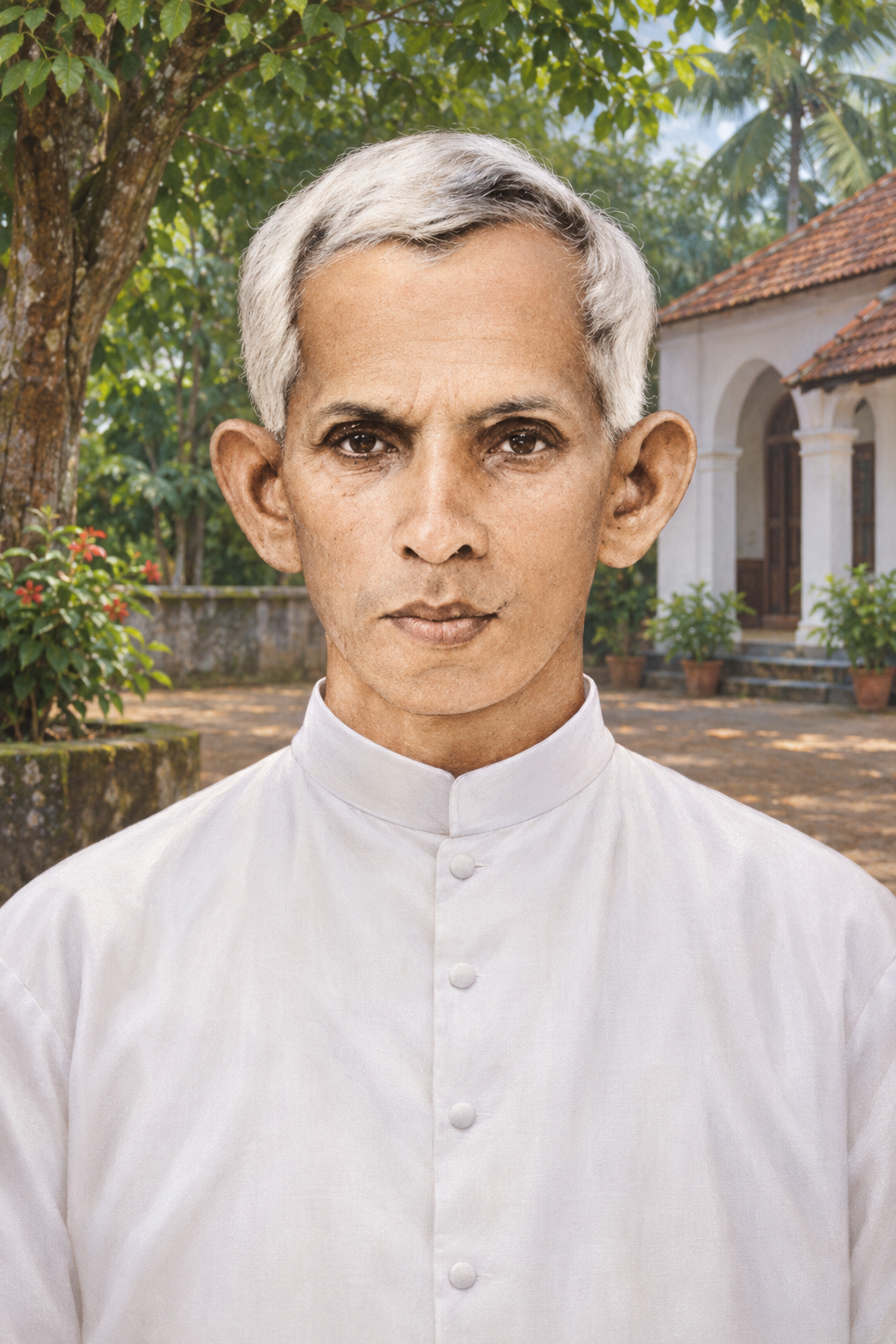
About Augustine Thevarparampil
Augustine Thevarparampil was born on 1 April 1891 at Ramapuram in Kerala, the youngest of five children of Itty Iype and Eliswa. He was baptized at the village church a week later and named for its patron, Augustine. His family lived by farming, and the local church account places his first lessons in a small kalari before he attended the primary school at Ramapuram and later Saint Ephrem’s School at Mannanam. The name Kunjachan, “little priest,” came later from his short stature; it became the familiar name by which people remembered him.
Augustine entered the minor seminary at Changanacherry and moved to the major seminary at Puthenpally in 1915. The church history recalls a journey from Ramapuram to Changanacherry made partly on foot and partly by boat, a reminder of the travel required for a seminarian of his time. He was ordained in December 1921. The Vatican’s beatification biography gives 17 December, while the local life history gives 21 December; the disagreement is best left visible rather than resolved without an ordination record. After his first Mass at Ramapuram, he trained under the parish priest and became assistant at Kadanad in 1923.
Illness brought him back to Ramapuram in March 1926. A retreat there had already introduced local Dalit families to Christian instruction; the parish history says roughly two hundred people were baptized at its conclusion. Augustine saw families living on land they did not own and working for little pay. Caste restrictions kept many children from ordinary schools and excluded families from other public spaces. The local account uses an older label for these communities, but “Dalit” better names the people whose circumstances it describes. Augustine made their pastoral care the central work of his priesthood.
His ministry required travel through villages rather than waiting for people to come to the parish. The diocesan account describes early prayer and Mass followed by visits with a catechist. Augustine entered homes, learned family names, and kept a register of household circumstances. He visited sick people even at night and made confession available before or after Mass. These ordinary practices explain how a priest could remain known to families across decades: he was present for instruction, worship, illness, and daily difficulty, not only for public ceremonies.
Education became part of the same work. When he found that Dalit children were refused admission to public schools, Augustine opened small shed schools called kalaries in several places. They offered a first chance to read and write in communities where the church history says many adults had had no schooling. He also helped organize a cooperative society whose officers came from the community itself. Those efforts addressed exclusion in practical ways; they were more than a means of preparing people for baptism.
The parish history also recalls small acts of care: sharing food with hungry visitors and arranging cloth for women through Sister Scholastica. Its testimony says he regularly learned the needs of the households he visited. Such accounts come from a church that venerates him and can be affectionate in tone, but the described actions fit the wider, documented pattern of his visits and education work. He recorded baptisms, marriages, and deaths in diaries and registers. Those records are a more concrete trace of the families among whom he served than a general claim that he was kind.
The Vatican and diocesan accounts report more than five thousand baptisms associated with Augustine’s ministry. That figure is a church estimate of a long pastoral campaign, not a count that explains each person’s reasons for joining. The same Vatican account acknowledges opposition from some higher-caste people and established Christians. Augustine continued the village visits with a catechist despite criticism. His work can be understood both as evangelization and as sustained accompaniment of people whose opportunities were restricted by caste.
His health worsened in 1959, and he eventually left his rooms at the church for family care. The local account says he continued praying and listening to Scripture when he could no longer read easily. In a brief will, he asked for a simple funeral and burial among the Dalit Christians with whom he had lived since 1926. He died at Ramapuram on 16 October 1973. His wish about the burial place was not followed; the parish buried him before the altar of the old Saint Augustine’s Church. The contrast between his request and the chosen tomb shows how his community already wished to mark him publicly.
Visitors began praying at his tomb soon after the funeral, according to the local church. The diocesan inquiry into his life opened in 1987 and gathered testimony and written records. Pope John Paul II recognized his heroic virtues in 2004, and the Holy See approved a reported healing as the miracle for beatification in 2005. Benedict XVI’s pontificate saw his beatification at Ramapuram on 30 April 2006. His feast is kept on 16 October, the anniversary of his death. The surviving diaries, registers, and witness accounts make Augustine’s long service unusually tangible, while stories of favors at his tomb remain devotional testimony.
Wondering how to weigh the stories and sources? Learn how to read a saint biography.