Biography
Callistus Caravario
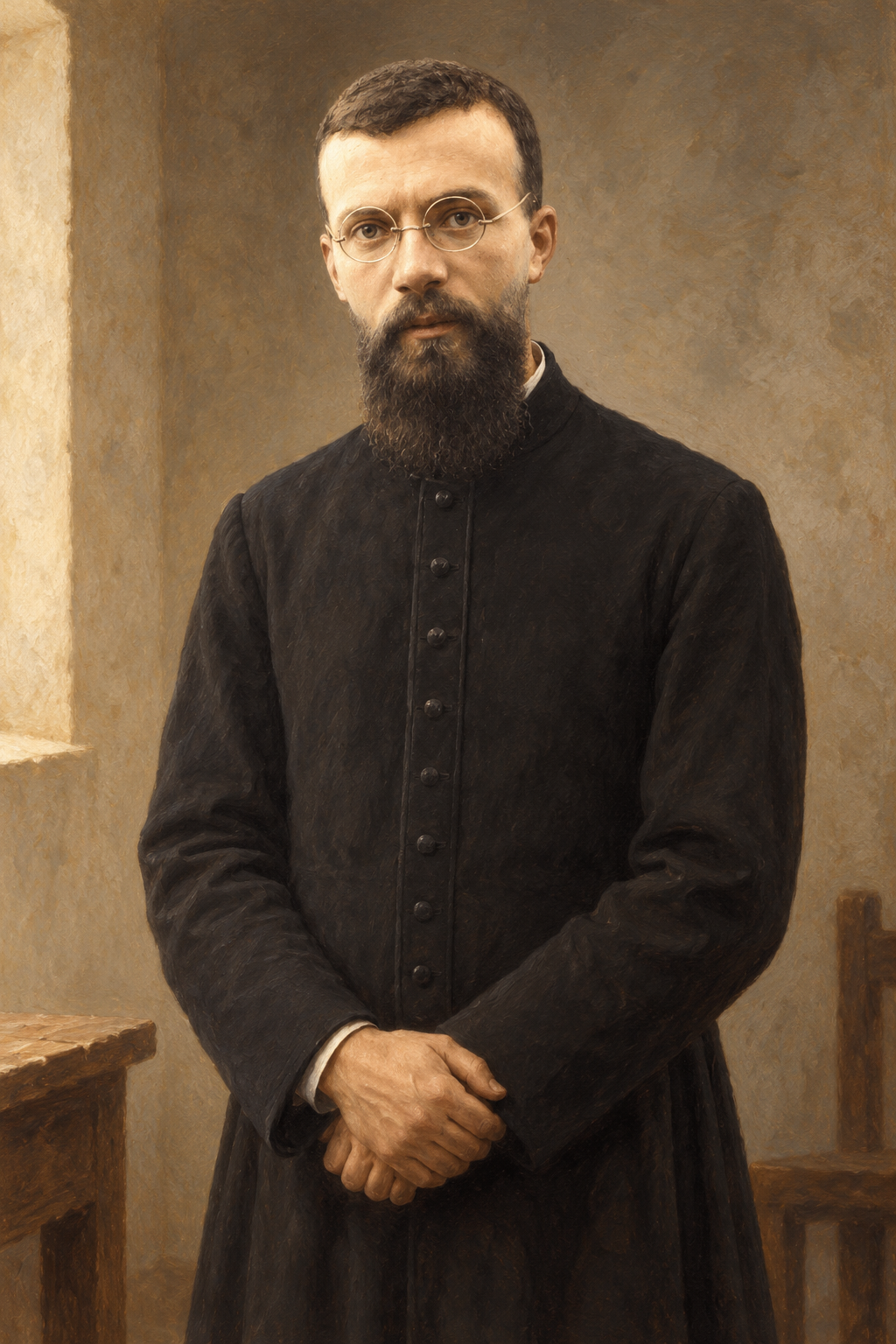
About Callistus Caravario
Callistus Caravario was an Italian Salesian priest who worked with young people in China and Timor. Born at Cuorgnè on 8 June 1903, he entered religious life while still in his teens and made his first vows in 1919. His missionary years were brief. He left for China in 1924 as a cleric still preparing for priesthood, and died there in 1930, less than a year after his ordination.
His family moved to Turin when he was five. There he encountered the Salesians through school and the oratory, places where education and religious formation were closely connected. He entered the Valdocco community in 1914 and began his novitiate in 1918. A meeting with Bishop Louis Versiglia in 1922 strengthened his desire to become a missionary. That ambition grew within an existing community of teachers and priests, rather than from an isolated decision to travel abroad.
In Shanghai, Caravario taught young people while continuing his own preparation for ministry. Learning Chinese was part of that work. In 1927 he went to Dili in Timor, where he remained for about two years. His responsibilities again included the care and education of boys. He later returned to China, having contracted malaria during his time in Timor. His health and his need for further formation were practical concerns throughout these years of service.
Caravario’s letters to his mother preserve a more personal voice. He asks after her, thanks her for parcels and describes the progress of his work. They also contain prejudiced judgments about Chinese society. In May 1925 he called for sweeping cultural reform while recognizing the need for Chinese teachers. These passages belong beside his expressions of affection and service; the letters do not support a portrait of someone free from the assumptions of his time.
He was ordained on 18 May 1929 at Shiu Chow. Writing that day, he tells his mother about the ceremony and the first Mass planned for the following morning. Her gift of a chalice becomes part of his account of gratitude. His hope is to serve faithfully, however long his priestly life lasts. The letter records a commitment, not evidence that he knew what would happen to him.
His assignment was to Lin Chow. The Salesian liturgical account remembers his visits to Christian families and his attention to children in the mission’s schools. This was ordinary pastoral work as well as a missionary appointment: teaching, meeting households and sustaining a small Christian community. The same account places his priesthood within the Salesian tradition of service to the young, the work for which he had trained before leaving Italy.
In February 1930 he accompanied Versiglia on a visitation to the Lin Chow mission. Their party travelled by boat. Armed bandits stopped them, demanded money and attempted to take three young Christian women who were travelling with the group. According to the account used in their beatification, the bishop and priest resisted the attempt to seize the women. Both men were beaten, taken to the river bank and shot on 25 February. Caravario was twenty-six.
The account published by the Dicastery for the Causes of Saints includes the surviving women’s testimony. It describes their detention after the attack and their liberation by soldiers in early March. Their survival matters to the history of the event: the story did not rest only on the later discovery of the men’s bodies. The account also reports that Versiglia and Caravario confessed to one another before their deaths. That detail is preserved within the Church’s account of their final hours. The travellers included people returning to the mission for study and work. Their presence explains why the journey joined pastoral visitation with the everyday movement of a school community.
The Catholic Church beatified Caravario with Versiglia on 15 May 1983. On 1 October 2000, he was canonized among Augustine Zhao Rong and his companions, the martyrs of China. His remembrance therefore belongs both to Salesian history and to a much wider community of Chinese Christians and missionaries. He was a young priest with a short ministry, rather than the founder of a long-established institution.
At the canonization, John Paul II acknowledged the complexity of the historical setting and the human limitations of missionaries. He explained that honouring the martyrs was not a judgment on every aspect of that history. That distinction helps place Caravario’s remembrance in context: respect for his final act of protection can coexist with an honest reading of the attitudes expressed in his own correspondence.
The Salesian proper calendar celebrates Caravario and Versiglia together on 25 February. Their shared feast remembers a bishop and a young priest whose lives ended while they were travelling in the service of a Christian community. For Caravario, it gathers a few years of teaching and pastoral work into a remembrance of fidelity at a moment of danger.
Wondering how to weigh the stories and sources? Learn how to read a saint biography.