Biography
Baldred of Tyninghame
About Baldred of Tyninghame
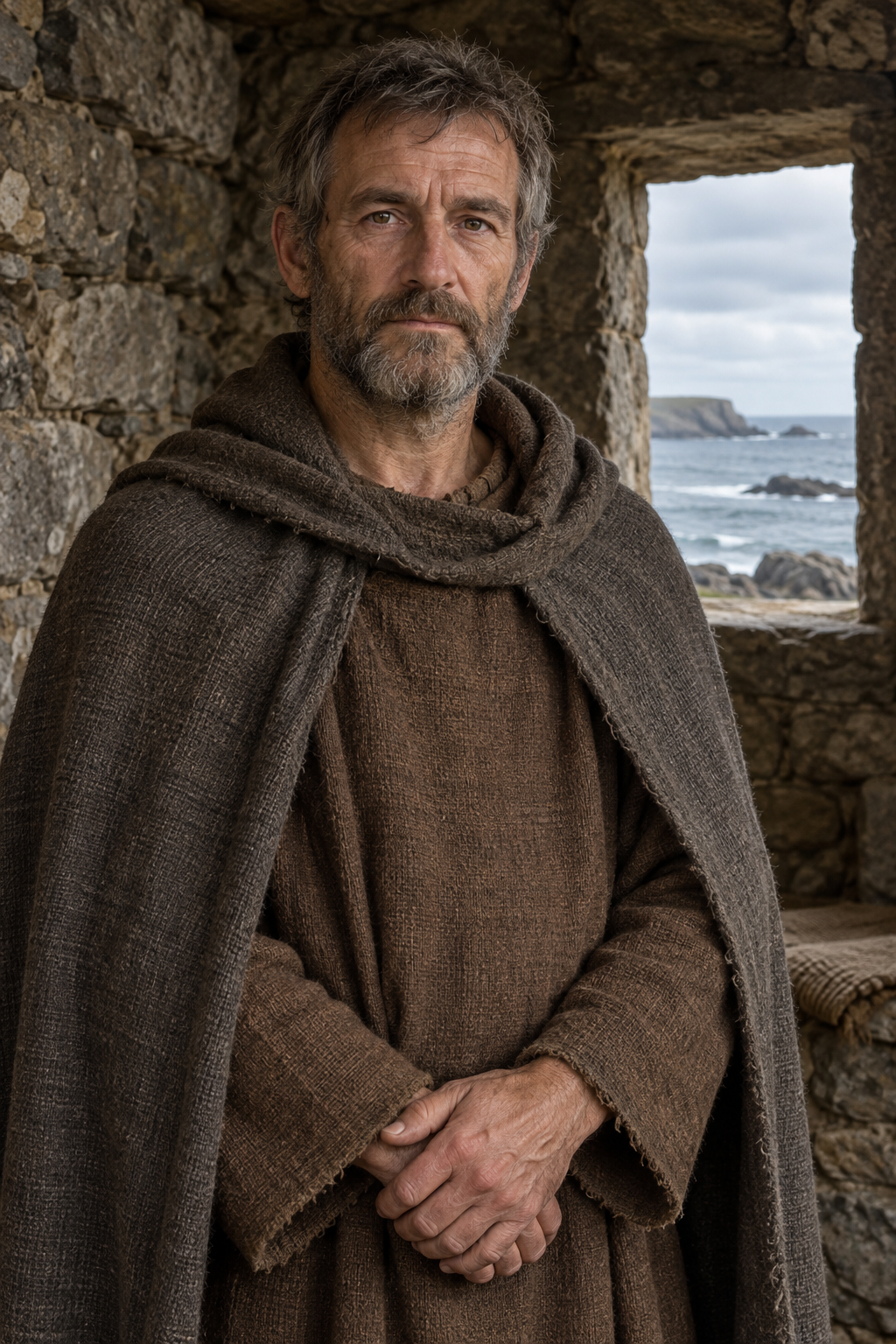
Baldred of Tyninghame, also called Balthere, was a priest and hermit on the Northumbrian coast. A death notice preserved by Symeon of Durham places his solitary life at Tyningham. He is generally remembered as having died around 756, though the chronicle dates are not entirely consistent.
Alcuin’s poem about York’s kings, bishops and saints gives a fuller, devotional portrait. It describes Balthere in a place surrounded by sea and steep cliffs. The setting has been identified with the Bass Rock, but the poem does not name the island.
The poem presents him as a man of prayer who resists evil through faith. In one story he shelters a frightened soul and prays for its deliverance. In another, he falls from a cliff and walks across the water to a boat. These are stories of sanctity, shaped by Christian accounts of spiritual struggle and miraculous rescue.
The priest Stephen Mark Holmes reads this coastal setting alongside Baldred’s local worship. A surviving medieval Mass connected with Haddington uses a chant about building on firm rock. Holmes proposes that its choice reflected the island hermitage. His reading shows how landscape could enter a community’s prayer, without turning a liturgical image into a precise description of Baldred’s home.
Later accounts describe Baldred as a bishop associated with Kentigern. The Catholic Church in Norway’s historical profile distinguishes that tradition from the eighth-century hermit. The difference matters: combining the accounts would give one man incompatible dates and offices.
His memory also became bound to claims about land and churches. Alasdair Ross’s study of North Berwick cautions that Durham’s surviving accounts served the interests of the community of Cuthbert. Their lists of possessions cannot simply be treated as a map of Baldred’s own ministry. The age and purpose of these records need to be considered alongside their religious testimony.
At Tyninghame, the roofless church remains belong to a much later building. The Romanesque sculpture survey describes surviving chancel arches and apsidal details from the twelfth century. After the parish church ceased use in the eighteenth century, the site continued as a private family burial ground. Its preservation marks a long history of local remembrance; it does not establish the form of Baldred’s original hermitage.
Baldred is remembered on 6 March. Traditions about his relics connected several local churches, but the legend of a body multiplied for competing parishes belongs to later storytelling. It should remain distinct from the early notice of the priest who lived in solitude at Tyningham.
Wondering how to weigh the stories and sources? Learn how to read a saint biography.