Biography
Bernard of Thiron
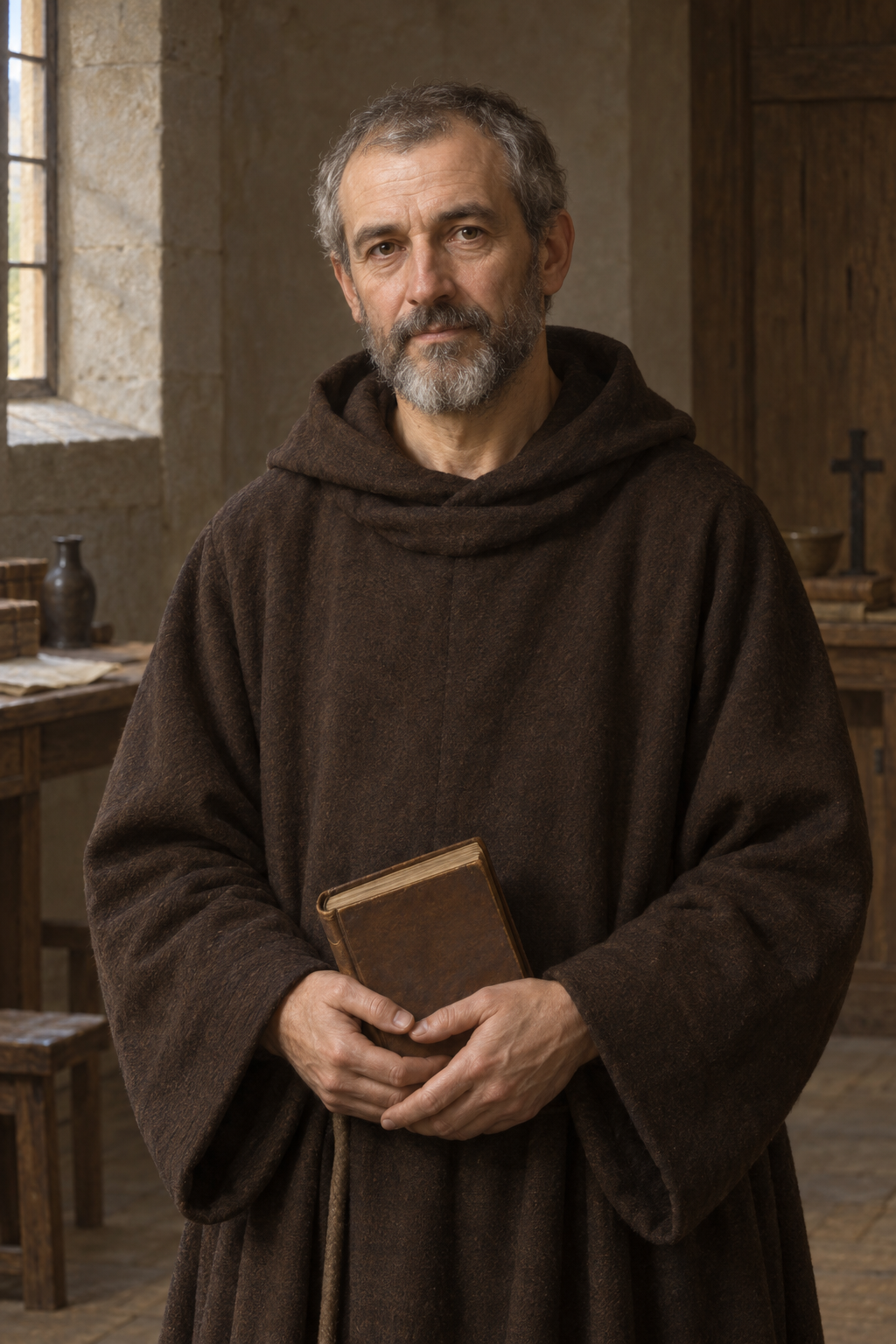
About Bernard of Thiron
Bernard of Thiron was a monk and abbot whose life became the founding narrative of a religious community. Geoffrey’s account begins with his education in the territory of Abbeville and his search for monastic life at Saint-Cyprien near Poitiers. It later follows the search for a place where Bernard and his companions could live together. These episodes form part of a saint’s life written to preserve the community’s memory of its founder.
Kathleen Thompson’s study examines the career behind this story. She places Bernard within established monastic institutions before his departure into a different form of community life. By comparing the Life with records from Saint-Cyprien and other accounts, she finds different views of his departure. The community he left and the community he later founded had different reasons to remember it. Thompson also stresses his ability to work with bishops and noble patrons. His interest in poverty and stricter discipline did not place him wholly outside the structures of his society. The study treats his search for a new community as a response to the difficulties of bringing those ideals into an established house. This is a historical interpretation grounded in comparison, rather than a claim that every episode of the Life is equally secure.
The disagreement with Cluny needs a particular qualification. Henriet finds that Geoffrey’s account challenges Cluny’s claim to authority over Saint-Cyprien, rather than attacking the way Cluniac monks lived. The argument concerns a monastery’s freedom. Describing Bernard simply as an opponent of corrupt Cluniac observance would change the nature of the dispute preserved in the source.
Royal support supplied practical resources for the new community. An act of Louis VI, dated by its editors to 1115, grants the monks land at Cintray sufficient for four plough teams and use of the forest of Melleray. The forest concession is specifically for construction timber and fuel. The king presents the gift as an act for the spiritual benefit of his parents and predecessors. This document places Tiron within the network of royal patronage during Bernard’s final years. Its original is lost, but the critical edition records the copies through which the text survives. The grant names the community as beneficiary; it does not prove a personal meeting between Bernard and the king.
One of Geoffrey’s final anecdotes gives this religious memory a practical form. A servant had been taking food, and the brothers responded by locking it away. The account shows Bernard blaming their failure to care for the hungry man and telling them to allow him food. The story links discipline within the household with responsibility for another person’s need.
In her later book, Thompson broadens the question from the founder’s career to the history of his community. The introduction asks readers to consider the Life alongside the abbey’s records and other narratives. It describes a short account that is more than an abridgement of the familiar Life: differences between the texts can illuminate the development of the founder’s memory. It also distinguishes the image of wandering hermits from the more settled community visible in the archive. The opening chapter questions some familiar assertions about Geoffrey himself, including his identification with a scribe called a chancellor. This approach gives a fuller account of how authority accumulated around the biography. A writer’s claim to have known the founder matters, but it does not remove the need to examine how the work was composed and used.
Patrick Henriet approaches Bernard’s Life through the meaning of reform. He distinguishes personal conversion, the discipline of a particular monastery and the reform of the wider Church. These aims can appear together without being identical. His reading follows the way the narrative gives Bernard a place among monastic discipline, preaching and individual change. In the conclusion, Henriet also asks how these ideals served the memory and interests of Tiron itself. The biography is evidence of a local community presenting its founder, as well as a source for the reforming movements of his time. That perspective helps explain why a detailed religious account still needs careful comparison with other evidence.
That secure grant must be distinguished from later claims made in Bernard’s name. The critical editors of Louis VI’s acts identify a group of forged documents for Tiron, including one claiming that Bernard’s prayers cured the king and won sweeping privileges. They point to handwriting, wording and institutional details inconsistent with the supposed period. Their analysis places the forgeries within later struggles to extend the abbey’s rights. These documents do not establish a royal healing, Bernard’s membership in the royal household or the privileges attributed to him. They show how a founder’s reputation could be used long after his death.
The date of Bernard’s death remains disputed. Henriet retains 1116 or 1117. Thompson uses 1116. The older published Life’s commentary also discusses differing calendar evidence. The current Catholic reference Nominis honours him on 14 April as a local feast. That observance can be recorded without making it a settled death date.
Wondering how to weigh the stories and sources? Learn how to read a saint biography.