Biography
Bonaventure
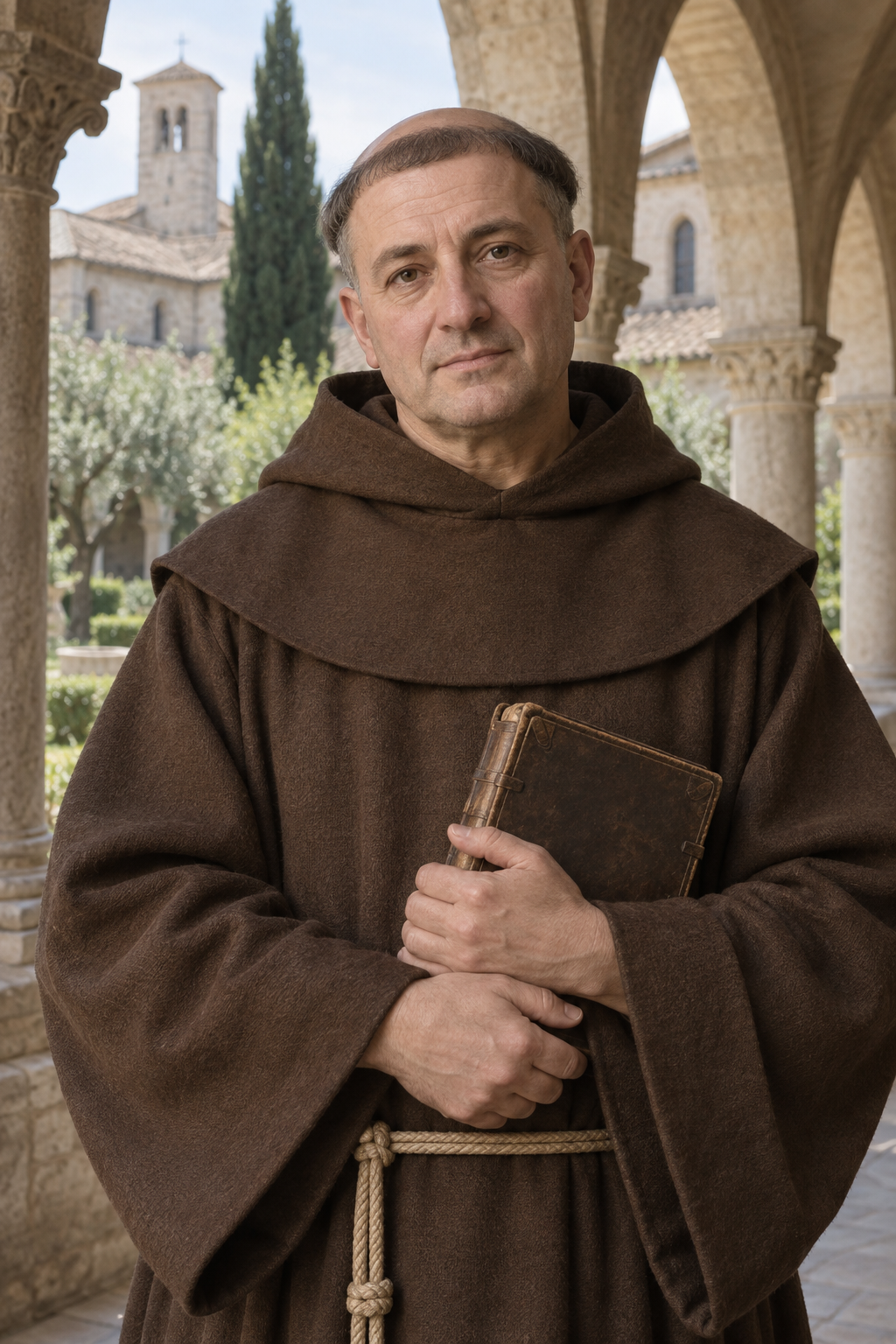
About Bonaventure
Bonaventure brought the habits of a teacher to the responsibilities of leading a religious community. A Franciscan friar, theologian and eventually a bishop and cardinal, he spent his life connecting study with prayer and the practical work of helping his brothers remain faithful to their vocation.
He came from Bagnoregio in central Italy. His birth is usually placed around 1217 or 1221. In Paris he studied philosophy before undertaking theology within the Franciscan community. His teachers included Alexander of Hales and other early Franciscan masters. The work demanded sustained attention: reading Scripture, studying earlier theologians, preaching and taking part in formal discussions. These were not separate interests added to religious life but the daily disciplines through which he learned to teach.
Bonaventure's teaching career developed amid a dispute over the place of friars at the University of Paris. Other masters challenged their right to teach and even the legitimacy of their religious way of life. He responded in writing, defending the vows of poverty, chastity and obedience as a way of following Christ. His concern was therefore more than professional recognition. He was explaining why a life of voluntary poverty could belong within the Church's work of teaching. Papal intervention eventually secured recognition, but his own responsibilities were already moving beyond the classroom.
In 1257 the friars elected him minister general while he was away in Paris. The community he inherited was large, spread across different countries and marked by different understandings of its purpose. His response included revising the regulations that governed common life. At Narbonne in 1260, a general chapter approved the collected constitutions. Leadership also meant equipping people for their work: his later collection of sermons offered help to brothers whose preparation for preaching was inadequate. Rules and teaching materials addressed needs that enthusiasm alone could not meet.
He also needed room to pray. In the prologue to The Journey of the Mind into God, Bonaventure remembers withdrawing to Mount Alverna in 1259 to seek peace of mind. Francis's remembered vision there suggested a pattern for a spiritual journey. Bonaventure offered this pattern to readers without treating intellectual effort as sufficient in itself. He asked them to bring love and humility to their learning, and to attend to the purpose of his writing rather than its elegance. The teacher who could organize a difficult argument also wanted to awaken desire: his reader was invited to become more prayerful, not merely better informed.
Writing the life of Francis was both a public responsibility and a personal act of gratitude. In its prologue, Bonaventure recalls having survived a dangerous illness as a child through Francis's intercession. He presents this as his own remembered experience. When asked to write the biography, he visited Francis's birthplace and questioned people who had known him. He wanted to gather memories before the people who carried them died. He also explains a choice that shapes the book: episodes are arranged by subject rather than always in chronological order. The result introduces readers to Francis through patterns of conduct, prayer and devotion. For Bonaventure, preserving those memories was a way to serve brothers who needed a shared example as well as shared rules.
His account became the Franciscans' official biography of their founder. The Catholic Encyclopedia records that the general chapter convened by Bonaventure in Paris in 1266 ordered the destruction of earlier lives of Francis. Bonaventure gathered material and also drew on earlier accounts. His effort did not permanently end those disagreements. The official biography became a common text for a community whose members did not all understand their inheritance in the same way.
His care extended beyond the friars. For the community associated with Isabelle of Longchamp, he wrote On the Perfection of Life for Sisters. Isabelle also worked with him and other Franciscan masters on a rule for the community.
The treatise begins by acknowledging the request he has received and his own limitations as a teacher. He asks his reader to judge his intention kindly and to excuse what brevity and lack of time have left unfinished. His advice then becomes searching and practical. He urges examination of how time is spent and whether prayer, reading and work receive proper attention. He also asks readers to notice envy: taking pleasure in another person's trouble or resenting another's success. A religious life, in this account, needs honest attention to ordinary habits as much as ambitious spiritual hopes.
In 1273 he became a cardinal and bishop of Albano. At the Second Council of Lyon he worked toward reunion between the eastern and western Churches. He died there on 15 July 1274, while the council was still meeting. The work of leadership ended before the assembly did.
Bonaventure was canonized in 1482. His writings continued to circulate long after the disputes that had first called them into being. Readers could encounter both the demanding theologian and the spiritual guide, a teacher whose public responsibilities had never exhausted his concern for the inner life.
Wondering how to weigh the stories and sources? Learn how to read a saint biography.
Explore similar vocations
Prayers for Bonaventure
Bonaventure: sourced prayer excerpt
formaci alla scuola del Vangelo, perché conosciamo la tua verità e la viviamo nella carità fraterna.