Biography
Boniface of Brussels
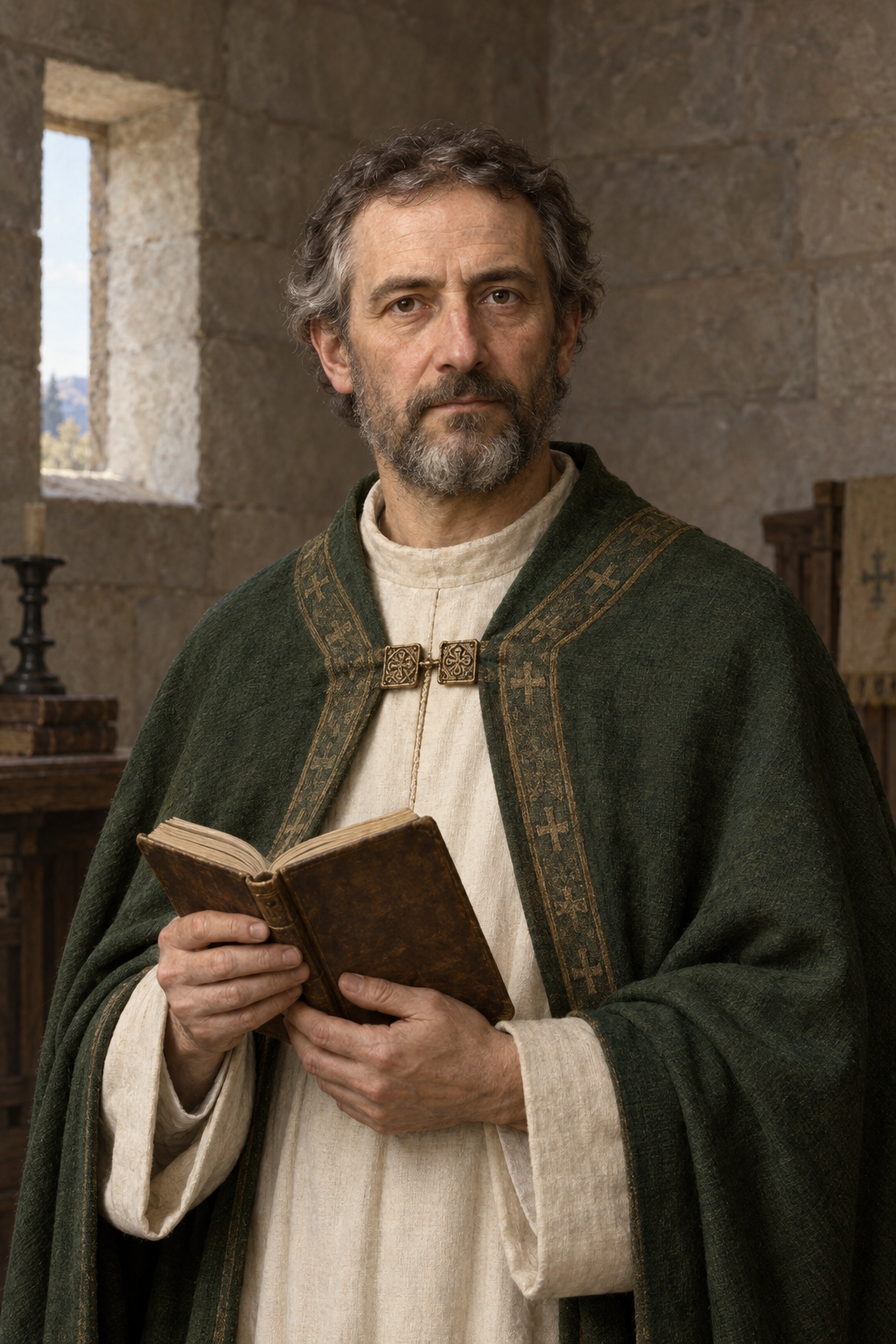
About Boniface of Brussels
Boniface of Brussels taught in Paris and Cologne before becoming bishop of Lausanne in 1231. He sought to reform the clergy and defend the rights of his church, but encountered opposition from cathedral canons and civic authorities. The disputes reached beyond Lausanne into conflicts involving Bern, Morat, the empire and the papacy. After a violent attack, he sought refuge in Rome. Pope Gregory IX supported him against his attackers, yet initially refused his request to resign. Permission came in 1239. Boniface eventually returned to the Brussels area and lived at the Cistercian women’s abbey of La Cambre.
His departure left a remarkably detailed personal record. In a letter to the chapter, knights and citizens of Lausanne, Boniface described repeated attempts to obtain permission to leave office. His language about the church’s condition was severe, drawing on biblical images of sickness and a household resistant to peace. He nevertheless expressed continuing affection for the church and its people. He thanked those who had honoured him, sought pardon if he had wronged anyone, and asked forgiveness for those who had injured him.
The same letter dealt with unfinished business. His stay at the papal court had involved borrowing money, and he warned of the cost of delayed repayment. He gave instructions about obtaining the relevant documents when the debt was paid. Correspondence concerning the contested church of Köniz remained in a locked box with the Dominicans in Rome because references to the emperor made carrying it dangerous. He also recommended armed defense in that dispute. The letter ended under an archbishop’s seal because his own was unavailable.
Leaving office did not resolve the struggle over Lausanne. Historian Catherine Santschi explains that the continuation of its episcopal chronicle concentrates on the cathedral chapter and the troubled choice of a successor. The record combines copied letters and formal documents with passages describing negotiations. It therefore offers a different perspective from a continuous life of Boniface: its central concern is who could govern the church during a vacancy and who had authority to choose the next bishop.
Santschi’s analysis also cautions against treating the dispute as a simple contest between two uniform parties. Papal policy, the interests of the house of Savoy and divisions within the chapter overlapped. The chapter’s appeal to an ancient electoral privilege was selective, while later canonical rules and earlier papal intervention complicated its argument. Boniface’s resignation belonged to this unsettled institutional setting; it was followed by further conflict rather than an immediate peaceful succession. The chapter divided between Philippe of Savoy and Jean of Cossonay, and their supporters brought the surrounding lords into the struggle. Choosing a successor became a conflict involving armed forces as well as ecclesiastical procedure.
The later account of his life requires a different kind of care. Patricia Stoop’s scholarly reference identifies an early Life associated with La Cambre and another preserved in manuscripts from houses of Augustinian canons. The latter belongs to the fifteenth century. These witnesses are separated by time, setting and transmission. Stoop notes that the present locations of some manuscripts mentioned by the Acta Sanctorum are uncertain. Their survival in editions does not make every reported episode equally secure, nor does it provide an uninterrupted account of Boniface’s daily life.
His residence among Cistercian nuns is better established than his membership in their order. Stoop explicitly leaves uncertain whether he made monastic vows. That distinction matters when describing his final years: La Cambre was his place of residence and burial, but its setting alone cannot establish a profession as a monk. The same reference places his birth around 1182 and his death on 19 February 1261. Other accounts give different estimates, so the approximate birth year and the competing chronology should remain visible.
Boniface’s remembrance also has a physical history. A Brussels heritage publication describes a wooden reliquary from the seventeenth century in his chapel at La Cambre, north of the church’s transept. It records that the relics had spent a period at Notre-Dame de la Chapelle before returning to the abbey church. This object belongs to the later preservation of his cult, rather than providing a portrait made during his lifetime. Its presence connects his name with a particular chapel and with the changing custody of objects associated with his memory.
The surrounding abbey has changed as well. The Brussels heritage service’s 2014 guide identifies the Saint-Boniface chapel within a protected site that underwent restoration in the twentieth century. Its surviving buildings include much later construction and serve parish, educational and institutional uses. The guide preserves the chapel’s place within that larger complex without presenting today’s buildings as an unchanged medieval setting. Boniface’s local Catholic remembrance continues beyond the site itself: a 2025 parish calendar at Bellevaux listed Mass for Saint Boniface, bishop of Lausanne, on 19 February. His memory links a difficult episcopate with a continuing, specifically located commemoration.
Wondering how to weigh the stories and sources? Learn how to read a saint biography.