Biography
Boniface of Mainz
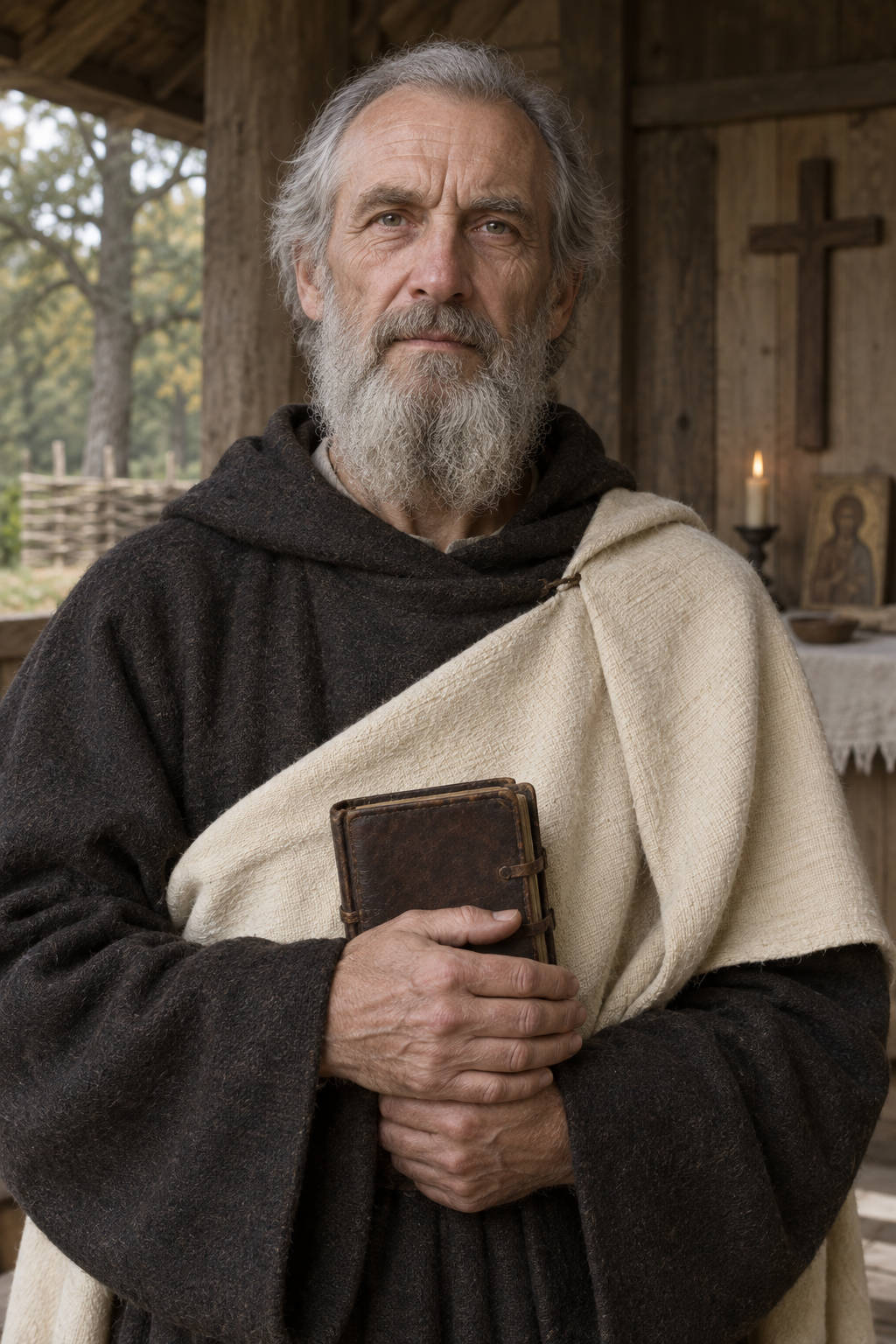
About Boniface of Mainz
Boniface of Mainz was an English monk and teacher whose work helped organize churches across parts of eighth-century continental Europe. Born in Wessex around 675, he was first known as Winfrid. His education in monastic communities prepared him to teach Latin grammar and study Scripture, and he also wrote poetry. These habits of learning remained important after he left England. His later missionary responsibilities required correspondence, books, and trained colleagues as well as preaching, so the scholar and the organizer were not separate figures in his life.
His first journey to Frisia in 716 did not establish the mission he hoped for. Political conflict made the work difficult, and he returned to England. He subsequently sought authorization from Rome before beginning again on the continent. The older Catholic Encyclopedia account also records Christian churches and monasteries already present in Bavaria and other regions he crossed. His task therefore included working among existing Christians and trying to change their practices.
Boniface's correspondence makes the practical support behind his work unusually visible. In a letter to Abbess Eadburga he thanks her for sending books and asks for prayer. Writing to his former pupil Duddo, he requests biblical commentaries and invites him to share useful material from his own library. The exchange also leaves room for the pupil's notes. Learning moves in both directions: the older teacher needs help, and he asks for it.
One of the best-known episodes comes from Willibald's Life, written to commemorate Boniface. It describes him cutting an oak at Gaesmere that local people regarded as sacred. The author reports that a powerful wind brought the tree down and that its timber became a chapel dedicated to Peter. The miraculous explanation belongs to this Christian narrative, not to independently verified observation. Even on the account's own terms, the episode involved destroying another community's sacred object. Willibald portrays onlookers first cursing Boniface and then turning to Christian belief after the tree fell.
The historical account published by the town of Fritzlar places this mission within Frankish power. Papal recommendations were accompanied by protection from Charles Martel, whose letter made Boniface's authorization known to officials. The nearby Frankish stronghold at Büraburg offered a base with an existing church. Boniface's religious work depended on institutions and political protection, not simply on personal courage. His relationship with rulers gave his work reach while also tying its fortunes to changes in their support.
As the work expanded, Boniface helped establish a more regular structure of episcopal oversight. The Catholic Encyclopedia describes his reorganization in Bavaria and his participation in synods concerned with clerical discipline. These assemblies addressed the responsibilities of priests and bishops and sought to restrict clergy's participation in warfare. Their decisions reveal a reform program directed inward at Christian communities as well as outward toward potential converts.
Monastic communities gave that program a continuing home. Benedict XVI's account emphasizes the contribution of men and women who came from England to support teaching and religious life. They were participants in the work, not merely an audience for Boniface's plans. Fulda became especially important as a place for prayer, study, and preparation for ministry. The network of communities could sustain activities beyond a single visit by the bishop and give younger collaborators a setting in which to learn.
At Fulda, Boniface entrusted the foundation to Sturmi. The Benedictine abbey's history dates this beginning to 744 and remembers Benedict's Rule as the pattern for the new community. The undertaking joined a founder's initiative to the daily responsibilities of an abbot and his monks. The city itself grew around the monastery, whose importance extended beyond its walls. Boniface's grave is now in Fulda Cathedral, on the site associated with the former men's abbey.
The later Catholic remembrance of Fulda also stresses books and education. In Ecclesiae Fastos, Pius XII describes the monastery's collection, copying, and study of manuscripts. He places Boniface's work within a long history of learning that continued after the missionary's death.
Boniface eventually held the see of Mainz. The diocese's historical list places him between Gewiliob and Lul and gives his tenure as 745 to 754.
He returned to Frisia near the end of his life. Willibald describes a camp awaiting converts for confirmation, an armed attack, and Boniface telling his attendants to stop resisting. The speech is preserved by his biographer and cannot be treated as a verbatim record of the final moments. The account remembers both the bishop and the companions killed with him.
His remains were ultimately buried at Fulda, and devotion to him developed beyond the communities he had served. Pius XII's account cites the early commemoration established in England and the continuing veneration of his grave. His legacy thus joined the remembrance of a violent death to institutions built for continuing work. The surviving record preserves a missionary whose teaching, administration, and dependence on others helped connect churches across political and geographical boundaries.
Wondering how to weigh the stories and sources? Learn how to read a saint biography.
Explore similar vocations
Prayers for Boniface of Mainz
Boniface of Mainz: sourced prayer excerpt
Health and prosperity in Christ.