Biography
Clemente Ignacio Delgado Cebrián
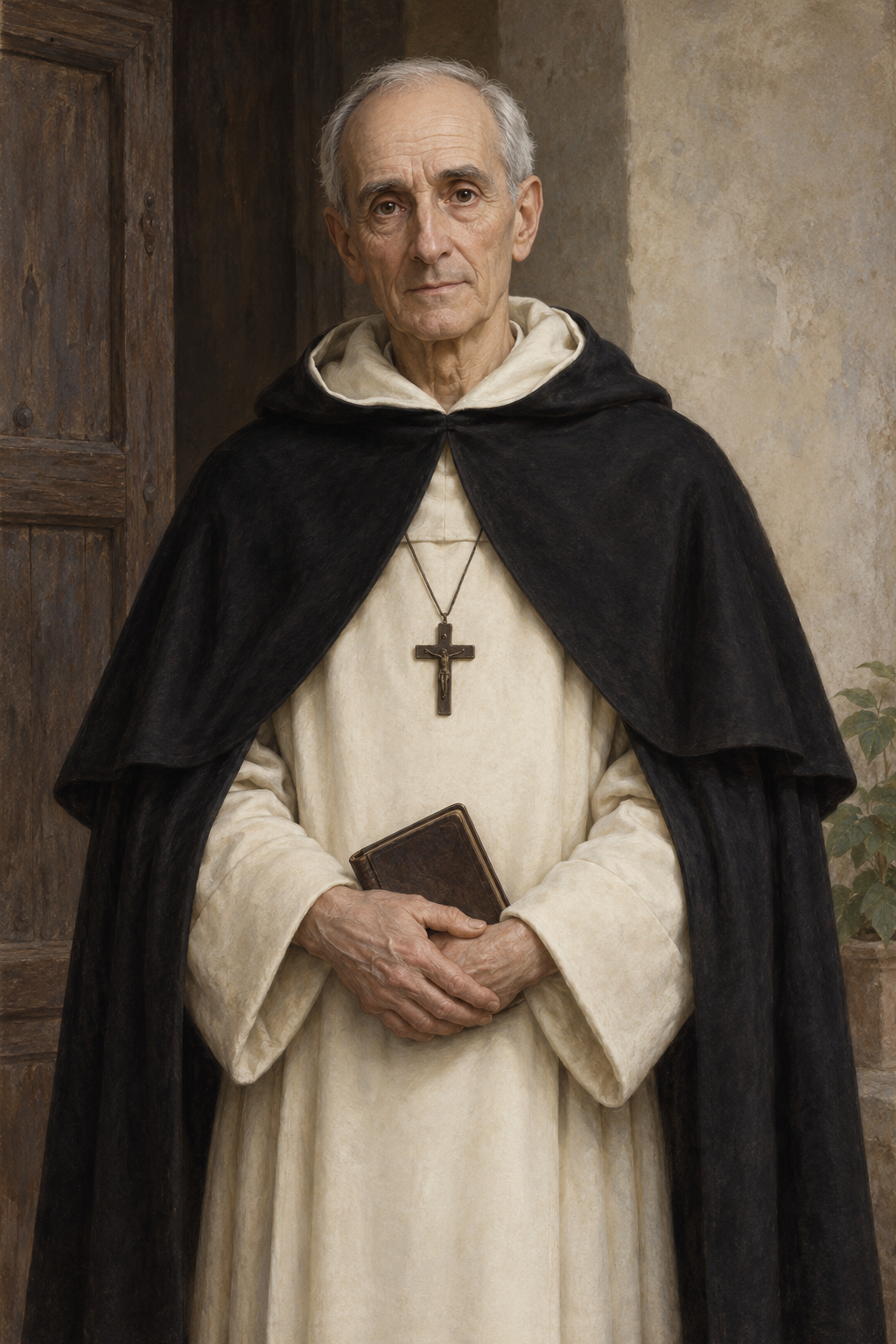
About Clemente Ignacio Delgado Cebrián
Clemente Ignacio Delgado Cebrián was a Spanish Dominican missionary and bishop who spent nearly half a century among the Christians of Tonkin. His work included preparing local clergy and supporting communities whose freedom to worship became increasingly precarious. In old age he was arrested and condemned to death. He died in custody in 1838 before the sentence could be carried out.
He came from Villafeliche in Aragón. The details of his birth are less certain than many short biographies suggest. The Dominican collection Witnesses of the Faith in the Orient records competing years, 1761 and 1763, while reporting a baptismal entry dated November 22, 1762. That evidence supports an approximate birth year rather than treating the baptism date as a securely established birthday.
Delgado belonged to the Dominican convent of San Pedro Mártir at Calatayud and studied at Orihuela. In 1785 he left Spain for the Philippines. His formation and travels connected the Province of Aragón with the Dominican missions administered through Manila. He eventually reached Tonkin in October 1790.
His parents were Francisco Delgado and Teresa Cebrián. He volunteered for the eastern missions while still a subdeacon, before completing the preparation required for his priestly ministry.
The journey from Manila had been much less direct than intended. The Dominican account describes a failed attempt to reach Tonkin, a return to Macao and several months helping with ministry in Malacca. Francis Albán, originally chosen to accompany him, became ill and could not continue. Delgado finally arrived with other priests, including Domingo Henares. Their later work as fellow bishops grew from this shared missionary beginning.
Bishop Feliciano Alonso appointed him vicar general, and in 1794 Delgado was chosen as coadjutor, with the right to succeed him. He received episcopal consecration in 1795 and became vicar apostolic after Alonso’s death in 1799. Henares subsequently became his coadjutor. These offices placed Delgado within an existing church, with responsibility for its clergy and faithful, rather than making him the founder of Christianity in the region.
The Dominican biography emphasizes his concern for the formation of young Vietnamese clergy and lay Christians. A seminary offered a way to prepare people who could sustain the church locally. This aspect of his work matters alongside the better-known account of his death: his vocation involved years of teaching, pastoral responsibility and support for communities, not only a final confrontation with the authorities.
The Dominican collection also lists his correspondence and a report on persecution beginning in 1827. These records connect his pastoral leadership with the work of keeping distant church authorities informed about conditions in the mission.
Conditions grew more dangerous under Emperor Minh Mạng. By 1838 missionaries were living in hiding, and Delgado was too old and infirm to escape readily. Guido Pettinati’s account places him at Kiên Lao, where an attempt to move him in a litter failed after soldiers entered the area. He was taken to Nam Định and confined in a cage.
During interrogation he was pressed to identify those who had sheltered him. The same account describes his willingness to answer for his own ministry while withholding information that would endanger others. Exposed to the weather and increasingly ill, he remained imprisoned after being condemned. The cruelty of his confinement forms an essential part of the church’s remembrance of him as a martyr.
He died on July 12, 1838. Henares had already been executed, so the two bishops’ deaths should not be compressed into one incident. Delgado’s body was subjected to the sentence after his death. His beatification followed in 1900, long after the communities he had served had endured further periods of persecution.
News reached Rome while the danger to Vietnamese Christians continued. In August 1839 Gregory XVI wrote to the faithful of Tonkin and Cochinchina about the loss of their leaders. His letter named Delgado and Henares and expressed concern for the people left without their pastors. It also spoke of finding replacement leaders and encouraged the surviving communities to persevere. The letter shows that the bishops’ deaths were understood in relation to a living church that still needed care.
John Paul II canonized Delgado with the Vietnamese martyrs in 1988. In his homily he placed missionaries from abroad alongside the many Vietnamese Christians who had suffered for their faith. He also acknowledged political tensions, economic and social pressures, and misunderstandings surrounding the conflict. The canonization remembered an entire church, including laypeople, rather than a story belonging only to European missionaries.
In his home region, Delgado is remembered as patron of the missionaries of the Archdiocese of Zaragoza. Federico Castillo, the diocesan missions delegate, described the annual gathering at Villafeliche as an occasion for returned missionaries, their families and the local community to meet. Prayer, a procession and a shared meal keep that remembrance connected with people still engaged in missionary service.
Wondering how to weigh the stories and sources? Learn how to read a saint biography.