Biography
Caprasius of Lérins
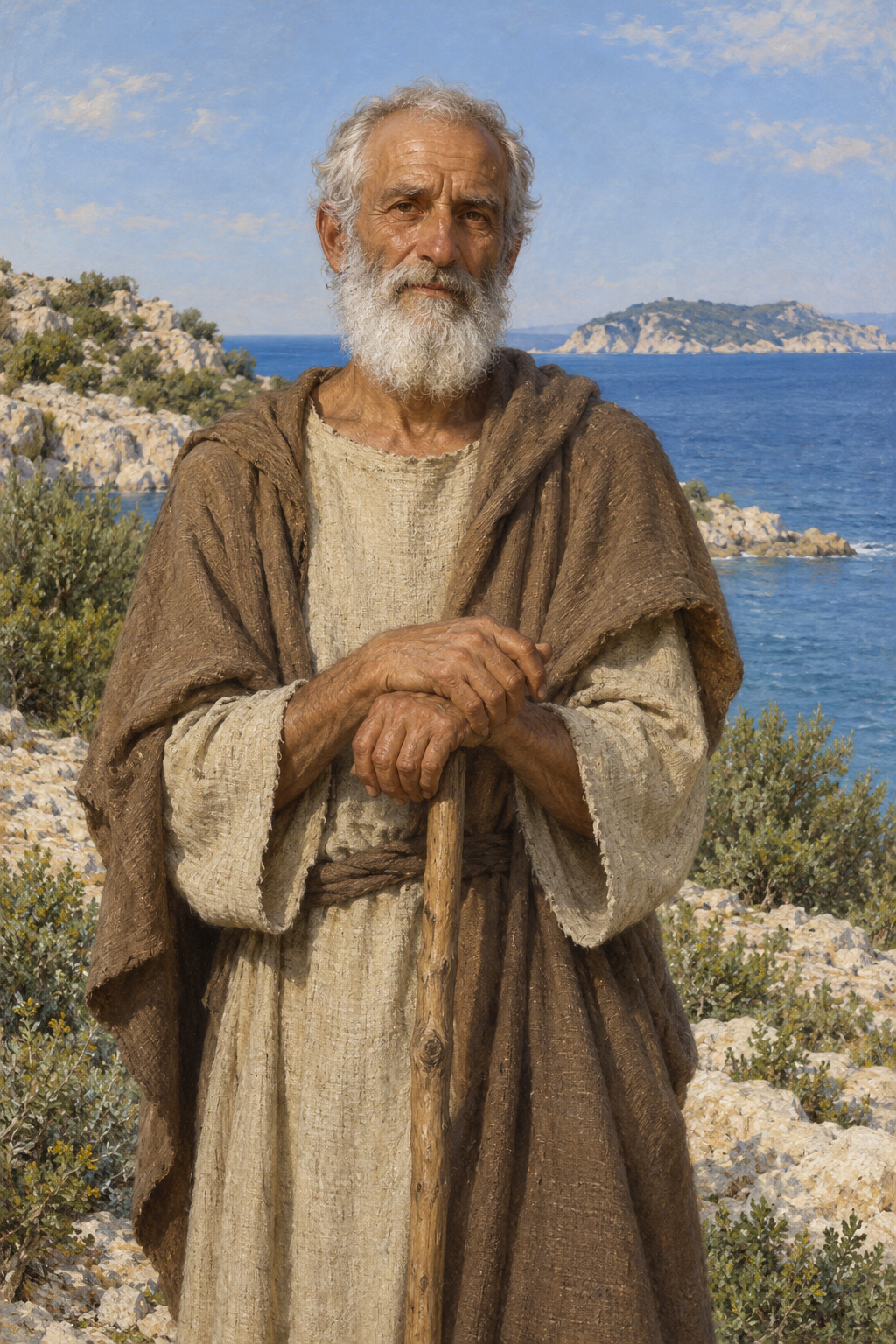
About Caprasius of Lérins
Caprasius of Lérins, known in French as Caprais, is remembered as an elder among the first companions of Honoratus. The abbey’s account places him with Honoratus and his brother Venantius on a journey eastward in search of monastic life. After Venantius died, the surviving companions returned to Provence. Caprasius then belonged to the religious community associated with the island now called Saint-Honorat.
The early praise of Honoratus gives Caprasius a particular role in that journey. The young brothers choose an older man whose maturity will guide them, and regard him as a father in Christ. The passage praises him while he is still living. Its emphasis is on spiritual counsel and example, rather than a formal title or a detailed account of his origins. Caprasius appears as someone whose experience helped younger Christians pursue the life they had chosen.
Eucherius of Lyon provides another early witness. Near the end of his Praise of the Desert, he names Caprasius among the people who make Lérins a place of holiness. He compares the elder’s seriousness with the saints of earlier times, then evokes older ascetics in separate cells as bringing the example of Egypt into Gaul. This is religious praise, not a description of an empty or uninhabited island. The solitude Eucherius admires is a setting for prayer and disciplined Christian companionship.
That passage also helps explain why Caprasius mattered without making him the hero of a long independent narrative. Eucherius celebrates humility, obedience, hope and common praise within the community. Caprasius is one of its living examples. The testimony preserves the esteem in which he was held more clearly than the dates of his birth or the events of his earlier life.
Later accounts require more caution. The Orthodox Encyclopedia distinguishes the early references from a separate Life preserved through a much later edition. That Life offers a different travel story and places his death around 430. The encyclopedia instead argues that he probably lived beyond 433, drawing on the bishops named in the account of Hilary’s visit during his illness. It also treats his possible contribution to early monastic rules as a scholarly proposal, not an established authorship. A precise death year or a list of writings would conceal those uncertainties.
A chapel at the western end of Saint-Honorat now carries his name. The abbey describes its location as the place where he is traditionally believed to have lived as a hermit, and records its restoration in 1993. The dedication preserves his place in the island’s memory without making the present building a surviving structure from his lifetime.
Wondering how to weigh the stories and sources? Learn how to read a saint biography.