Biography
Caradoc of Wales
About Caradoc of Wales
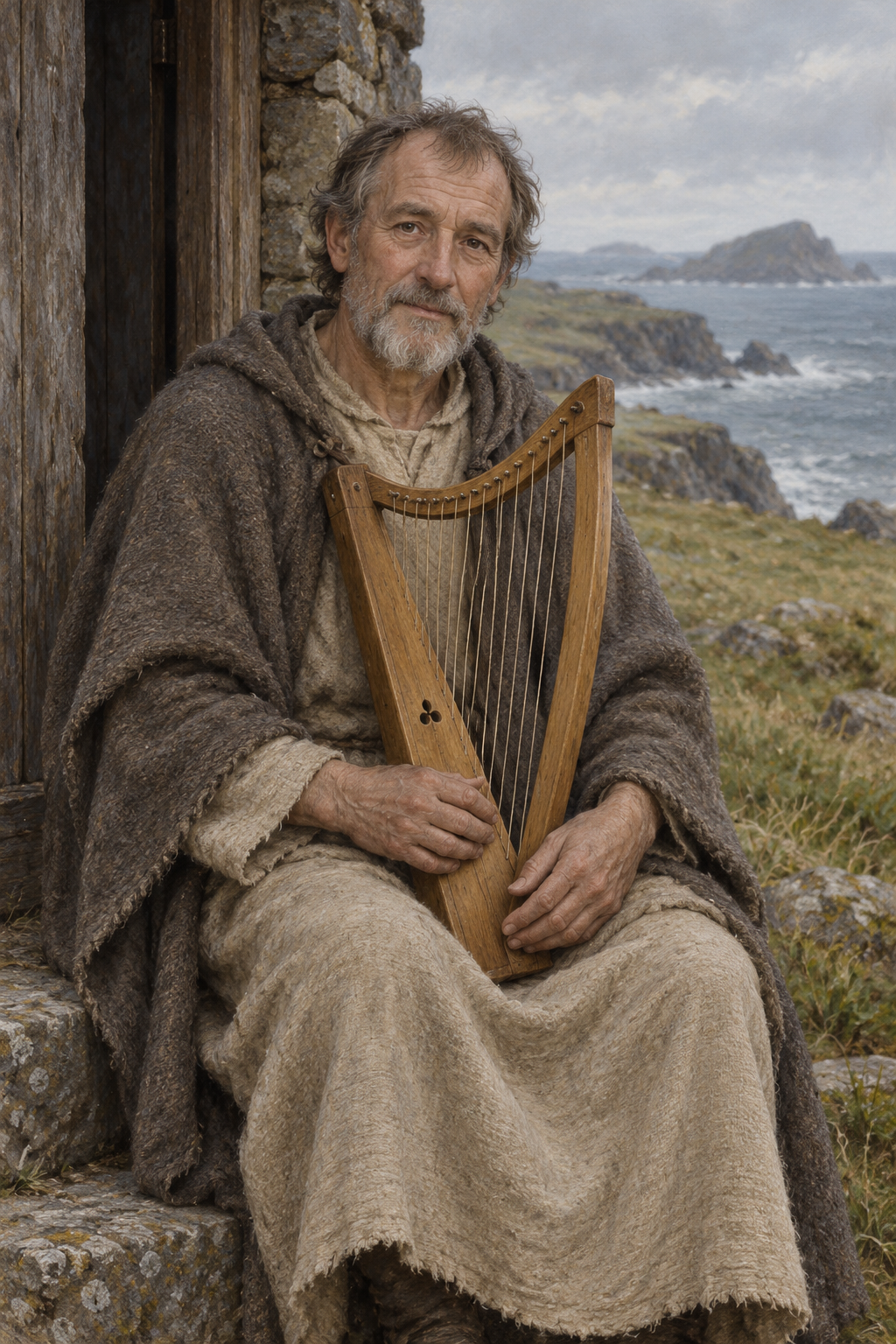
Caradoc, also known as Caradog Fynach, was a Welsh priest and hermit remembered especially in Pembrokeshire. John Edward Lloyd’s account places his origins in Brycheiniog and his early service at the court of Rhys ap Tewdwr. The traditional story explains his departure through a quarrel over two lost greyhounds: threatened by the prince, he chooses a religious life. His skill on the harp remains a familiar part of that remembrance.
The surviving Life develops that change of service into a religious lesson. Caradoc leaves the court with companions, receives the tonsure at Llandaff and later settles near the church of Saint Cenydd. The group clears an overgrown place with considerable labour. He eventually becomes a priest at Menevia, or St Davids. Although the account calls him a hermit, it repeatedly places other people beside him: solitude does not mean that he has no companions, work or responsibilities.
In another episode, Caradoc gives fish and money to someone seeking help. Its miraculous ending belongs to religious storytelling, but the narrative presents generosity as a central expression of his vocation.
The text itself has a complicated history. Francesco Marzella explains that Gerald of Wales wrote a Life of Caradoc and presented it to Pope Innocent III. Only its preface survives directly. The later version associated with John of Tynemouth appears to preserve an abridgement. That transmission matters: even when the story retains older material, it reaches us through later selection and rewriting.
Lloyd describes Caradoc’s last community at Saint Ismael’s in Rhos and difficult relations with neighbouring Flemish settlers. He gives April 13, 1124, as the date of death and records burial at St Davids. Gerald’s subsequent campaign for canonization produced a papal inquiry in 1200, but Lloyd reports that the process went no further. The opening of an inquiry must therefore be distinguished from a completed papal canonization.
Evidence for local devotion survives apart from the stories of his lifetime. The Cult of Saints in Wales records an early chapel at Newgale, associated with the journey of his body to St Davids, and a well near Haverfordwest documented in 1315. It also cautions that the dedication of Lawrenny church to him is not attested before the eighteenth century. A living dedication is important evidence of remembrance, but its earliest surviving record is not automatically the date when devotion began.
The same scholarly record notes two dates for his commemoration: April 13 in a later account and April 14 in a medieval manuscript calendar. These are witnesses to different calendar traditions, rather than grounds for silently combining a feast date with a death date.
At St Davids Cathedral, his shrine and the embroidery above it preserve his reputation for gentleness toward animals. The cathedral also identifies him as a patron claimed by Welsh harpists. Its account treats the hound stories as legends that may carry meanings beyond the events they describe, including the relationship between a Welsh holy man and powerful newcomers. Caradoc’s remembered music and kindness remain central to this local devotion, even where the details of his life depend on a later religious narrative.
Wondering how to weigh the stories and sources? Learn how to read a saint biography.