Biography
Caridad Álvarez Martín
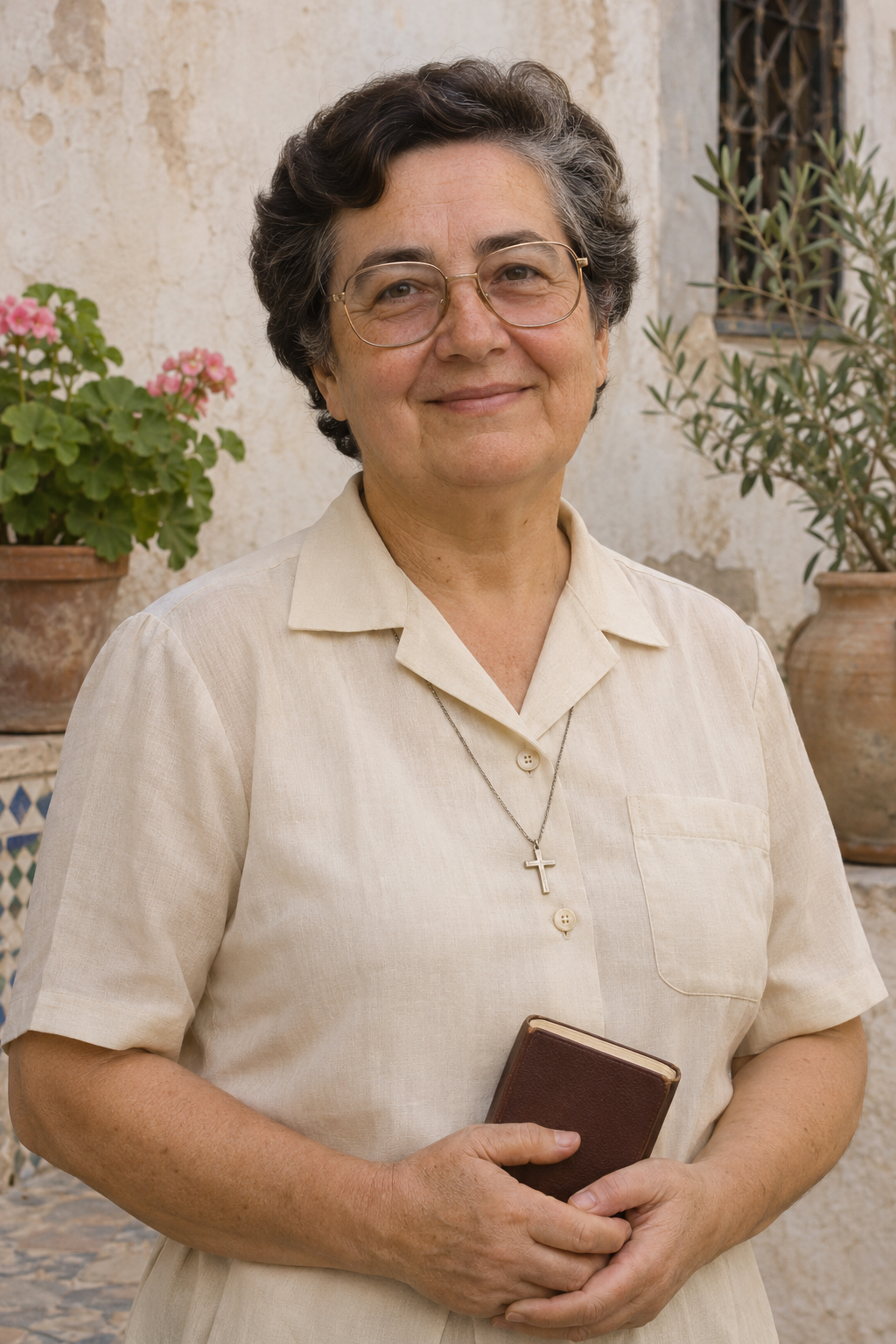
About Caridad Álvarez Martín
Caridad Álvarez Martín was born at Santa Cruz de la Salceda, Burgos, Spain, on May 9, 1933. She entered the Augustinian Missionary Sisters in 1955. Sent to Algeria, she made her lifelong religious profession there in 1960. Ill health required a return to Spain, but after recovering she went back. Her mission became closely associated with vulnerable elderly people, especially those living in poverty.
The congregation records more than thirty years of service in Algeria, a long attachment interrupted by the return for treatment. She prayed the rosary daily.
Rodríguez also recalled that her lifelong profession had taken place at Hippo, the ancient city associated with Augustine.
Her former provincial María Jesús Rodríguez remembered the daily work that sustained their house in Algiers. Caridad cooked, welcomed visitors and listened to people who needed her. She was attentive to small practical details. Every Friday she prepared tea and pastries for elderly neighbors. Rodríguez described these gatherings as a regular way of being with people rather than an occasional charitable gesture. She also remembered Caridad's cheerful manner. The recollections bring her ministry into the ordinary setting of a shared house, a kitchen and conversations with neighbors. Much of her service took place through these recurring acts of hospitality.
Lourdes Miguélez and María Paz Martín likewise remembered her as the woman who kept serving the sisters and a small group of older people. Their account places this work within the changing life of the Algerian church after independence. The congregation adapted when church schools were nationalized, developing libraries, nursing services and childcare. Caridad belonged to one of three small communities maintaining a local presence. The sisters' work depended on relationships formed through modest but necessary services. Her household responsibilities were part of that shared mission.
When growing violence made departure a serious possibility, Caridad took part in the community's discernment. Her recorded reflections turned to Abraham's call to leave his land and to Mary's acceptance of God's will. She recognized her own vocation in those biblical accounts. She spoke of willingness to accept what God and her superiors asked of her. Remaining in Algeria meant renewing a commitment already lived over many years. Her words joined trust in God with attention to the choices being made by the community.
Rodríguez later recalled urging Caridad to return to Spain because of concern for her safety. Caridad answered by referring to fidelity to her mission and the people among whom she lived. The provincial stressed that the sisters understood the risks and decided individually and freely to remain. She also emphasized their love of life. Their decision was rooted in affection for the Algerian people rather than a desire to die. The account preserves a difficult choice made within relationships of responsibility, concern and faith.
The community continued to take precautions. Rodríguez described a practice of going out in pairs rather than all together. On the afternoon of October 23, 1994, Caridad and Esther Paniagua went first toward the nearby chapel of the Little Sisters of Jesus in Bab El Oued. María Jesús and Lourdes followed some distance behind. They heard gunfire and neighbors warning them to take shelter. Caridad and Esther were shot on their way to Mass. Both died that day. The witness account also remembers the help offered by people living nearby.
Ángela Cecilia Traldi, then superior general, remembered knowing and loving both women. Their deaths raised an agonizing question about the safety of the sisters still in Algeria. She sought advice and remained in close contact with them. In her later interview she recalled the pressure to withdraw the community and her own difficulty in praying during that time. The sisters who remained asked to be trusted in their decision to continue. The congregation maintained its presence. Traldi's recollection shows the emotional and practical cost of that continuation without presenting the community as untouched by fear or grief.
Historian Fernando Rojo Martínez included Caridad and Esther in his survey of Augustinian women. He highlighted prayer, service, simplicity and humility as features of their lives. His brief account places their missionary witness within a long history of women living the Augustinian vocation. It offers an assessment of their shared commitment rather than additional details about Caridad's childhood.
Caridad was beatified at Oran on December 8, 2018, with Esther and seventeen other martyrs killed in Algeria. Their congregation celebrated a thanksgiving Mass at León Cathedral a week later. Carmen Ramírez, an Augustinian Missionary Sister in Avilés, spoke of the joy the recognition brought to the sisters. She connected their example with the congregation's continuing attention to education and people in need. She described interior prayer, fraternal community and service to the church as central to their way of life. Caridad's memory remains associated with that ordinary pattern of prayer, welcome and practical care.
Wondering how to weigh the stories and sources? Learn how to read a saint biography.