Biography
Catherine of Siena
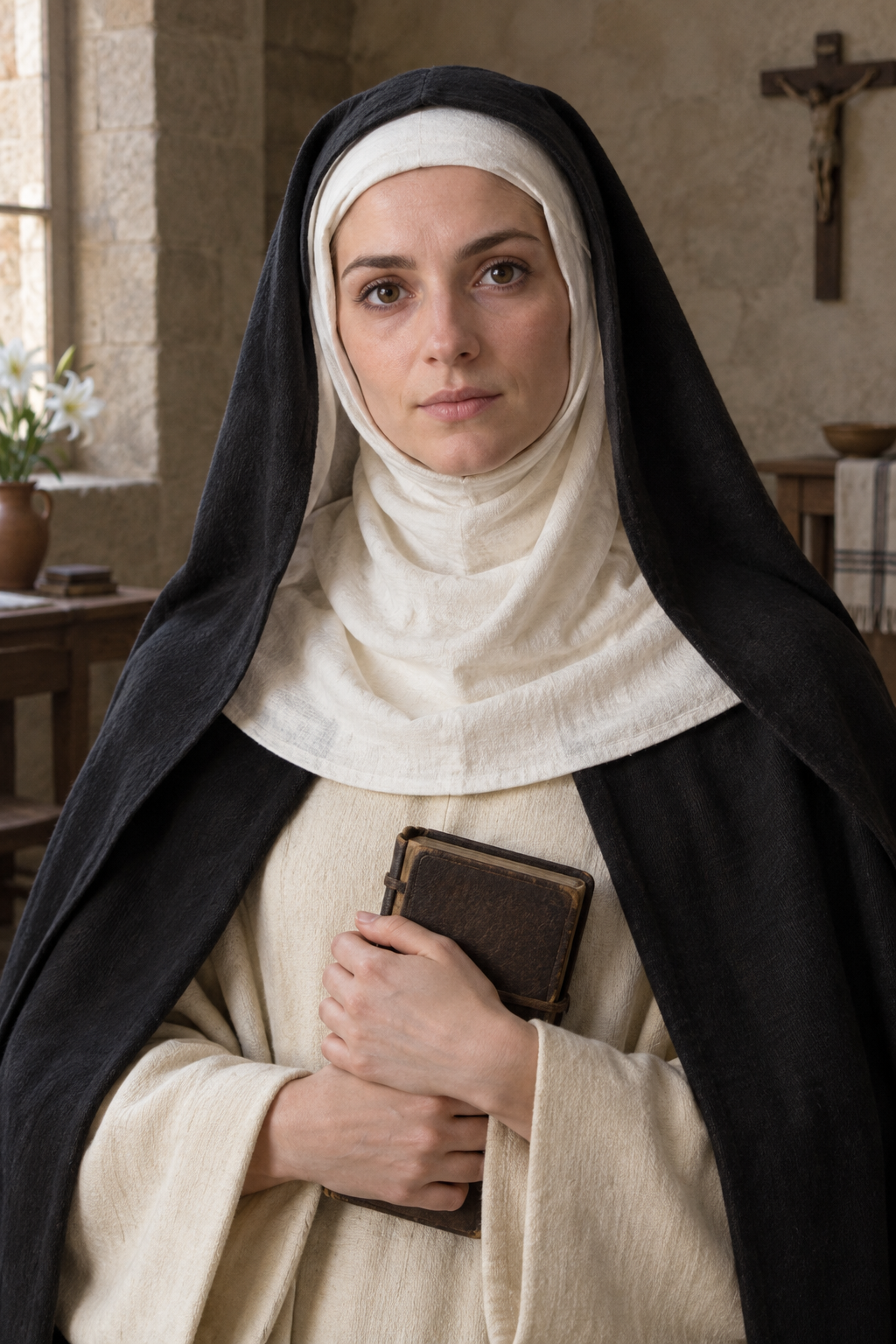
About Catherine of Siena
Catherine of Siena's life joined prayer at home with journeys into the conflicts of her time. Born Caterina Benincasa in Siena on March 25, 1347, she was the daughter of Jacopo, a dyer, and Lapa. Her family hoped that she would marry, but she chose a life dedicated to God. She remained a laywoman, living with her family even after entering the Dominican Third Order.
The women of that Dominican branch were called the Mantellate. Catherine entered at about sixteen, committing herself to prayer, penance and care for the sick. Her influence gradually drew together people from many walks of life, including ordinary citizens, artists, nobles and members of religious communities. They sought her counsel and came to regard her as a spiritual mother. Her growing reputation did not spare her scrutiny: the Dominican general chapter summoned her to Florence in 1374. Raymond of Capua became her spiritual guide and confessor, and later wrote an extensive account of her life.
Care for vulnerable people gave her dedication a practical form. Paul VI's account names the hospital of Santa Maria della Scala and the leper hospital of San Lazzaro among the places where she served. Her unusual way of life provoked disapproval, yet service to others remained part of it. The same account recalls her mystical experiences, describing the stigmata through Raymond's testimony as wounds received in a form of light. These experiences belong to the religious witness preserved by her followers, who understood her love of Christ as deeply personal and costly.
Catherine's concern for others also reached people with political power. She urged rulers to govern justly rather than treat their realms as private possessions. Their responsibility for poor people belonged within their public duties, not outside them. With similar urgency, she pressed bishops, priests and cardinals to bring integrity to their ministry. John Paul II's account of her work emphasizes the connection she made between public peace and moral reform. Her appeals addressed the conduct of those in authority, asking that their responsibilities be shaped by charity rather than self-interest.
Her own letters show how direct that counsel could be. Writing to Pope Gregory XI, she compares corrupt pastors to spoiled flowers that must be removed from a garden. In their place she asks for ministers concerned with God's honour and the wellbeing of those entrusted to them. In another letter she presses the pope to make peace with Tuscany and reach agreement with people who have rebelled against him. Her confidence in the papacy did not mean leaving its holder free from criticism; she expected him to use his authority responsibly.
In June 1376 Catherine travelled to Avignon to work for peace between Florence and the Holy See. She also urged Gregory XI to return to Rome, which he reached in January 1377. Her campaign was not the ending of the Great Schism: that division began in 1378, after Gregory's death. Catherine then supported Urban VI and went to Rome at his invitation. Her efforts for peace existed alongside a specifically medieval ambition: she also promoted a crusade, hoping to redirect Christian warfare toward the Holy Land.
Diplomacy brought danger as well as access to powerful people. During her later mission to Florence, a popular uprising put her life at risk. She remained in or near the city until news arrived that peace had been concluded. Returning to Siena, she spent a quieter interval dictating the Dialogue, the work in which her spiritual teaching took its most sustained form. The movement between public action and concentrated reflection was part of her life, rather than a choice she made once and never reconsidered.
In the Dialogue, Catherine presents a soul's conversation with God. Its teaching on discretion places love and virtue above bodily penance, treating ascetic practices as means rather than ends. They must be suited to a person's capacity and circumstances. Patience, humility and care for a neighbour matter more than the outward impressiveness of a religious exercise. That teaching offers a way to read her demanding spirituality without turning every austerity into a rule for others.
She had learned to read with difficulty and to write only as an adult. Her teaching nevertheless reached others through the Dialogue, letters and prayers. The people around her helped carry that teaching into a wider spiritual family, looking to her for guidance and nourishment in their own lives.
Catherine died in Rome on April 29, 1380. Her body is venerated at Santa Maria sopra Minerva, while her head is preserved at San Domenico in Siena. The Church later recognized her as a patron of Italy and a co-patron of Europe.
Pope Pius II canonized Catherine in 1461.
In 1970 Paul VI declared her a Doctor of the Church, honouring a teacher whose authority had grown through prayer, service and spiritual counsel.
Wondering how to weigh the stories and sources? Learn how to read a saint biography.
Explore similar vocations
Prayers for Catherine of Siena
Catherine of Siena: sourced prayer excerpt
Open the door of Your inestimable love which You have given us through the door of Your Word.