Biography
Clelia Nanetti
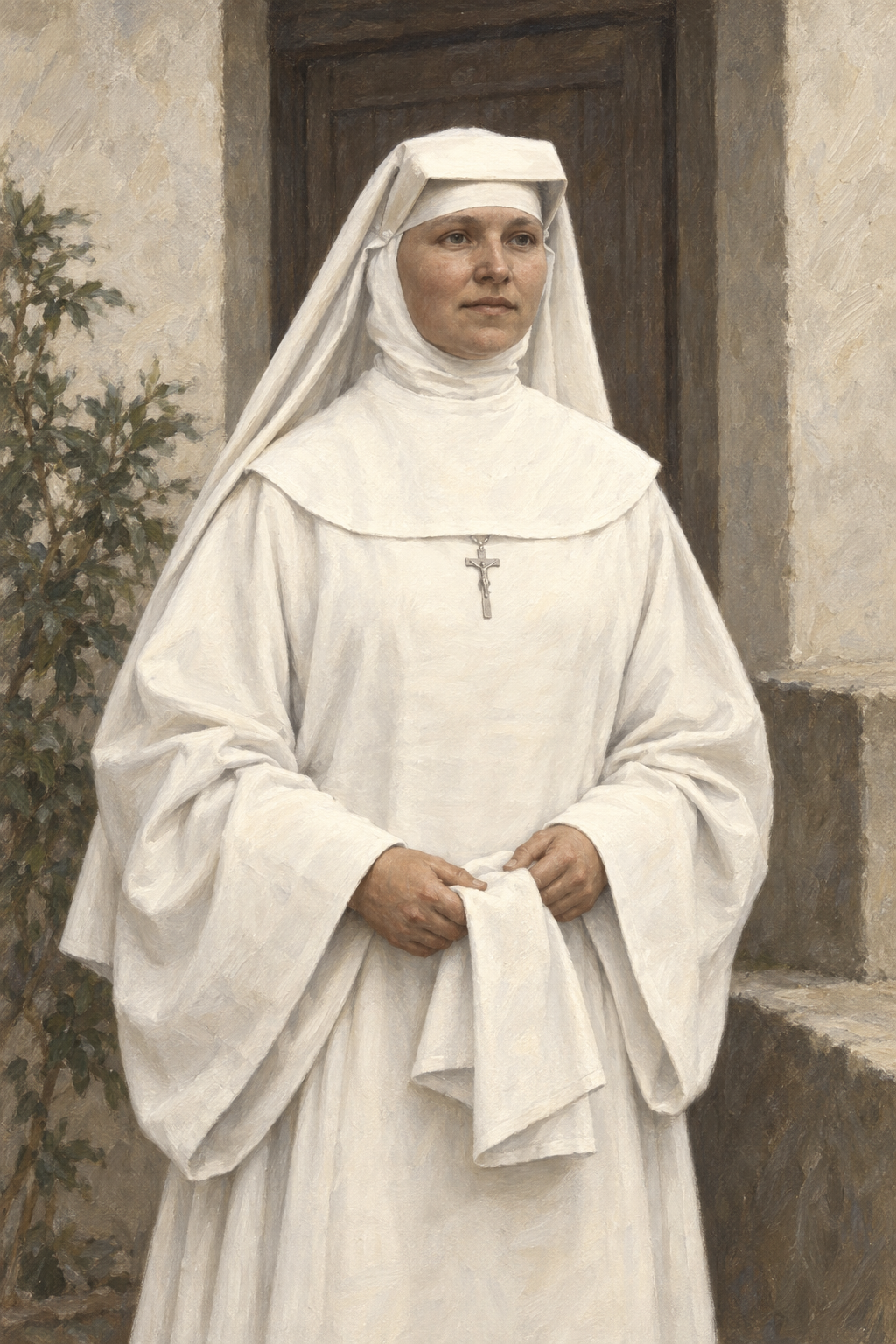
About Clelia Nanetti
Clelia Nanetti, known in religious life as Maria Chiara, was an Italian Franciscan Missionary of Mary who served at an orphanage in Taiyuan. She was twenty-eight when she was killed during the Boxer uprising in 1900. Her religious life had taken her from northern Italy through communities in France and Belgium before she reached China.
She was born at Santa Maria Maddalena beside the Po in 1872. Historian Pier Luigi Bagatin places her family in the Pepoli household, where her father Narciso worked as an estate manager. Her mother was Pellegrina Rossi. The family’s roots and later homes lay on the Ferrara side of the river as well as in the Polesine. After leaving Santa Maria Maddalena, they lived near Medelana and eventually at Francolino. Her older brother Silvio entered the Franciscans and became known as Father Barnaba. This family history helps explain why both the Rovigo and Ferrara communities remember her.
Her wish to become a religious sister met opposition from her parents. The New Catholic Encyclopedia describes a lively, intelligent young woman whose decision was not immediately welcomed at home. Her brother helped her find a congregation suited to a missionary vocation. She joined the Franciscan Missionaries of Mary in January 1892 and began her novitiate a few months later.
The name Maria Chiara marked that new beginning. At Les Châtelets in Brittany, formation included demanding agricultural work, familiar in some respects from her rural upbringing. Ill health led to a transfer to Vanves near Paris. She also spent time in Belgium before taking responsibility for the community’s clothing. The sisters lived with very limited changes of habit, making washing, repairs and timely distribution an important service. This was practical work requiring consideration for other people as well as the ability to finish a task. In November 1898 she made her perpetual profession and learned that she would join the mission to Shanxi.
Her letters preserve a more personal view of these years. In August 1892 she understood that harvesting and silkworm work had delayed her family’s reply. Before sailing, she described learning useful skills, including embroidery, machine work and decorative drawing, so that she could help wherever needed. In July 1899 she welcomed a retreat after months of travel and work. These passages show continuing concern for home, practical preparation and a need for recollection alongside activity.
The seven sisters reached Taiyuan on May 4, 1899. They formed an international community, including women from France, Italy, Belgium and the Netherlands. Their mission included an orphanage and dispensary. Clelia’s time there lasted little more than a year before the violence that ended the community’s work.
Her journey also brought a final brief reunion with Barnaba, already working in China. He was there to greet her when she reached Taiyuan, but they did not meet again afterward. The brother who had helped her choose religious life thus remained connected with her missionary calling, even though their work did not keep them together.
The orphanage already had Chinese women caring for its children. Mazzetti’s account describes the newcomers’ difficulty learning the language and negotiating responsibilities with these established workers. Clelia helped with the children’s meals. The planned hospital also faced a shortage of resources, while famine relief placed demands on the mission. This setting was more complicated than a story of European sisters arriving to begin everything from nothing: local Christians and existing institutions were already part of the work.
The wider conflict likewise cannot be reduced to the experience of foreign missionaries alone. Anthony Clark’s study of the Boxer uprising in Shanxi examines religious belief together with political, cultural and environmental pressures. Its publisher’s account emphasizes the many Chinese Christian victims and the participation of women on both sides, including the Boxers’ Red Lantern girls. Clelia’s death belongs within that larger history, while her own record describes one small community caught in it.
As danger increased, an attempt was made to evacuate the orphanage. According to the New Catholic Encyclopedia, Clelia and the children returned when their route was blocked. Accounts that present her simply as refusing every chance to leave do not convey this part of the story.
On July 5, 1900, the sisters were imprisoned with other Catholics. Four days later they were taken to the governor’s palace and killed with their companions. Their congregation remembers both their shared religious commitment and the ordinary work that preceded their deaths. Pius XII beatified the sisters in 1946; John Paul II canonized them in 2000.
Her remembrance later reached beyond Italy and China. Writing in 2013, Francesca Magon described the Missionary Family of the Redemption’s role in making her story known and a parish dedicated to her at Yoba, near Gitega in Burundi. That continuing dedication connects the memory of a young missionary with another community’s worship and service.
Wondering how to weigh the stories and sources? Learn how to read a saint biography.