Biography
Clement of Ohrid
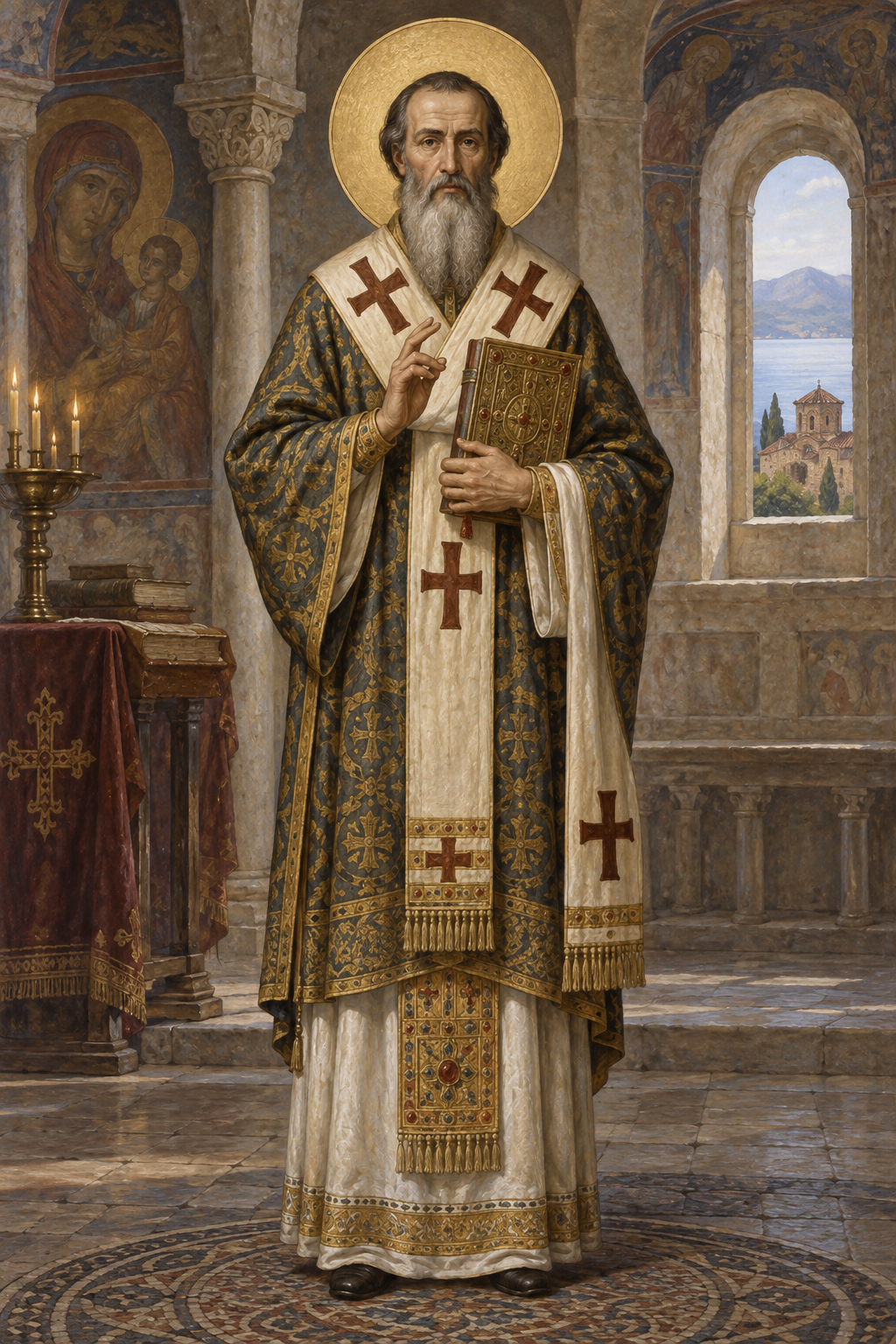
About Clement of Ohrid
Clement, or Kliment, of Ohrid was a medieval Christian bishop, teacher, and writer associated with the Slavic missions of Saints Cyril and Methodius. Modern reference works usually place his birth around 840, although an encyclopedia gives a broader range beginning around 835. The available sources do not establish a birthplace, so none is supplied. His life is known substantially through later hagiographic writing, especially the Life attributed to Theophylact of Ohrid, and scholars distinguish that narrative from contemporaneous documentation.
The Croatian Encyclopedia describes Clement as a disciple of Methodius and a participant in the mission among Slavic peoples in Great Moravia. After Methodius’s death, Clement and other disciples were expelled, and Clement found refuge in Bulgaria. The outline is consistent with the medieval literary tradition, but detailed scenes and speeches in later lives cannot be treated as direct eyewitness records. This entry therefore gives the broad movement reported in the biographical tradition without supplying a precise travel itinerary or unverified conversation.
The Great Russian Encyclopedia places Clement among the followers of Cyril and Methodius and connects him with the foundation of the Ohrid literary school. The Croatian reference account credits him with helping root Christianity among Slavic communities in the region and with contributing to Slavic literacy and literature. Those broad cultural associations are well established in modern reference scholarship, although individual works attributed to Clement require separate textual analysis. The later Life of Clement is itself an important witness to how his community remembered his role.
In 893 Clement was appointed bishop, according to the Croatian Encyclopedia. The same account associates his episcopal work with the Macedonian region, while the Great Russian Encyclopedia records several possible episcopal titles and cautions that the historical geography is complex. This profile does not impose a modern national jurisdiction on a medieval office. It uses “bishop” as the sourced ecclesiastical role and treats Ohrid as the center of his later memory and cult.
Clement is credited with translating from Greek and composing homilies, encomia, and instructional writings in Church Slavonic. The Croatian Encyclopedia reports those literary activities and notes that some attributions remain uncertain. Rather than list an expansive catalog of works, this biography distinguishes the general fact of his literary activity from particular authorship claims. The University of Ioannina repository documents a recent scholarly study and translation of Theophylact’s Life, which is the chief hagiographic narrative used in modern discussions of Clement’s biography.
Clement died in 916, according to the reference works used here. Ohrid is associated with his death and burial in the later tradition, but the record does not add a more precise site. His death year is more consistently reported than his birth year.
Clement’s legacy is the combination of pastoral leadership and Slavic-language learning attributed to him. Later Orthodox hagiography presents him as a saint and teacher, while modern scholarship examines the way that text shaped collective memory. The evidence supports a concise account of his broad historical significance but not a detailed chronology of daily life. This biography consequently omits unsupported family details, precise birthplace, birth month or day, and claims that he invented an alphabet.
Wondering how to weigh the stories and sources? Learn how to read a saint biography.