Biography
Columban of Luxeuil
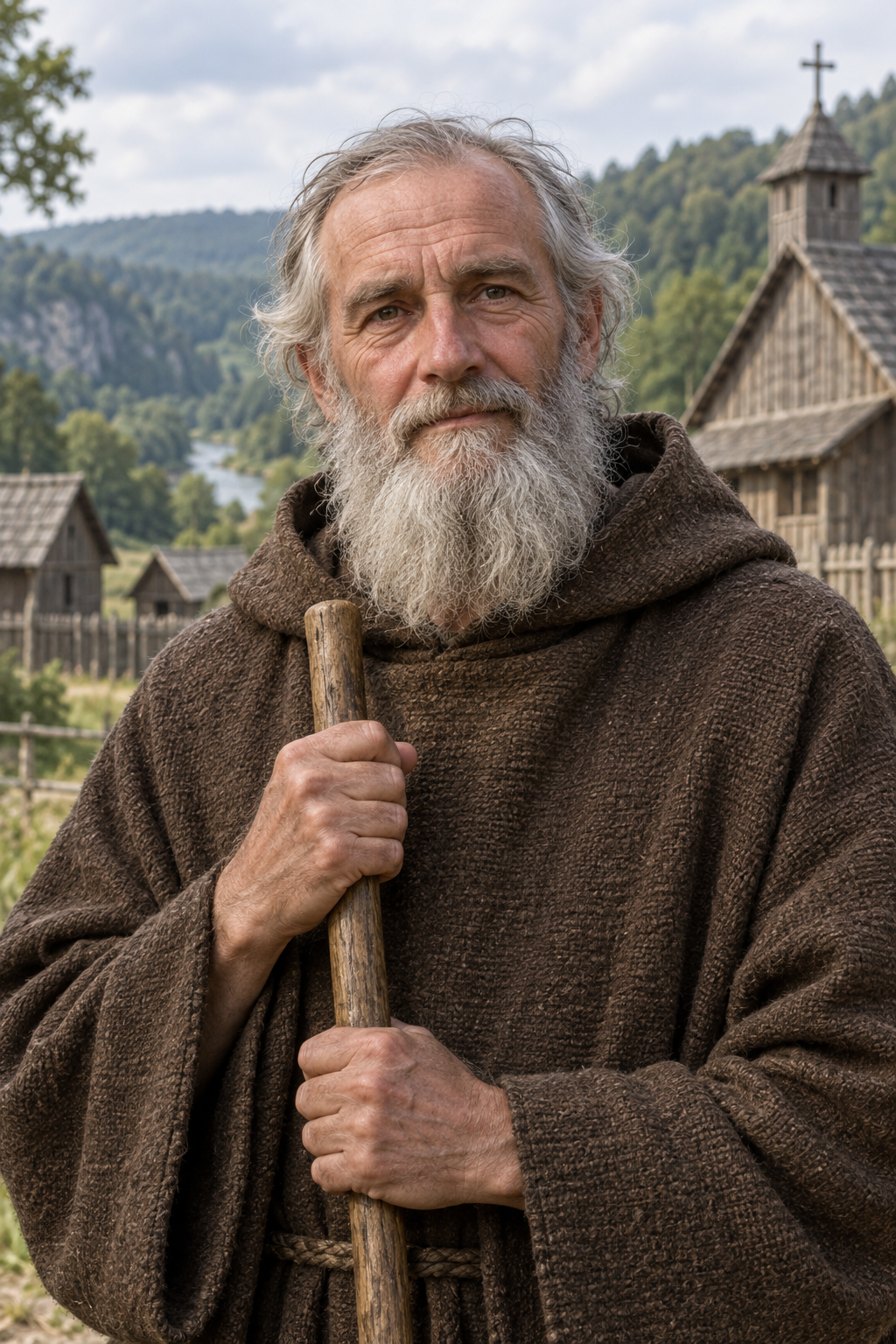
About Columban of Luxeuil
Columban of Luxeuil carried the monastic life he had learned in Ireland into communities in Gaul and northern Italy. Born in Leinster around the middle of the sixth century, he studied Scripture before entering Bangor, where Comgall was abbot. There he followed a demanding life of prayer, study, and discipline and was ordained a priest. His later work grew out of this long formation. He did not begin his travels as an inexperienced young convert, but as a monk already shaped by years within a religious community.
Around 590, he left Ireland with twelve companions, understanding the journey as pilgrimage for Christ. The Irish bishops' account dates the departure to 591 and recalls that he had been a teacher at Bangor. The group eventually established houses at Annegray, Luxeuil, and Fontaine. These were not the end of his travels: he would also work at Bregenz before founding a monastery at Bobbio. The repeated movement carried a recognizable form of communal religious life from one setting to another, bringing new foundations into contact with the Irish tradition in which he had trained.
Jonas of Bobbio describes the growth of the community at Luxeuil in practical terms. Increasing numbers required a larger settlement, and Columban chose a site with the remains of ancient fortifications and baths. More people came to join, including sons of noble families. Jonas's stories also place the monks in fields and woodland, gathering crops and obtaining timber. The community needed food, shelter, and organized labor as well as places for prayer. Although the biography surrounds many of these activities with miracle stories, its repeated settings preserve a picture of the work involved in maintaining these houses.
The rules associated with Columban set out that common life in detail. They required obedience, careful speech, simple food, and freedom from greed. They also adjusted the length of night prayer to the changing seasons and insisted that discipline should take account of strength. The companion rule prescribed punishments for specific offenses, including corporal punishment; its severity should not be softened into a modern ideal of gentle instruction. Alongside these demanding requirements, the texts treated discretion as necessary to spiritual progress. A practice carried beyond proper measure could cease to be a virtue, even when it began as an effort at self-denial.
Columban's insistence on his community's customs brought him into conflict with local church leaders. The dating of Easter became a particular point of dispute, alongside his criticism of clerical conduct. He appealed to Pope Gregory and addressed the bishops rather than quietly abandoning the Irish practice. His surviving letters show forceful argument as well as concern for unity. Later, writing to his own disciples, he urged Attala to preserve peace and adapt his guidance to different people. He admitted that his own attempts to help everyone had left him burdened and distressed.
In 610, conflict with the royal household ended in expulsion from Luxeuil. The Dictionary of Irish Biography connects this with his refusal to bless King Theuderic's illegitimate sons and the resulting anger of Brunechildis. Columban and some companions were taken under guard to Nantes, but their attempted departure by sea failed. He then sought other routes and patrons, eventually reaching the region of Lake Constance. Political change and local opposition made this settlement insecure too. After Theudebert's defeat in 612, Columban moved south into Lombardy, where royal support opened another possibility for monastic life.
The Lombard court welcomed him, but the churches of northern Italy were divided. Columban opposed Arian teaching and wrote to Pope Boniface IV about restoring communion amid the Three Chapters controversy. Land made available in the Trebbia valley allowed him to begin again at Bobbio. His last foundation thus emerged alongside another effort to intervene in the disagreements of the wider Church.
His transmitted sermons reveal another side of this demanding teacher. In one, he asks Christ to kindle a lamp that will continue to burn and give light to others. The image makes prayer an appeal for a love that can be sustained, rather than a claim that the speaker already possesses it fully. Another sermon describes Christ as a living fountain and invites listeners to keep drawing from it. The preacher includes himself among those who need to be awakened from spiritual inertia. These addresses combine instruction with petitions in which the teacher stands alongside those he is urging onward.
Near the end of his life, according to Jonas, Eustasius came from Luxeuil with an invitation to return. Columban declined the journey but instructed him to care for and educate the community. He also sent a letter asking the king to protect the monks. He died at Bobbio in 615. The transmitted Life gives November 21, whereas later church commemoration commonly falls on November 23.
Bobbio continued to change after its founder's death. The municipality dates the first community to 614, around the older church of Saint Peter. Later expansion and rebuilding produced an abbey very different from that first settlement. The present crypt contains Columban's sarcophagus and memorial stones associated with the next two abbots, Attala and Bertulf. These successive layers of building and remembrance should not be mistaken for an unchanged seventh-century monastery. They show a community's history continuing around the memory of the man who had established it.
Wondering how to weigh the stories and sources? Learn how to read a saint biography.
Explore similar vocations
Prayers for Columban of Luxeuil
Columban: petition for the lamp
Do Thou, Christ, deign to kindle our lamps, our Saviour most sweet to us