Biography
Condède of Belcinac
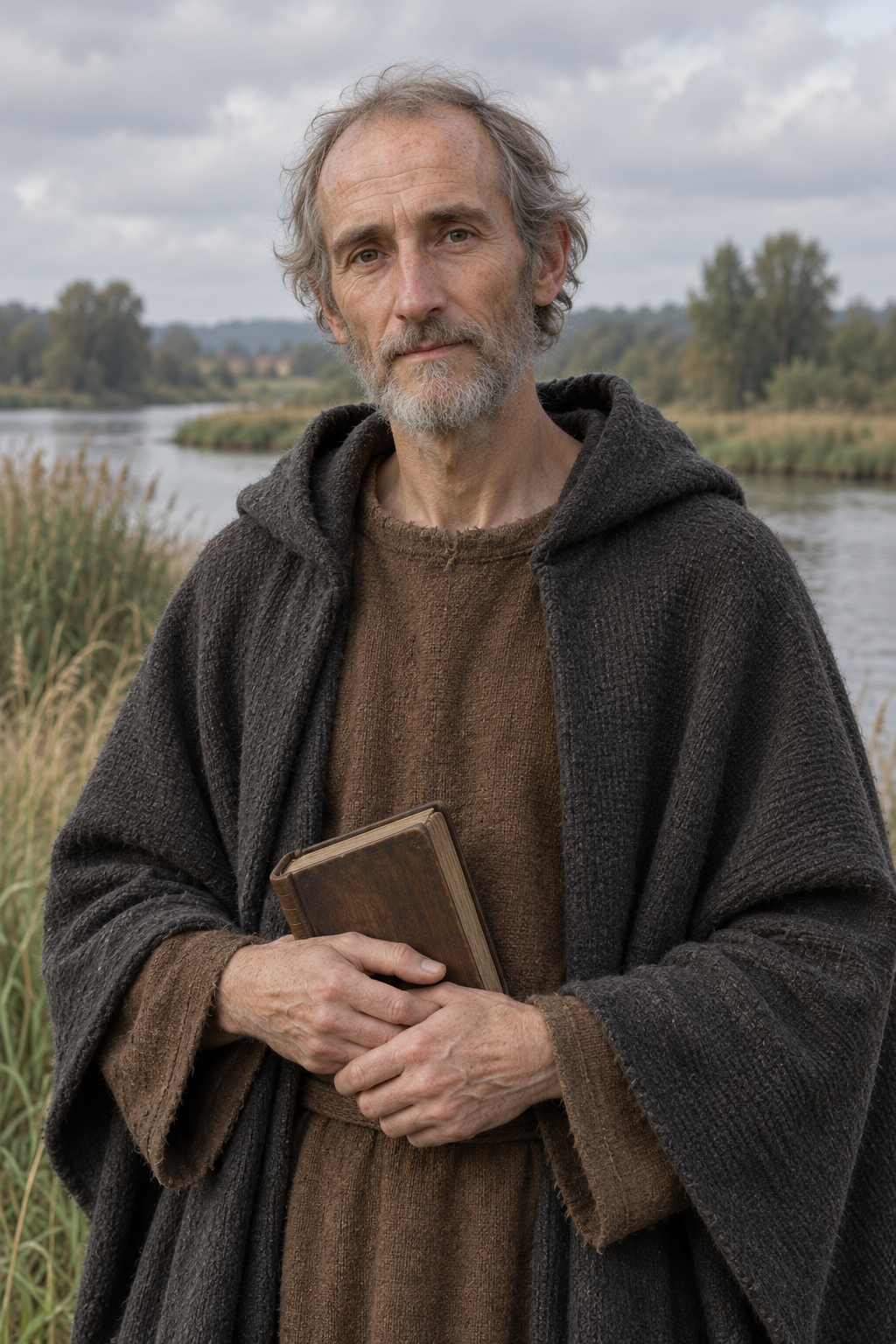
About Condède of Belcinac
Condède was a priest and hermit associated with Fontenelle and the island of Belcinac in the Seine. His story places him among the religious men who came from Britain to Frankish monasteries in the seventh century. The critical editor Wilhelm Levison distinguishes this setting from the much later composition of the surviving Life.
Levison dates that Life to the first part of the ninth century. Its author borrowed language and episodes from several earlier works, including Bede and other saints’ biographies. Some details may preserve older documents, but the narrative as a whole is not a contemporary account of Condède’s life.
The Life describes two churches on Belcinac: one dedicated to Mary and another to Peter and Paul, containing a memorial of Valery. It portrays Condède combining an austere life with teaching the people who came to him.
Its account of his property is unusually detailed. Condède assigns the island and other possessions to Fontenelle; a second act confirms the monastery’s rights. The listed holdings include a mill. These transactions make the connection between his island community and the larger abbey central to the story.
The dates need caution. Levison notes that the writer calculated abbots’ years alongside royal regnal years, and he questions details concerning Waratto’s title and the second transaction. He also distinguishes the lost royal grant described by the Life from a later charter manufactured from the narrative.
Condède remains part of Saint-Wandrille’s remembered history. A 2025 abbey article recalls the island and the powerful tides that threatened it, explaining their place in the community’s tradition.
Nominis records his local feast on October 21 and gives Condé, Condette and Candide as alternative names.
Wondering how to weigh the stories and sources? Learn how to read a saint biography.