Biography
Cyril of Alexandria
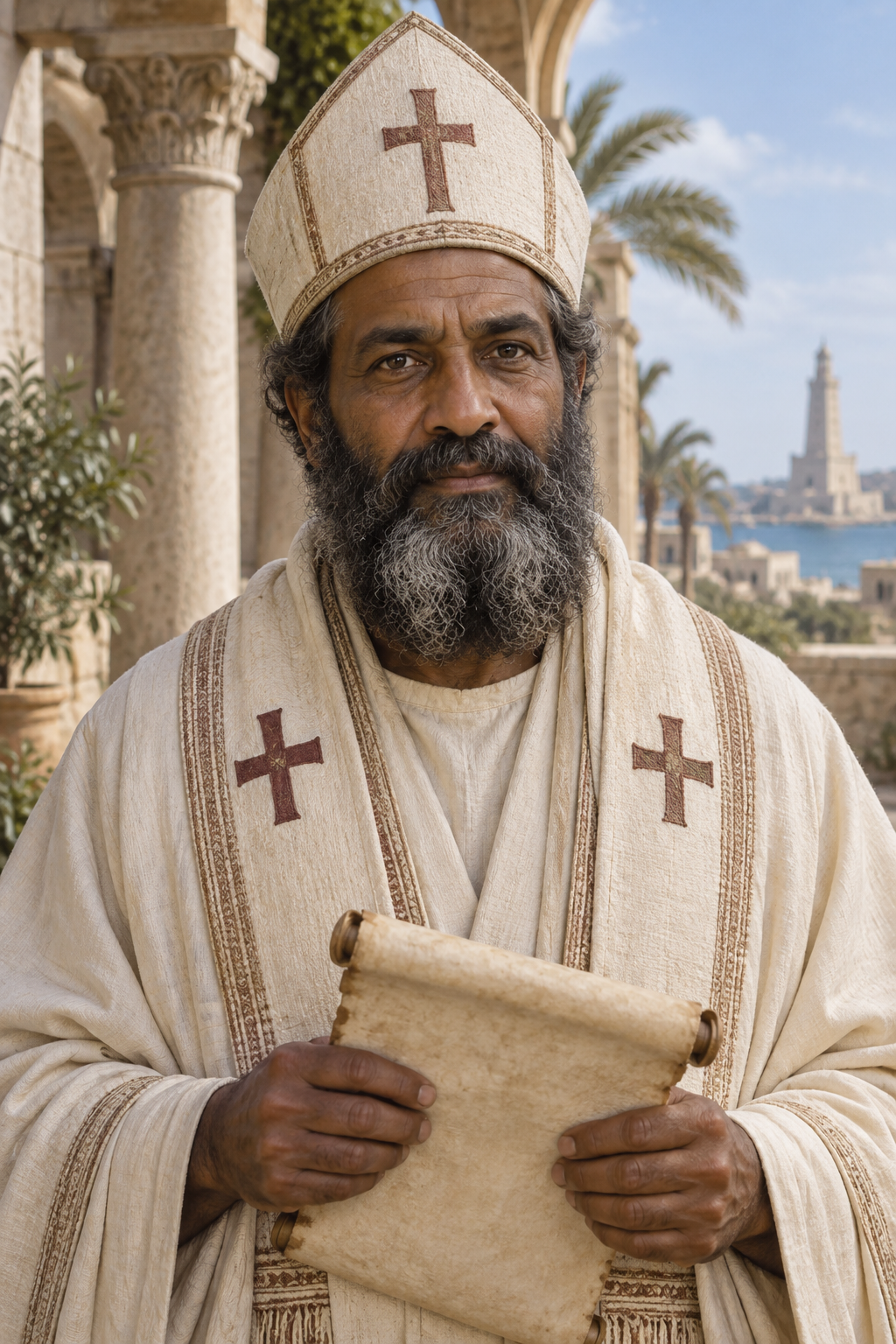
About Cyril of Alexandria
Cyril of Alexandria led an Egyptian church whose influence reached far beyond its own city. He probably came from Alexandria and was born between 370 and 380; little is securely known about his childhood. His uncle Theophilus was bishop there, and Cyril accompanied him to Constantinople in 403 for the Synod of the Oak, which deposed John Chrysostom. He succeeded Theophilus in 412, inheriting both an important teaching office and strained relations with other churches.
His first years in office included grave abuses of religious power. The historian Socrates reports that Cyril drove Jews from Alexandria after violence between Jewish and Christian groups, allowing their possessions to be plundered. The expulsion deepened his conflict with Orestes, the imperial prefect. Socrates also records that a Christian mob led by a reader named Peter murdered the philosopher Hypatia, whose friendship with Orestes had made her a target of suspicion. He condemns the murder as a disgrace to Cyril and the Alexandrian church; his account does not establish that Cyril ordered it. These episodes belong within the history of his episcopate, rather than being excused by his later theological importance.
A different conflict brought Cyril into a wider debate about Jesus Christ. Nestorius, bishop of Constantinople, challenged language about Mary that Cyril considered essential to a sound account of the Incarnation. Cyril wrote to Pope Celestine, asking for a judgment, and the pope authorized him to demand that Nestorius retract his teaching. Cyril then assembled his own bishops and sent a further letter with twelve condemnations of positions he rejected. The disagreement spread through correspondence among bishops, linking questions of belief with the authority of competing church centres.
His second letter to Nestorius explains the central concern in his own words. For Cyril, the eternal Word truly became human, taking a body animated by a rational soul. He did not mean that divinity changed into flesh, or that Jesus was an ordinary person subsequently joined to God. The human birth and suffering belonged to the same Son who existed before the ages. Calling Mary Mother of God therefore concerned the identity of her child; it did not mean that the divine nature began with her. His appeal combined doctrinal argument with a warning that careless teaching could harm people entrusted to a bishop.
The council at Ephesus opened amid serious disagreements about its proceedings. The Orthodox Church in America recounts that Cyril presided before John of Antioch and the Syrian bishops arrived, while Nestorius refused to join the opening session. The assembly condemned Nestorius, but John subsequently gathered a rival meeting against Cyril. Imperial intervention brought imprisonment for Cyril and Memnon of Ephesus before they were released. The competing assemblies show why the council cannot be described as a calm discussion that immediately reconciled all its participants.
Cyril reached an agreement with the Antiochenes in 433, accepting a formula that enabled reconciliation. He continued explaining his position through the remaining years of his life and died on June 27, 444.
His surviving biblical commentaries reveal a teacher at work beyond the council chamber. At the beginning of his commentary on John, he compares the evangelists to travellers approaching the same city by different roads. He notices that their ways of telling the story differ, while treating their witness as directed toward a common purpose. He encourages students of Scripture to gather useful insights from other writers, using a bee collecting material for honey as his image. He values such reading when it brings different insights into a coherent understanding. The argument then turns to the opening of John, where he defends the eternal existence of the Word. His interpretation proceeds through close attention to words, scriptural comparisons and arguments against alternative readings.
His commentary on Luke also connects biblical interpretation with conduct. Explaining the advice given by John the Baptist, he distinguishes the needs of ordinary people, tax collectors and soldiers. Mutual kindness, restraint in collecting money and freedom from oppression become concrete expressions of repentance. In the following sermon he explores the difference between John and Christ, treating the gift of the Holy Spirit as evidence of divine authority. For this preacher, ethical instruction and teaching about Christ could occur within the same sustained reading of the Gospel.
Later churches continued to weigh his teaching long after his own disputes had ended. Pius XII recalled that the Council of Chalcedon used Cyril alongside Leo the Great, and that later councils also appealed to his authority. The same papal account records his recognition as a Doctor of the Church in 1882. This reception concerns the enduring importance of his theological work, especially his account of the Incarnation. His legacy remains attached to a precise question: how Christians can speak of the full humanity of Jesus without dividing the one whom they confess as the Son of God.
Wondering how to weigh the stories and sources? Learn how to read a saint biography.
Explore similar vocations
Prayers for Cyril of Alexandria
Cyril of Alexandria: troparion excerpt
intercede with Christ