Biography
Cyril of Jerusalem
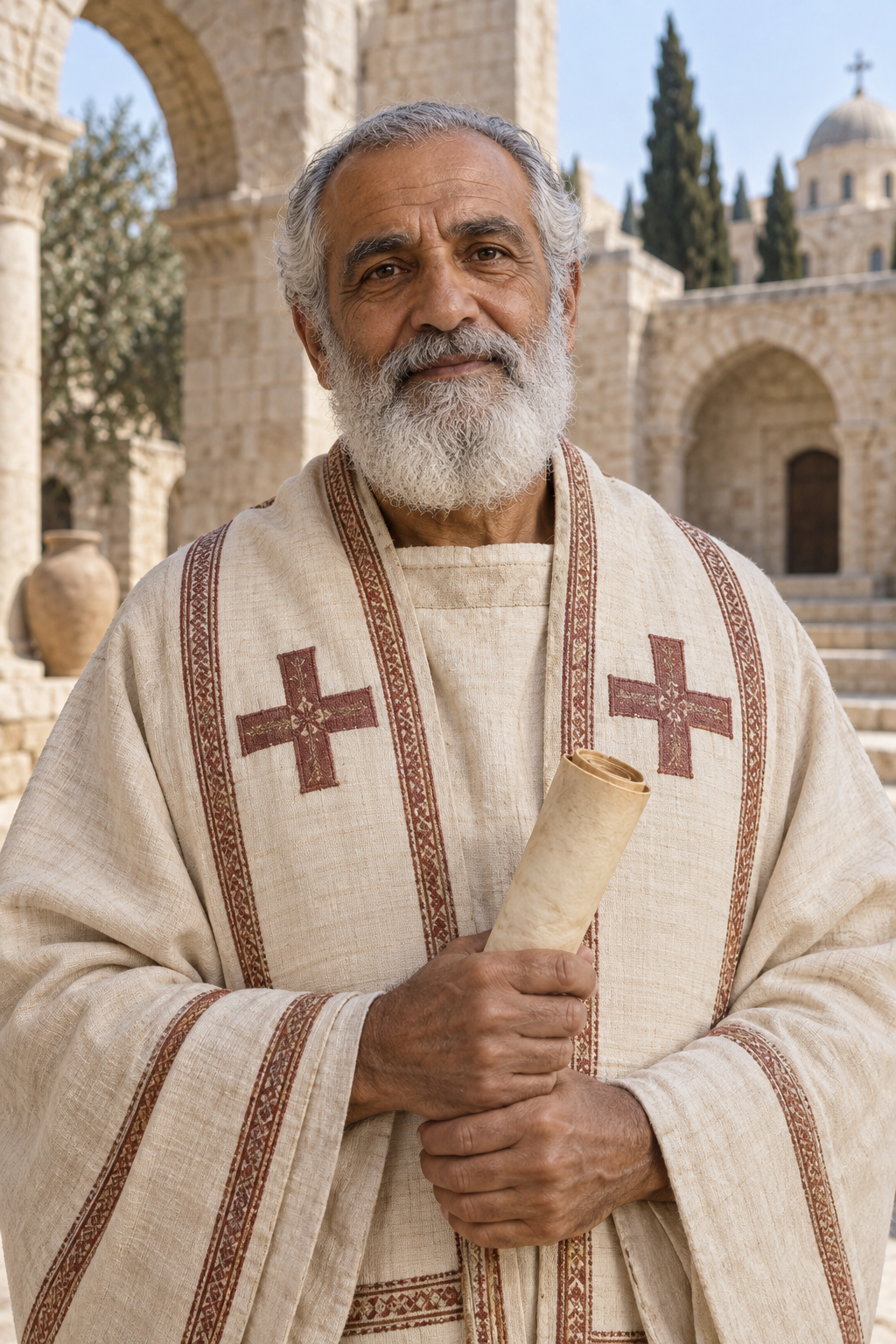
About Cyril of Jerusalem
Cyril of Jerusalem taught in a city whose holy places were being transformed around him. He was probably born in or near Jerusalem around 315, although no contemporary biography gives a detailed account of his childhood. His parents are unnamed in the surviving evidence discussed by his editor Edwin Gifford. Later calendars describe a Christian upbringing, but the available information does not support a detailed family story. His references to the appearance of local holy places suggest familiarity with Jerusalem before its great churches had received their imperial adornments.
Maximus ordained Cyril to the priesthood, and Cyril eventually succeeded him as bishop. The precise date and circumstances of that succession remain disputed. Edward Yarnold places it around 350 and explains why hostile accounts of the appointment cannot simply be treated as neutral reports. Acacius of Caesarea had a part in his appointment, but Cyril later contested the authority that Caesarea claimed over Jerusalem.
His fourth catechetical lecture gives a close view of his teaching method. Before discussing the Creed at length, he supplies a shorter account of its main themes so that listeners will not lose their bearings. He asks experienced hearers to be patient with elementary explanations that others still need. He also insists that religious understanding and conduct belong together: correct teaching without good works is inadequate, as are actions detached from belief. This is instruction shaped for a mixed audience, including people beginning their preparation and others renewing what they already know. The lecture moves from warnings about misleading appearances toward a systematic presentation of Christian belief.
The larger collection follows the movement of people entering the Christian community. An introductory address and eighteen instructions prepare candidates for baptism, while five further instructions explain rites to the newly baptized. The subjects include conversion, the Creed, baptism, anointing and the Eucharist. Benedict XVI describes the combination as an education in doctrine, conduct and the meaning of worship. The setting matters: Cyril was helping people understand practices they were preparing to undertake, and then interpret practices they had experienced. The surviving instruction consequently preserves evidence of both theological teaching and the worshipping life of Jerusalem. The explanations of baptism use bodily movement and water to interpret Christian language about death and new life.
Care for people also brought Cyril into a dispute over church possessions. Sozomen reports that during a famine the poor appealed to him for food, and that he sold church ornaments and a veil because he lacked money to help them. The historian connects these sales with accusations used by Acacius to secure his deposition. In the same account, their quarrel involved the standing of their respective churches as well as disagreements about doctrine. An action presented as relief for hungry people thus became an issue in the struggle over who could judge and remove a bishop. The report provides a concrete instance of charity without making the surrounding controversy disappear.
Deposition led to repeated displacement rather than a single uninterrupted ministry. John Chapman places the first exile in 357 and records Cyril taking refuge with Silvanus at Tarsus. Cyril attended the council at Seleucia in 359, but another reversal followed in 360. The accession of Julian allowed a return, before a further banishment under Valens kept him away until 378. The shifts in his circumstances followed changes in imperial government as well as decisions made by church councils.
A letter to Emperor Constantius supplies another kind of evidence from his episcopate. Cyril reported a luminous cross over Jerusalem in 351 and interpreted it as a sign of divine favour. The report preserves his religious interpretation of what people said they saw; it does not independently establish a miracle. Its importance lies partly in showing how he communicated with the emperor about the sacred significance of his city.
By the council at Constantinople in 381, Cyril stood among the bishops affirming the Nicene faith. Theodoret names him among the participants and preserves the letter written by the Eastern bishops the following year. That letter recognizes him as the lawfully ordained bishop of Jerusalem and praises his resistance to Arian teaching. The bishops wrote to colleagues meeting at Rome, presenting agreement in faith and proper appointment to office as parts of the same effort to restore communion. Their testimony is a contemporary defence of Cyril, preserved within a later historical work, rather than a judgment invented by modern admirers.
Jerome also records that Cyril held his episcopate for eight consecutive years under Theodosius and that his catechetical lectures remained in circulation. This short notice links his final period of stability with the continued availability of his teaching.
Yarnold favours 387 for Cyril's death over the traditional 386, and defends attributing the final sacramental instructions to him. Those judgments remain questions for scholarly assessment, alongside the substantial teaching that survives under Cyril's name.
Wondering how to weigh the stories and sources? Learn how to read a saint biography.
Explore similar vocations
Prayers for Cyril of Jerusalem
Cyril of Jerusalem: troparion excerpt
pray for us.