Biography
Eduardo of the Child Jesus (Eduardo Farré Masip y Soler)
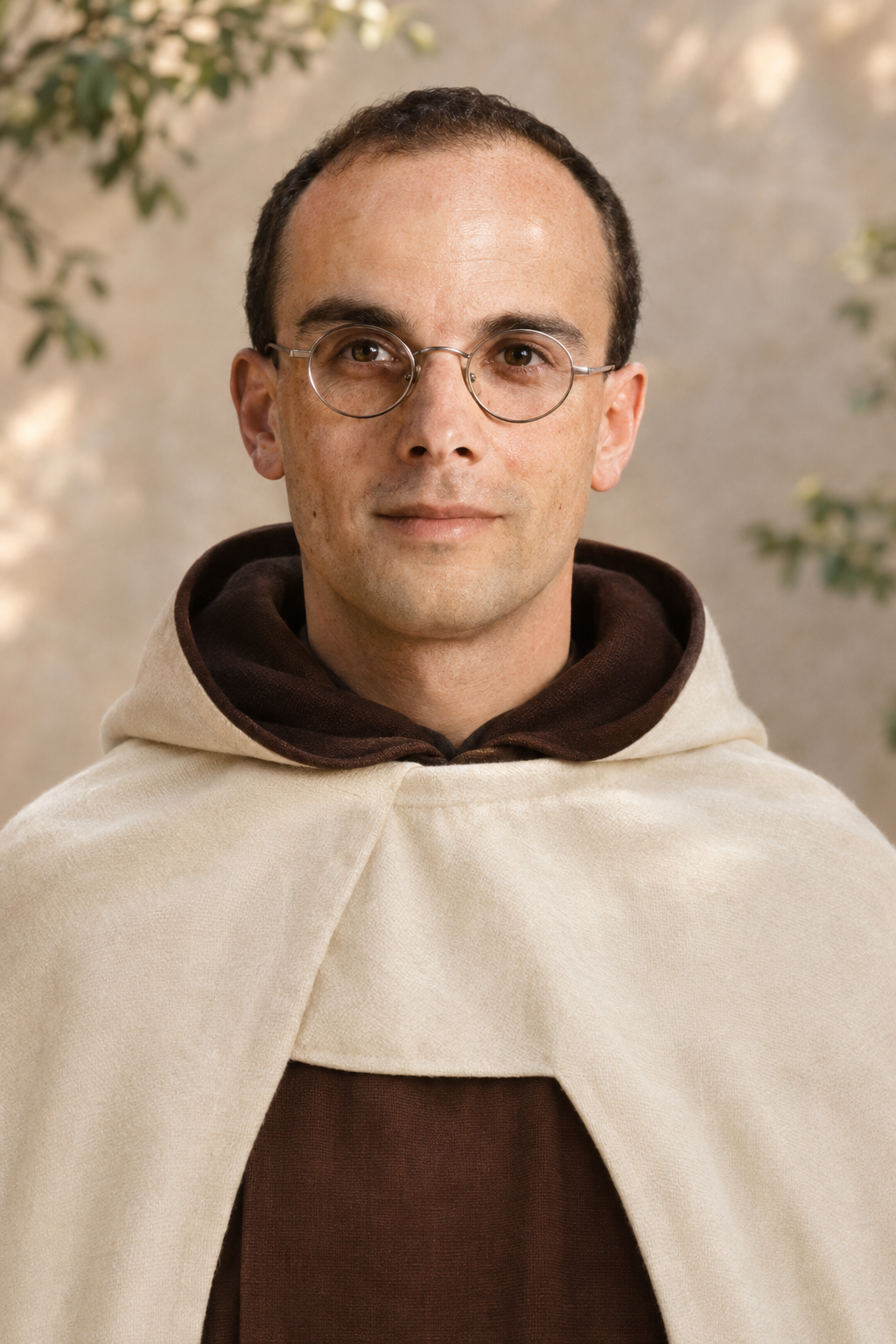
About Eduardo of the Child Jesus (Eduardo Farré Masip y Soler)
The Discalced Carmelite known as Eduardo of the Child Jesus was born in Els Torms, a village in the province of Lleida, on April 20, 1897. The diocese records that he was baptized the same day. His mother, Dolors, died after complications of childbirth. The diocese gives his birth name in Catalan as Ricard Farré Masip. Readers of the American Carmelite account will find him under Eduardo Farré Masip y Soler. It was as Eduardo of the Child Jesus that he went on to serve communities in Spain, Mexico and the United States.
As a boy he studied with the Carmelites. The Diocese of Lleida places him at their minor seminary in Badalona in 1909 and at the Tarragona novitiate in 1912. He was sixteen when he made his first vows there on August 10, 1913. He made his solemn profession in 1916. Literature was one part of his education at which he excelled. The American Carmelites remember him as a poet and name two settings in which his work won recognition, the Marian Academy of Lleida and the literary games at Sant Andreu in Barcelona.
Eduardo finished his studies before he was old enough for ordination under the usual rules. A dispensation allowed him to be ordained at Lleida on June 13, 1920. He celebrated his first Mass at the monastery of the Carmelite nuns in the same city. Within the year he was assigned to Durango in Mexico. It was his first long posting as a priest, and it placed him in a community already served by friars from his province.
He spent three years in Durango. In 1923 religious persecution led him to leave Mexico for the United States. The Carmelite province tells of friends who helped him cross to safety disguised as a newspaper reporter. Its account also says that gifts he received through preaching helped him pay his way to Tucson. The Diocese of Tucson remembers him at two parishes, Holy Family and Santa Cruz. He was one of several friars whose work on one side of the border led to a new assignment on the other.
In the United States he continued his own studies and became prior of the Carmelite community in Washington, D.C. The house had opened near the Catholic University of America in 1916. Among its other early residents was Lucas of Saint Joseph, whom Tucson also remembers as a parish priest. Eduardo was responsible for the affairs of this relatively young community. As provincial vicar for the American foundations he also had duties that extended beyond Washington. He had gone from being a student in one of his order’s schools to helping oversee its houses in the Americas. The American province singles out a problem that fell to him as prior in 1927. Some of the community’s properties needed attention, and it was his responsibility to resolve the difficulties involved in running them. The account leaves the details of those transactions unrecorded.
A provincial chapter called him back to Spain in 1930. According to the American province, when he was offered another term in Washington he declined and undertook a journey to Guatemala to investigate the possibility of a Carmelite foundation. In 1933 he took part in the general chapter on Mount Carmel. He was then assigned to Barcelona as a teacher of theology. His final election, in May 1936, made him prior of Tarragona, the community where he had taken his first vows as a teenager.
That July he was away from Tarragona, preaching a novena for the Discalced Carmelite nuns at Tiana. It was a sequence of services in honor of Our Lady of Mount Carmel. News of the fighting reached them during those days of prayer. The Carmelites recall that Eduardo urged the nuns to prepare to leave the enclosure. They went out in ordinary clothes and sought shelter in private homes. In their remembrance he blessed them before they parted and spoke of the possibility that they might never meet again.
Eduardo and Gabriel of the Annunciation took refuge together. On July 25 militia members searched the house. Carmelite tradition recalls that Eduardo acknowledged that the two men were friars. They were arrested and taken away. The diocese places their deaths that night at Montcada, near Barcelona. The American account records uncertainty over the place of burial. Eduardo was thirty-nine years old and had been prior of Tarragona for only a few months.
Eduardo and Lucas were beatified in Rome on October 28, 2007. Soon afterward, people gathered at Holy Family in Tucson for the blessing of three icons of the two friars. Bishop Gerald Kicanas remembered the presence of both older and younger parishioners that evening. At Santa Cruz they have since been commemorated with three more Carmelites whose lives likewise connected Arizona with Spain. For that parish, the name of a martyr honored in Rome also belongs to the history of its own early years.
Wondering how to weigh the stories and sources? Learn how to read a saint biography.