Biography
Esther Paniagua Alonso
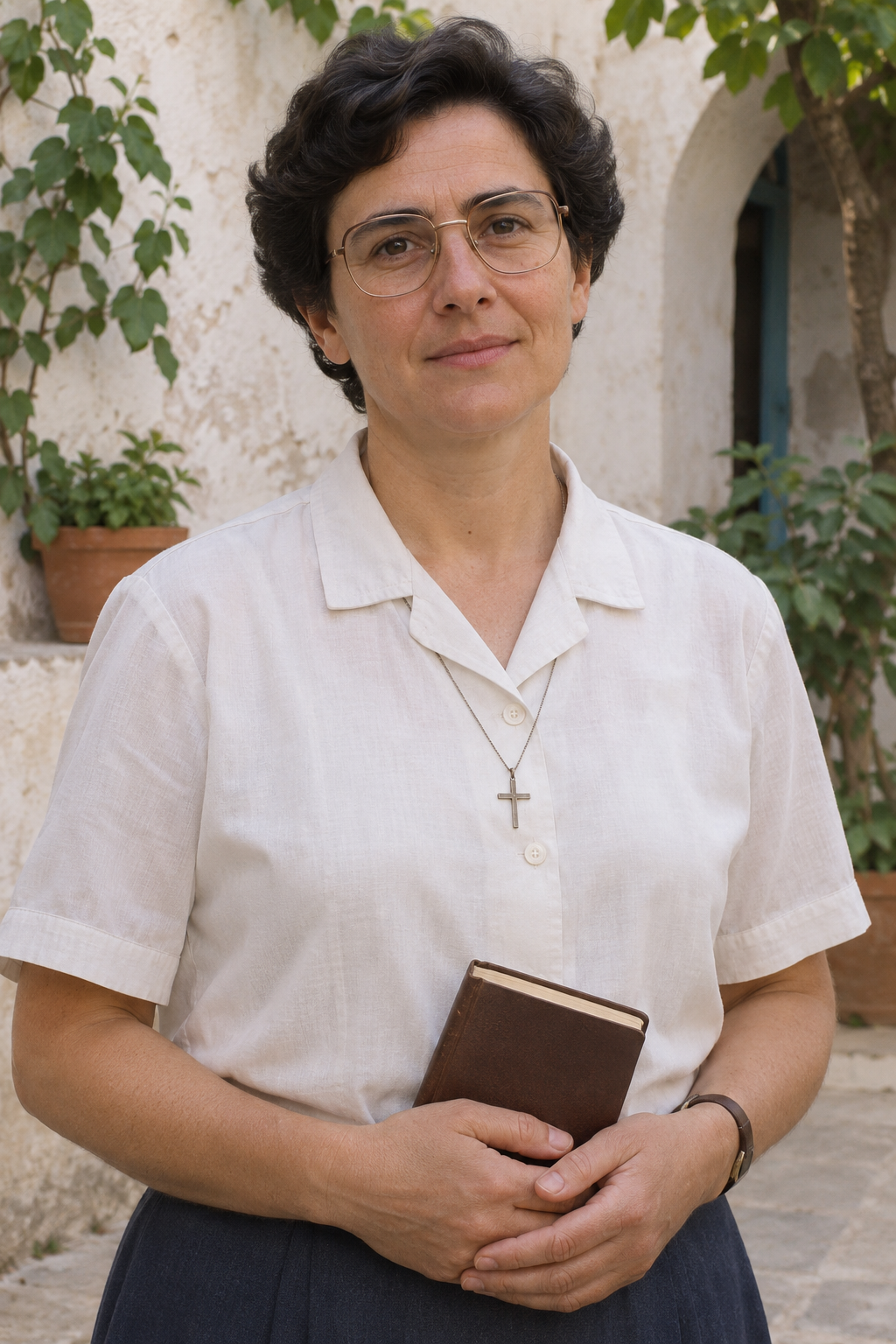
About Esther Paniagua Alonso
Esther Paniagua Alonso was a Spanish Augustinian Missionary Sister who worked as a nurse in Algeria. Born at Izagre, León, on June 7, 1949, she entered religious life as a young woman. Her work in Algerian hospitals included particular attention to children with disabilities. The congregation also remembers her interest in the Bible, the Qur'an and Muslim spiritual writers.
She grew up with two sisters in a farming family. Her parents were Nicasio Paniagua and Dolores Alonso. After beginning school in Izagre she continued her education with the Augustinian Missionaries at Logroño. Her sister Gloria remembered a serious, determined and affectionate young woman with a clear missionary vocation. Esther chose nursing because she expected to need it in the missions. She trained at the Nuestra Señora de Regla hospital in León and received a qualification through the University of Oviedo. Her lifelong religious profession took place in 1975. The family also remembered her affection for her nieces and the quiet holidays she spent with her parents. In Algeria she worked at Blida before moving to Algiers. Her sisters recalled good relationships with medical colleagues and a readiness to use free time to help a patient who needed additional attention. These recollections preserve the practical habits of a nurse as well as the family's memory of a loved sister. She entered the novitiate in 1967 and made her first profession on June 13, 1970. Her sister also recalled a period in Madrid studying French before going to Algeria.
Understanding the country mattered to her. Her companions Lourdes Miguélez and María Paz Martín record two years devoted to Arabic study in Rome. Their account places her work within a wider adjustment by the congregation after Algerian independence. When church schools were nationalized, the sisters developed other forms of service, including libraries, nursing and childcare. Esther's language studies belonged to this effort to live more closely with the people among whom she worked.
Her former provincial María Jesús Rodríguez recalled a visit by the Spanish ambassador to the hospital where Esther cared for children. Concerned for her safety, he urged her to leave. When he asked what help she needed, she requested a colonoscope for diagnosing patients' intestinal problems. Rodríguez told the story as an example of Esther's attention to the needs of those in her care. The remembered request gives a concrete form to a missionary commitment that otherwise might be described only in general terms.
Traldi also remembered Esther speaking about her parents' anxiety before returning to Algeria. The missionary's decision affected a family that cared for her deeply.
As violence increased, the sisters faced a deliberate choice about remaining in Algeria. Esther's recorded reflections drew on Ezekiel's vision of dry bones and on God's promise. She asked that prayer and the Spirit's love bring life to the country. She also looked to Jesus' suffering and the life Christians believe comes through the cross. The reflections connected her personal faith with concern for the people around her. Remaining was a decision made in awareness of danger.
She explained that the sisters did not imagine they could solve the country's crisis. They wanted to accompany people, listen and share their lives. The distinction helps explain why continuing ordinary nursing and community life could matter to them even when the future was uncertain. Their decision concerned presence and companionship as well as the work each sister performed.
On October 23, 1994, Esther and Caridad Álvarez Martín set out for Mass at the nearby chapel of the Little Sisters of Jesus in Bab El Oued, Algiers. Two other sisters followed separately, in keeping with safety precautions. Gunfire interrupted the short walk. Esther and Caridad were shot and died that day. The surviving sisters' recollections include neighbors helping them find shelter in the confusion.
Former superior general Ángela Cecilia Traldi remembered the deaths as a painful crisis for the whole congregation. She recalled knowing both women personally and struggling over the safety of the sisters who remained. Consultation, prayer and conversations with the community followed. Her testimony preserves uncertainty and grief alongside the decision to continue the congregation's presence in Algeria. The deaths did not erase the relationships the sisters had formed there.
In a historical survey of Augustinian women, Fernando Rojo Martínez included Esther and Caridad among women whose lives joined prayer to service. He emphasized simplicity and humility in their missionary commitment. The brief assessment places Esther within the wider history of women serving in the Augustinian tradition.
Esther was beatified with eighteen other Algerian martyrs at Oran on December 8, 2018. Her congregation subsequently gathered for thanksgiving at León Cathedral. Carmen Ramírez, an Augustinian Missionary Sister in Avilés, described the recognition as an encouragement for their continuing service. She connected that work with interior prayer, community life and attention to people in need.
Wondering how to weigh the stories and sources? Learn how to read a saint biography.