Biography
Ezra
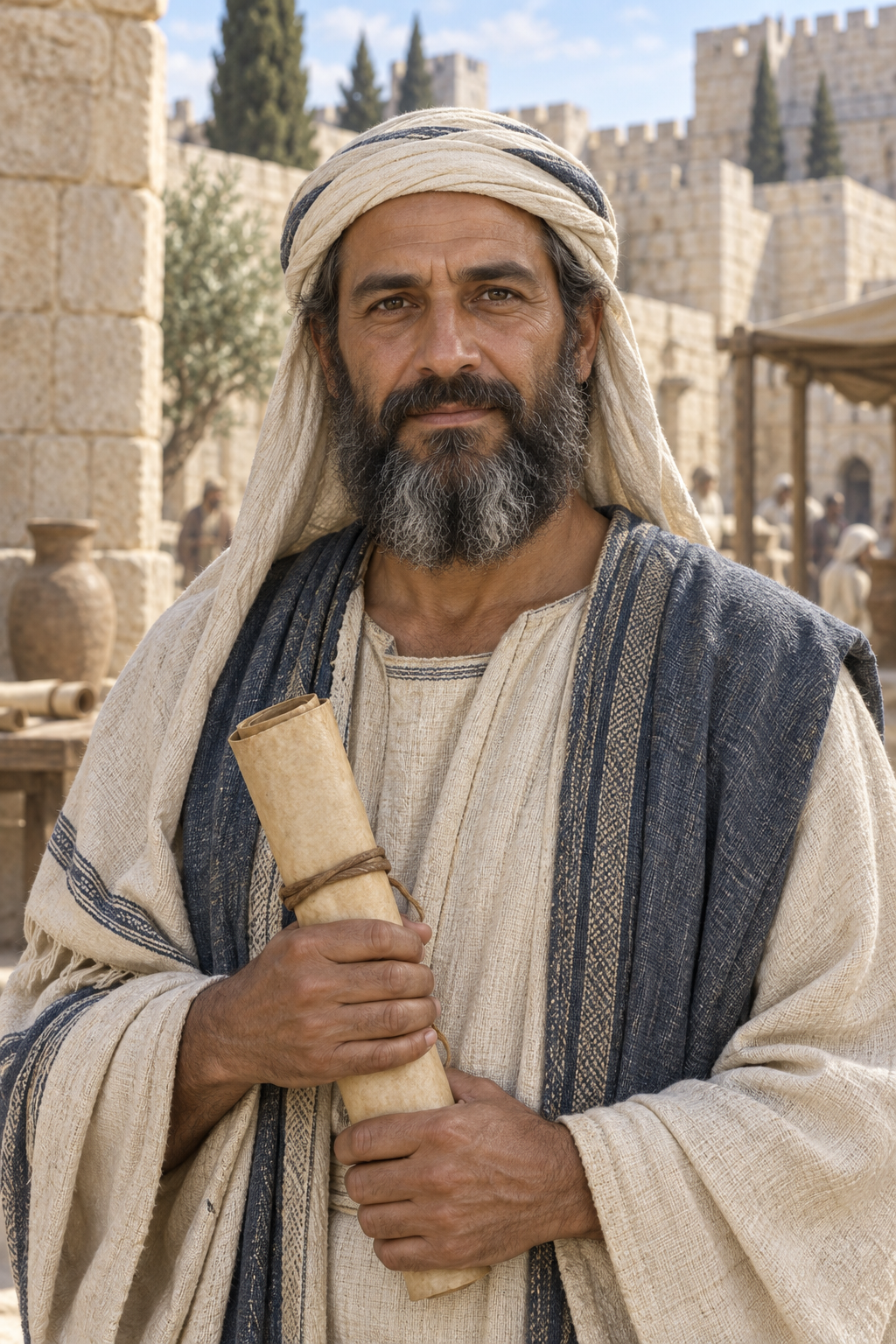
About Ezra
Ezra appears in the biblical books of Ezra and Nehemiah as a Jewish priest and learned scribe living under Persian rule. Ezra 7 introduces him through a priestly genealogy traced to Aaron and calls him skilled in the law of Moses. That description identifies the subject of this record; it does not establish the inherited claim that he was born in 480 BCE or died in 440 BCE. No surviving text gives those dates, a childhood narrative, or the names of his parents. The books present a public vocation centered on teaching, worship, and communal order. They are also literary and theological accounts, not a continuous contemporary biography, so a careful profile must distinguish what the narrative says from what modern historical study can securely reconstruct.
The story places Ezra in Babylon and says that he received authorization from King Artaxerxes to travel to Jerusalem. The royal rescript permits him to inquire into conditions in Judah, carry gifts for the temple, appoint judges, and teach the law. Ezra gathers companions beside a canal called Ahava, reviews the group, and recruits Levites before departure. The text dates arrival to the king's seventh year, but it does not specify which Artaxerxes in terms that settle the modern debate. A common reconstruction uses Artaxerxes I and 458 BCE; another places Ezra under Artaxerxes II in 398 or 397. Because the identification remains disputed, the event is dated only by the regnal formula and marked approximate rather than presented with false precision.
Ezra 8 describes preparations for the journey. He proclaims a fast at Ahava, explaining that the travelers sought protection rather than requesting a military escort. He entrusts silver, gold, and temple vessels to named priests and requires them to weigh the goods again in Jerusalem. These details portray accountability joined to religious confidence. The narrative reports departure from Ahava and safe arrival after danger along the road, but it does not preserve an itinerary that would justify drawing a route on a modern map. Babylon and Jerusalem can therefore appear as settlement-level associations, while Ahava remains geographically unlocated. The journey's significance lies less in imagined travel scenes than in the group's disciplined preparation and careful stewardship of entrusted resources.
After arrival, officials tell Ezra that some members of the returned community, including leaders, have married women from surrounding peoples. Ezra responds with mourning and a long confession that speaks in the first-person plural. Chapters 9 and 10 then describe a public assembly, an inquiry, and the separation of marriages. This episode has caused real moral and interpretive difficulty. The narrative frames the policy as protection against religious assimilation, yet it also records families divided by a collective reform. The text should not be converted into a timeless judgment about ethnicity, intermarriage, or outsiders. Ezra's role can be reported faithfully while acknowledging that later readers must face the human cost, the absence of women's voices, and the tension with other biblical books that portray foreign women differently.
Nehemiah 8 gives Ezra a different public scene. The people assemble near Jerusalem's Water Gate and ask him to bring the book of the law. Standing on a wooden platform with other leaders, he reads from morning until midday. Levites help explain the text so that those gathered can understand it. When the people weep, Ezra, Nehemiah, and the teachers direct them toward a holy day marked by food, shared portions, and rejoicing. The chapter presents interpretation as communal work rather than a solitary performance: readers, interpreters, leaders, and hearers all participate. Whether this scene belongs chronologically before or after the marriage reform is debated, but it remains the clearest biblical image of Ezra as a public teacher.
Historical reconstruction remains contested because the surviving evidence is internal to Ezra–Nehemiah and because the book's documents and sequence have generated sustained scholarly debate. Encyclopaedia Iranica notes parallels between the Aramaic correspondence and authentic Persian-period administrative forms, while also reviewing disagreements about Ezra's office, date, and mission. Some scholars accept a substantial historical core; others propose different orderings of Ezra and Nehemiah or give more weight to literary shaping. The responsible conclusion is not that Ezra certainly did not exist, nor that every detail functions as a modern record. It is that a Persian-period priest-scribe is a reasonable historical identification while exact chronology and parts of the received narrative remain probable or traditional rather than documented by independent contemporary evidence.
Later Jewish and Christian communities greatly expanded Ezra's reputation, crediting him with restoring Scripture and assigning him prophetic titles. The Orthodox Church in America commemorates the Prophet Ezra on July 13 and repeats traditional chronology and achievements. That observance documents a living Eastern Orthodox commemoration, not independent verification of every story in its life. This record therefore retains Ezra the Scribe as a title and records prophet only within the specific Orthodox tradition. It does not call him a Christian confessor or a layperson, since Ezra 7 explicitly presents him as a priest. It also avoids a personal quotation: the books contain words attributed to Ezra, but a short extract detached from their literary speeches would suggest a degree of direct transcription that the evidence cannot establish.
Ezra remains significant as a remembered organizer of learning after displacement. The narrative shows him preparing before action, accounting for communal goods, studying and teaching law, confessing collective failures, and making consequential reforms. Not every action should be praised without qualification, especially the dissolution of families in Ezra 10. His enduring importance instead lies in the difficult conjunction of text, authority, migration, worship, and communal identity during the Persian period. Reading him carefully permits both recognition and scrutiny: his commitment to intelligible teaching and responsible stewardship can be named, while debated dates, literary shaping, and the people harmed or silenced by reform remain visible rather than being smoothed into devotional certainty.
Wondering how to weigh the stories and sources? Learn how to read a saint biography.